Short answer
Write down exactly when the tank was set up and stocked, how many fish were added, and the numeric ammonia, nitrite, nitrate, pH, and temperature readings with dates and test method. Check breathing and filter flow now. A developing biofilter is one possibility; transport, acclimation, oxygen, and disease also need review.
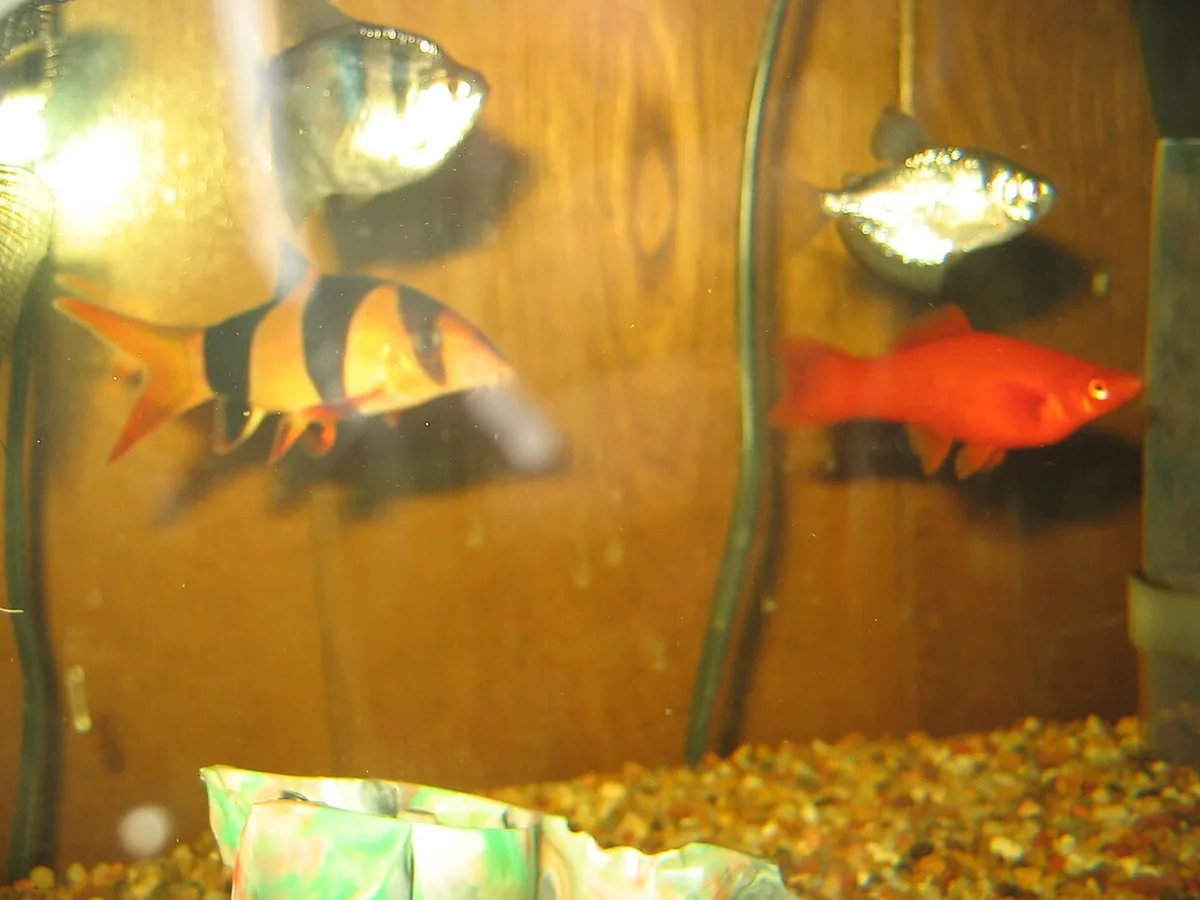
Context image only: these fish are not a documented example of new-tank losses.
Image: Mitternacht90 / Public domain / resized and cropped for layout
Record the first weeks, not just today's test
- Note tank setup date, first fish date, each later addition, feeding changes, and the order of symptoms or deaths.
- Write down numeric ammonia, nitrite, nitrate, pH, and temperature results with dates, test type, and whether the sample was before or after a water change.
- Ask what a store tested and for the actual numbers. A zero ammonia and nitrite reading at one moment cannot establish that the biological filter can handle the current fish load.
Check the fish and equipment now
- Watch for gasping, rapid gill movement, loss of balance, unusual hiding, injuries, spots, and whether several fish are affected.
- Confirm continuous filter flow and surface movement; note any outage, media replacement, or cleaning that could have disturbed the biofilter.
- Review source-water conditioning, tank and source-water temperature, and how new fish were acclimated after transport.
Why 'good water' may not explain the losses
A new biological filter takes time to establish. Ammonia and nitrite can change as waste production and bacterial activity change, so repeated dated tests matter more than an undated pass/fail result.
If water measurements remain reassuring, look beyond the nitrogen cycle: transport stress, rapid temperature or chemistry changes, oxygen, aggression, and a problem carried by new fish are other possibilities. The pattern and timeline help a professional narrow them down.
When to seek help
- Get prompt experienced help when losses continue, multiple fish breathe hard, or fish collapse; share the full timeline and actual readings.
- Pause further stocking while the cause is unresolved. Avoid choosing a medicine solely because a new fish died.
Choose your next check
- Ammonia poisoning guide →
Compare signs when ammonia is detected or a biofilter issue is suspected.
- Water parameter checker →
Review actual readings and their limits.
- Problems after a water change →
Use if the change immediately preceded the decline.
Sources and review
Content reviewed 2026-09-25. These sources support general fish-health checks; they do not diagnose an individual fish.
Fish Disease Identifier provides educational guidance and possible matches from photos. Results are not veterinary advice and may be wrong. For severe, worsening, or unclear symptoms, consult an aquatic veterinarian or experienced aquarium professional.