Fish Diseases
Common Fish Diseases and Aquarium Health Problems
Browse common aquarium fish diseases, visible symptoms, possible causes, and what to check next. Start with water quality and breathing signs, then compare visible clues before relying on a photo-based match.
Water qualityBreathing signsVisible clues
Start here
Check water and breathing before waiting for a clearer photo match.
Gasping, collapse, pineconing, or several fish declining together can point to ammonia, nitrite, low oxygen, or temperature stress.
Priority guide
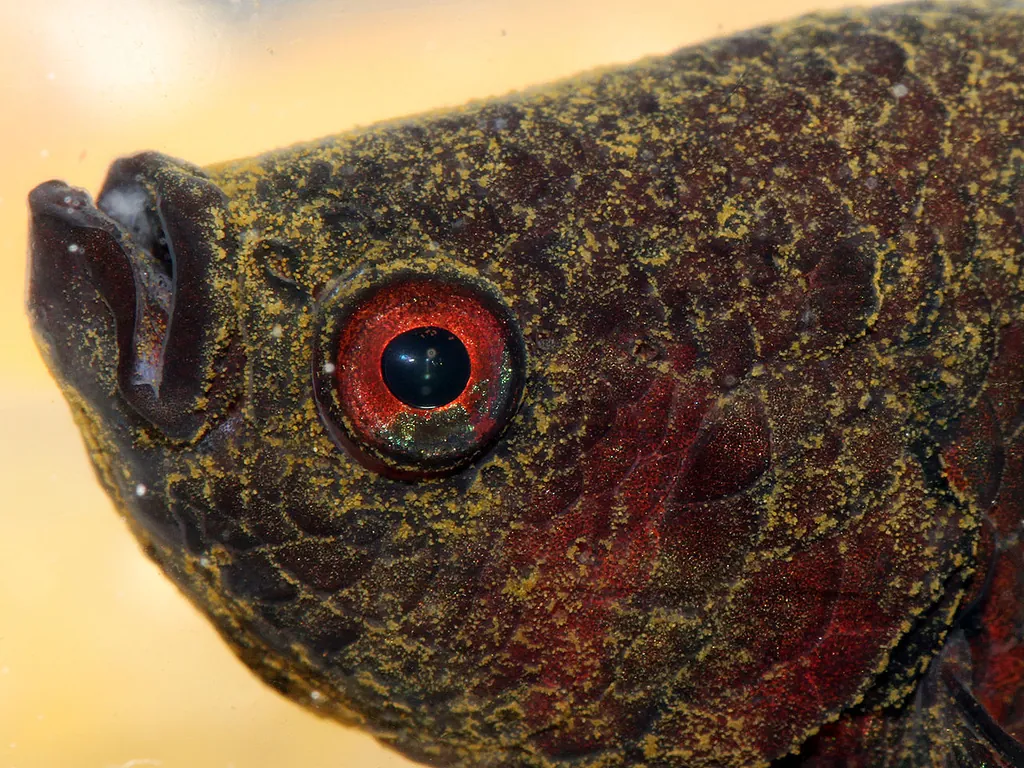
Velvet Disease in Fish: Dusty Coating, Fast Breathing, and Next Checks
Treat velvet-like signs with rapid breathing, surface gasping, or multiple fish declining as urgent because gill involvement can progress quickly.
Emergency checkRead guide ->
Image: Mydigitalife / CC0 / resized and cropped for layout
Priority guide
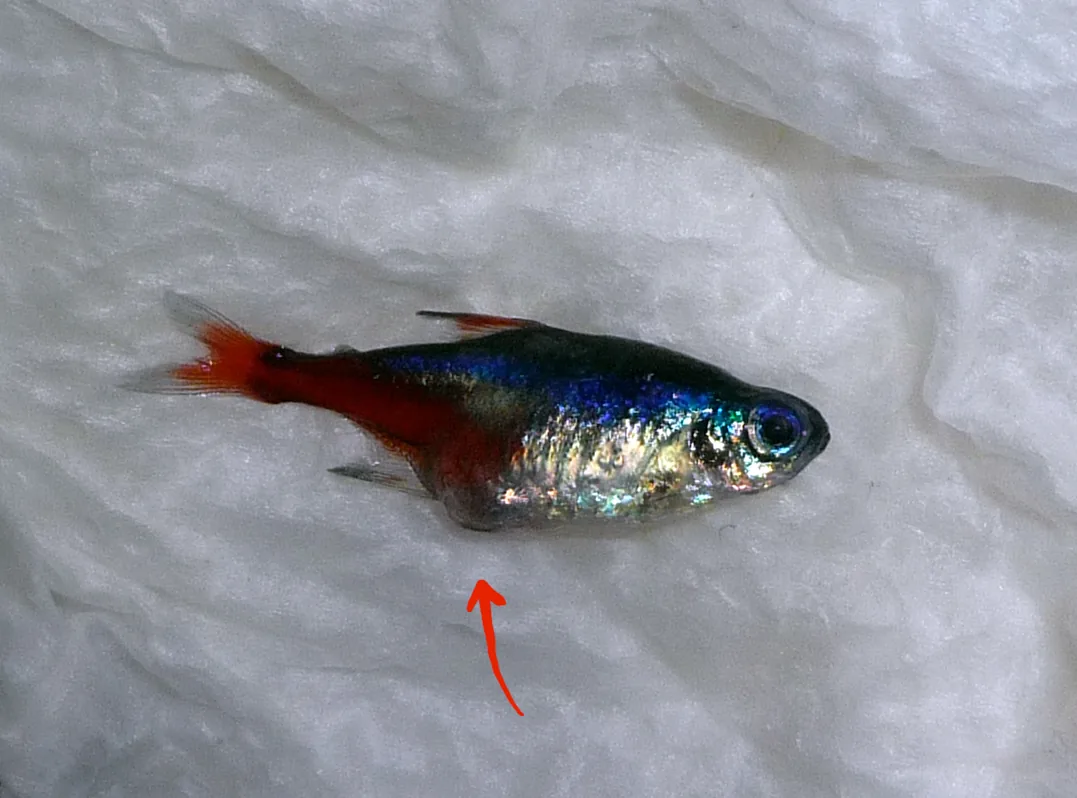
Dropsy in Fish: Swollen Belly, Pineconing Scales, and Warning Signs
Get same-day expert help for pineconing, fast swelling, appetite loss, or lethargy. Severe breathing distress or collapse should be treated as urgent.
Same-day concernRead guide ->
Image: Citron / Public domain / resized and cropped for layout
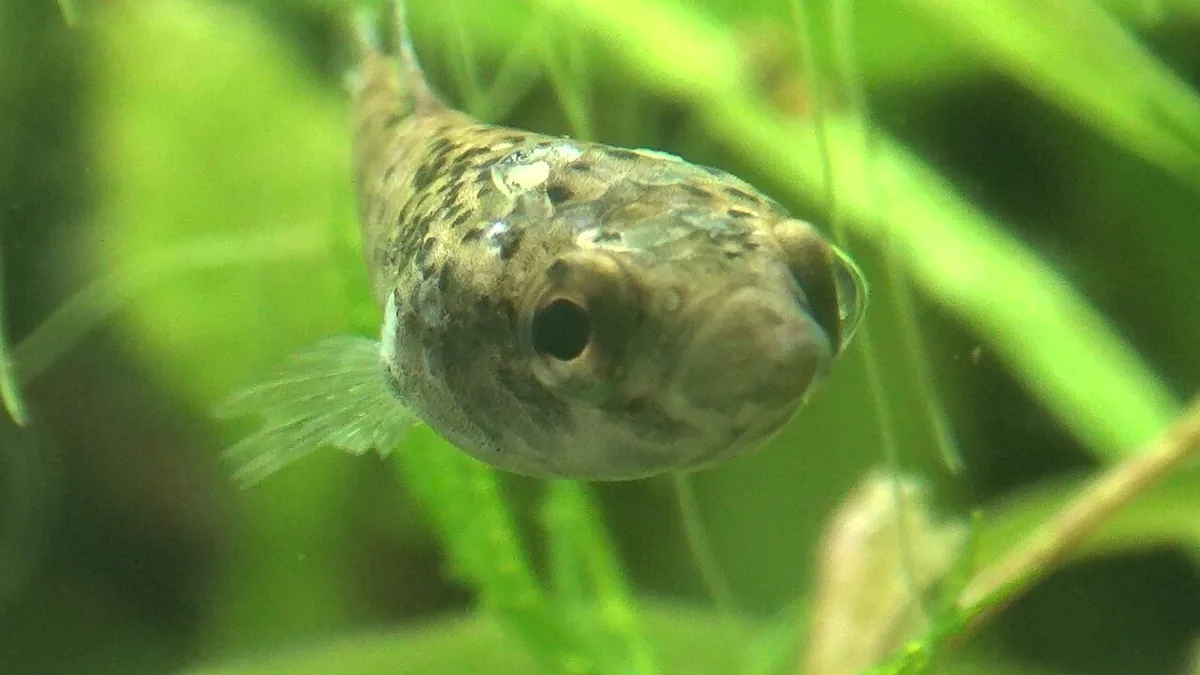
Priority guide
Columnaris in Aquarium Fish: Cottony Patches, Mouth Changes, and Next Steps
Review the same day for fast-spreading patches, mouth involvement, gill signs, lethargy, or multiple affected fish.
Same-day concernRead guide ->
Image: Ryan O. Hershey / CC BY 4.0 / resized and cropped for layout
Compare common lookalikes
Fish disease clues that are easy to confuse
Disease
Hallmark clue
Often confused with
First check
Distinct salt-like white grains on fins, body, or gills.
Velvet, fungus, air bubbles, debris
Compare grain size and test water before choosing treatment.
Fine gold or rust dusting plus fast breathing.
Ich, ammonia stress, gill flukes
Use angled light and treat breathing distress as urgent.
Gray-white patches, mouth erosion, saddle-like marks, or frayed fins.
Fungus, fin rot, injuries
Check spread speed, mouth/gill involvement, and water quality.
Gasping, red gills, lethargy, and multiple fish affected.
Gill flukes, velvet, low oxygen
Test ammonia and nitrite immediately.
Ragged or discolored fin edges that keep shrinking toward the body.
Nipping, clean tears, sharp decor, normal regrowth
Check progression, water quality, tank mates, and edge color.
No disease name yet?
Start with the sign you can actually see
Symptom guides compare several possible causes before you move to a disease-specific page.
Disease index
Browse fish diseases by likely pattern
Water quality emergencies
Disease guide
Ammonia Poisoning in Fish: Signs and First Checks
Gasping, red gills, and sudden lethargy can occur with ammonia stress, but also with other water or gill problems. Test ammonia and nitrite immediately and check aeration. A photo cannot confirm or rule out toxic water.
Key signs
- Gasping at surface, rapid breathing, or red and inflamed gills.
- Lethargy, clamped fins, darting, or staying near filter flow.
First check: Test ammonia and nitrite before relying on photos.
Emergency checkRead guide
Parasites and spots
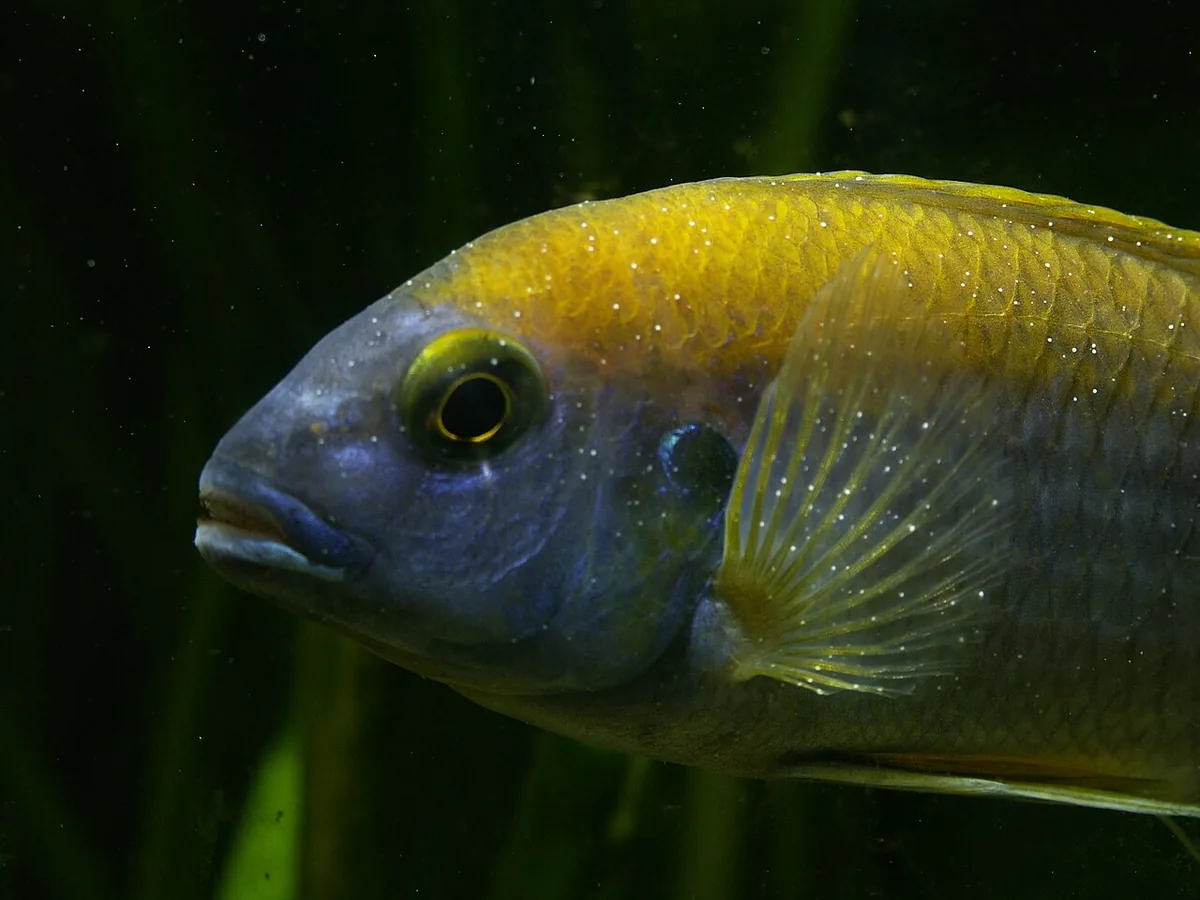
Image: Thomas Kaczmarczyk / Djpalme / Public domain / resized and cropped for layout
Disease guide
Ich in Fish (White Spot Disease): Signs and What to Do
Use this disease guide when distinct salt-grain spots plus rubbing, clamped fins, or faster breathing make ich a likely match. If the marks are fuzzy, dusty, flat, or still unclear, start with the broader white-spots symptom guide instead.
Key signs
- Distinct salt-like white grains on fins, body, or near gills.
- Flashing, rubbing, clamped fins, or sudden irritation.
First check: Compare salt-like grains with dust, fuzz, and bubbles.
Same-day concernRead guide
Image: Mydigitalife / CC0 / resized and cropped for layout
Disease guide
Velvet Disease in Fish: Dusty Coating, Fast Breathing, and Next Checks
Velvet may look like a fine gold, rust, or dusty coating and can affect the gills. It can progress quickly, so breathing signs deserve attention.
Key signs
- Fine gold, rust, tan, or dusty coating visible under angled light.
- Rapid breathing, surface hanging, or staying near high flow.
First check: Use angled light and check breathing immediately.
Emergency checkRead guide
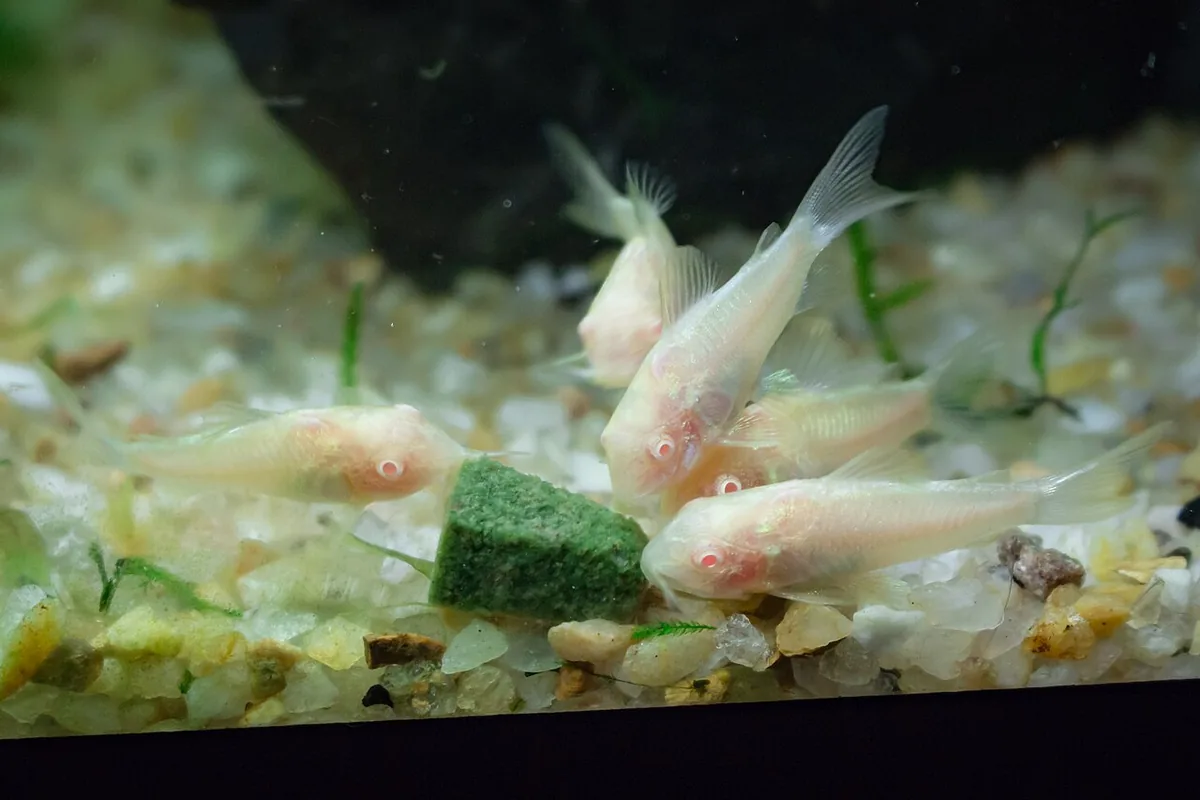
Image: Gabriel Resende Veiga / CC BY-SA 4.0 / resized and cropped for layout
Disease guide
Gill Flukes in Fish: Breathing Signs, Rubbing, and What to Check
Gill flukes are parasites that may irritate the gills and skin. Breathing changes, flashing, and excess mucus can overlap with other parasite or water-quality problems.
Key signs
- Rapid breathing or one gill held partly closed.
- Flashing, rubbing, mucus, or sudden dashing.
First check: Test ammonia/nitrite before assuming gill parasites.
Same-day concernRead guide
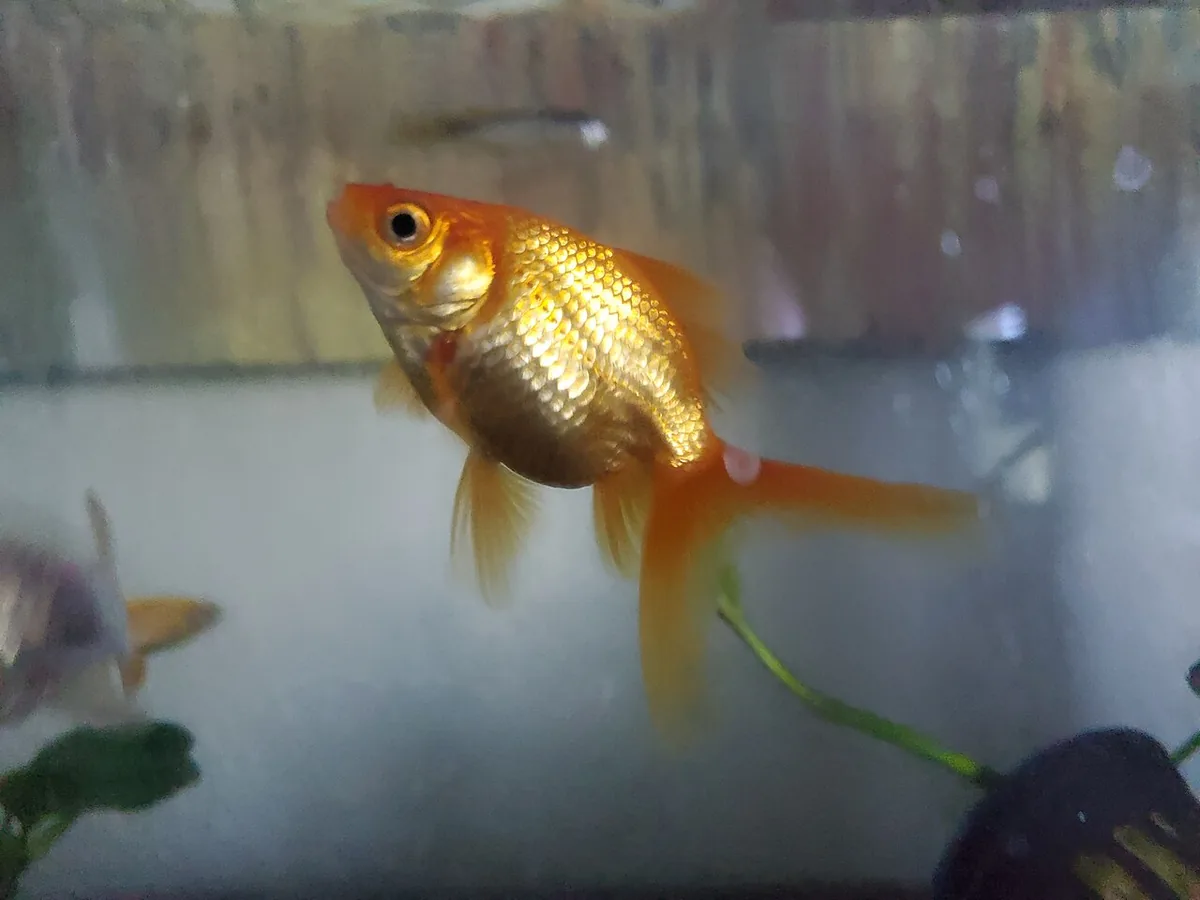
Image: Ry362 / CC BY-SA 3.0 / resized and cropped for layout
Disease guide
Anchor Worm in Fish: Visible Threads, Sores, and Next Steps
Anchor worm may look like thin threads or small worms attached to the fish, often with redness or sores at the attachment point.
Key signs
- Thin thread-like projection attached to skin, fins, or body.
- Redness, swelling, ulcer, or sore at attachment point.
First check: Confirm a true attachment point and check for sores.
Same-day concernRead guide
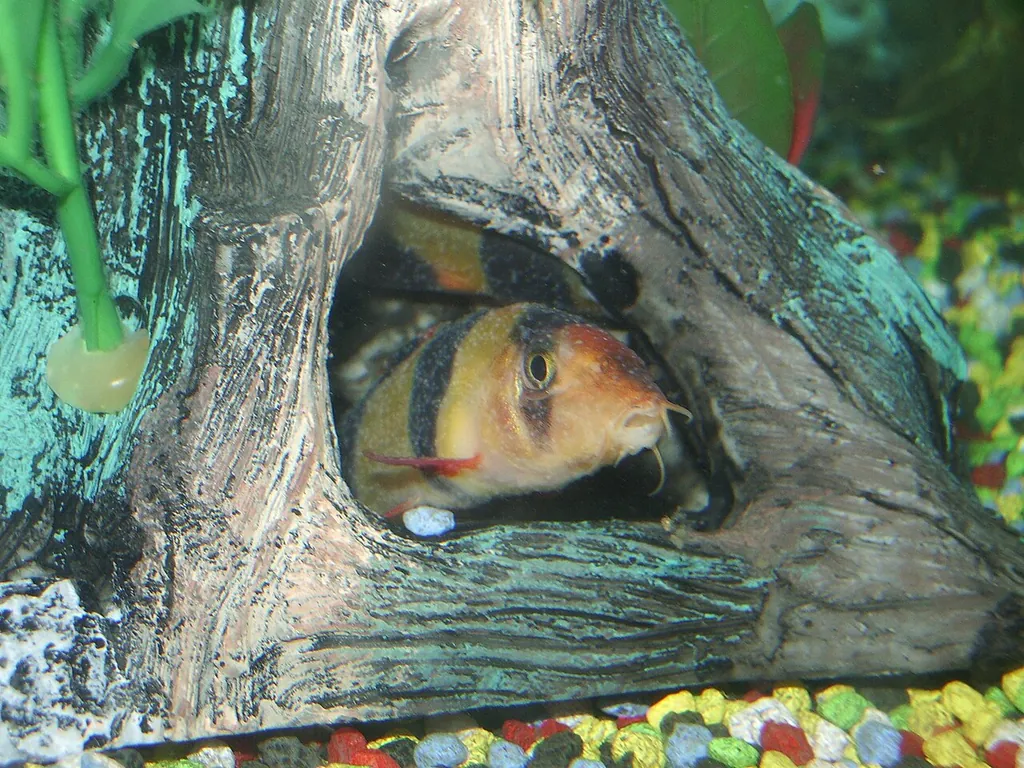
Image: ML5 / Public domain / resized and cropped for layout
Disease guide
Parasites in Aquarium Fish: Rubbing, Spots, Threads, and Next Steps
Parasites can be external or internal and may show through spots, flashing, mucus, breathing changes, weight loss, or visible attachments.
Key signs
- Flashing, rubbing, mucus, white spots, dusty coating, or visible threads.
- Rapid breathing or gasping when gills are irritated.
First check: Separate parasite signs from water irritation.
Same-day concernRead guide
Bacterial and tissue disease
Image: Ryan O. Hershey / CC BY 4.0 / resized and cropped for layout
Disease guide
Columnaris in Aquarium Fish: Cottony Patches, Mouth Changes, and Next Steps
Columnaris is a bacterial condition that may show as pale patches, mouth erosion, saddle-like marks, or fin damage. It can resemble fungus in photos.
Key signs
- Gray-white patches on mouth, head, back, body, fins, or gills.
- Mouth erosion, saddle-like back lesion, or cottony-looking but flat tissue.
First check: Check mouth involvement, spread speed, breathing, and water.
Same-day concernRead guide
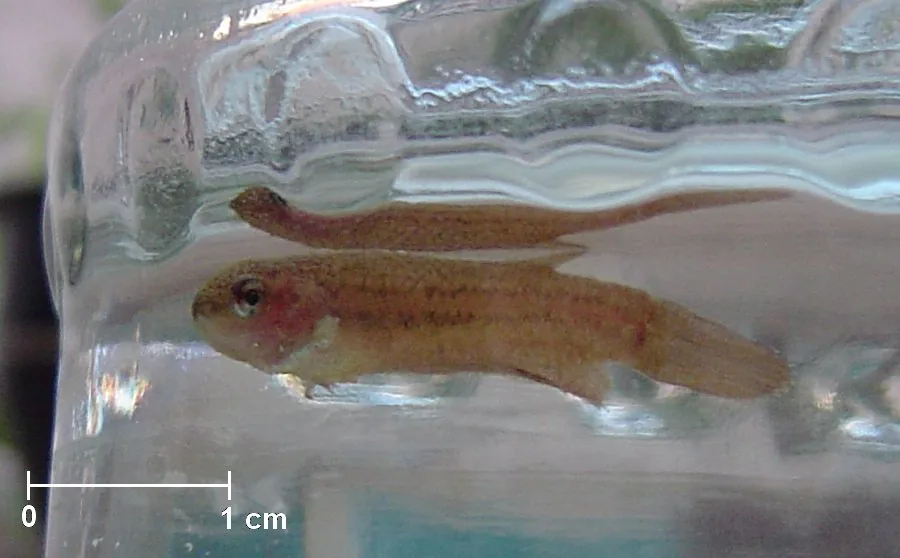
Image: Tze Sin, Tan / CC BY-SA 3.0 / resized and cropped for layout
Disease guide
Fungal Infection in Fish: Fuzzy White Growth and What to Check
Fungal growth often looks fuzzy, cotton-like, or thread-like on damaged tissue or eggs. It may follow injury, poor water quality, or another illness.
Key signs
- Fuzzy, cottony, or thread-like growth attached to tissue.
- Often starts on wounds, fin damage, eggs, or irritated skin.
First check: Find the wound or damaged tissue under the fuzz.
Same-day concernRead guide
Image: Ryan O. Hershey / CC BY 4.0 / resized and cropped for layout
Disease guide
Bacterial Infection in Fish: Sores, Red Streaks, and Next Checks
Bacterial infections can show as sores, red streaks, fin damage, swelling, cloudy eyes, or lethargy. These signs overlap with injury and poor water quality.
Key signs
- Red streaks, sores, ulcers, swelling, or fin deterioration.
- Lethargy, clamped fins, appetite loss, or hiding.
First check: Find wounds and test water before considering treatment.
Same-day concernRead guide
Eye and mouth problems
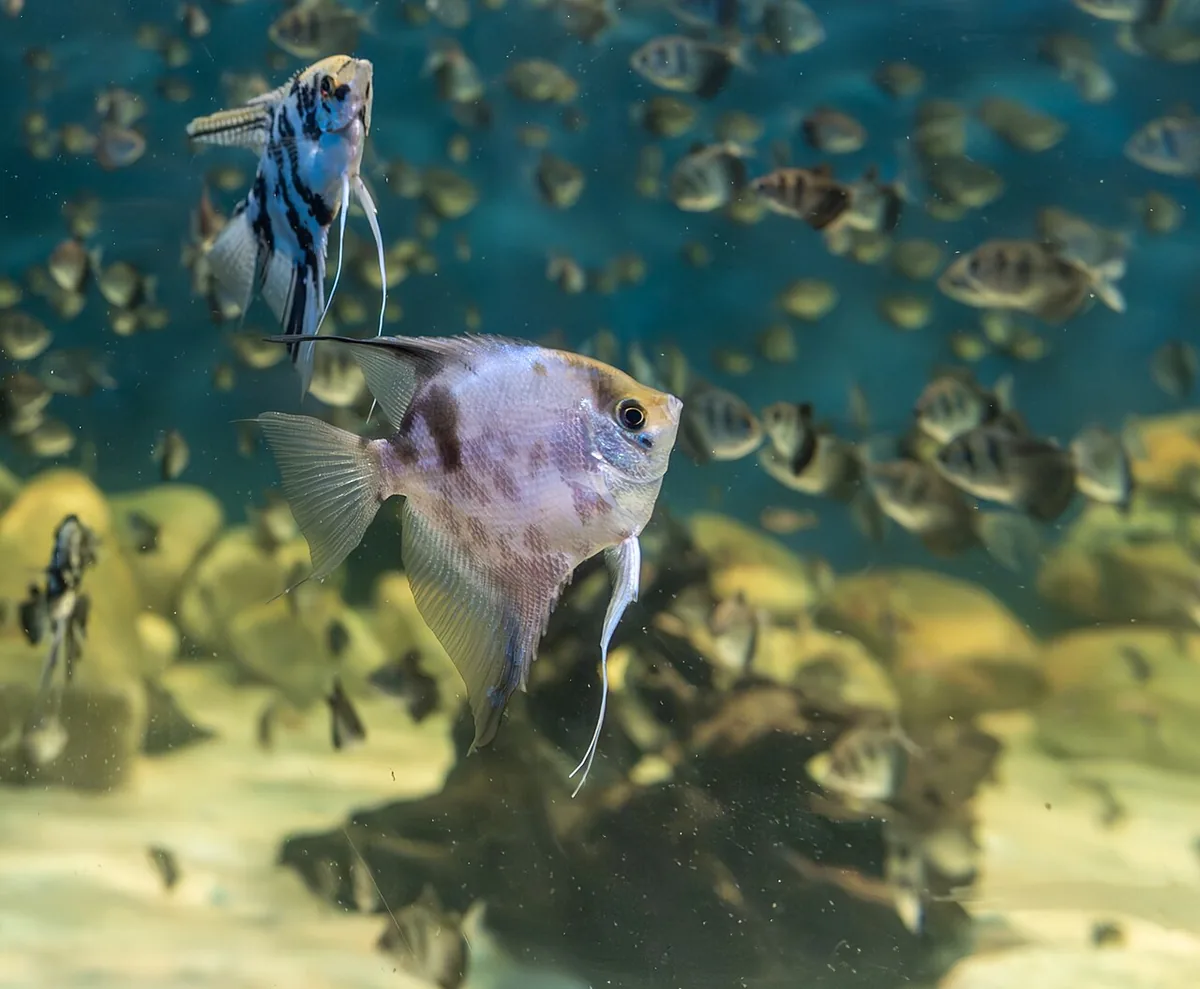
Image: Rjcastillo / CC BY 4.0 / resized and cropped for layout
Disease guide
Cloudy Eye in Fish: Causes, Checks, and Next Steps
Cloudy eye can be a symptom of injury, water stress, infection, or irritation. One cloudy eye often suggests trauma, while both eyes can point toward system-wide stress.
Key signs
- Milky, hazy, scratched, or filmed eye surface.
- One or both eyes may be affected.
First check: Check one eye vs both eyes and test water.
Monitor closelyRead guide
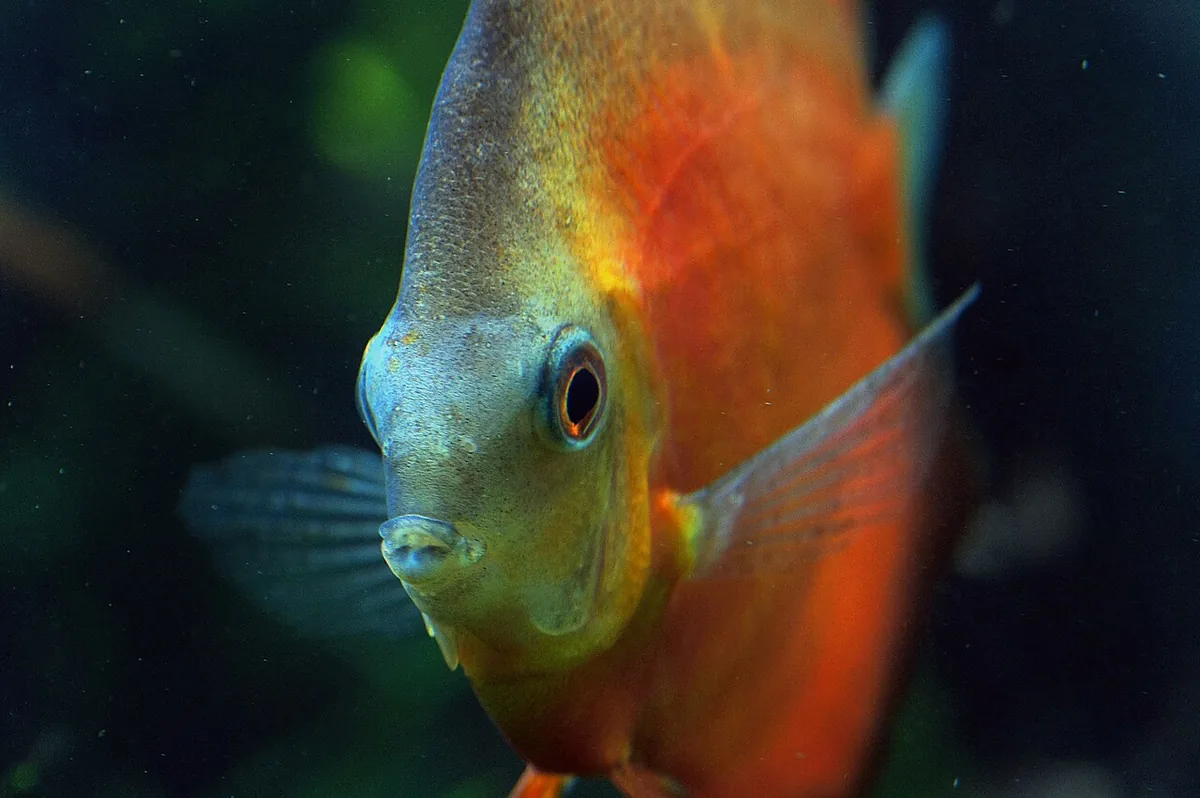
Image: Bernard Spragg. NZ / CC0 / resized and cropped for layout
Disease guide
Popeye in Aquarium Fish: Swollen Eyes, Causes, and Next Checks
Popeye describes one or both eyes protruding. It can follow injury, infection, gas supersaturation, or water-quality stress.
Key signs
- One or both eyes appear enlarged or protruding.
- Cloudiness, redness, or swelling may surround the eye.
First check: Check whether one eye or both eyes are swollen.
Same-day concernRead guide
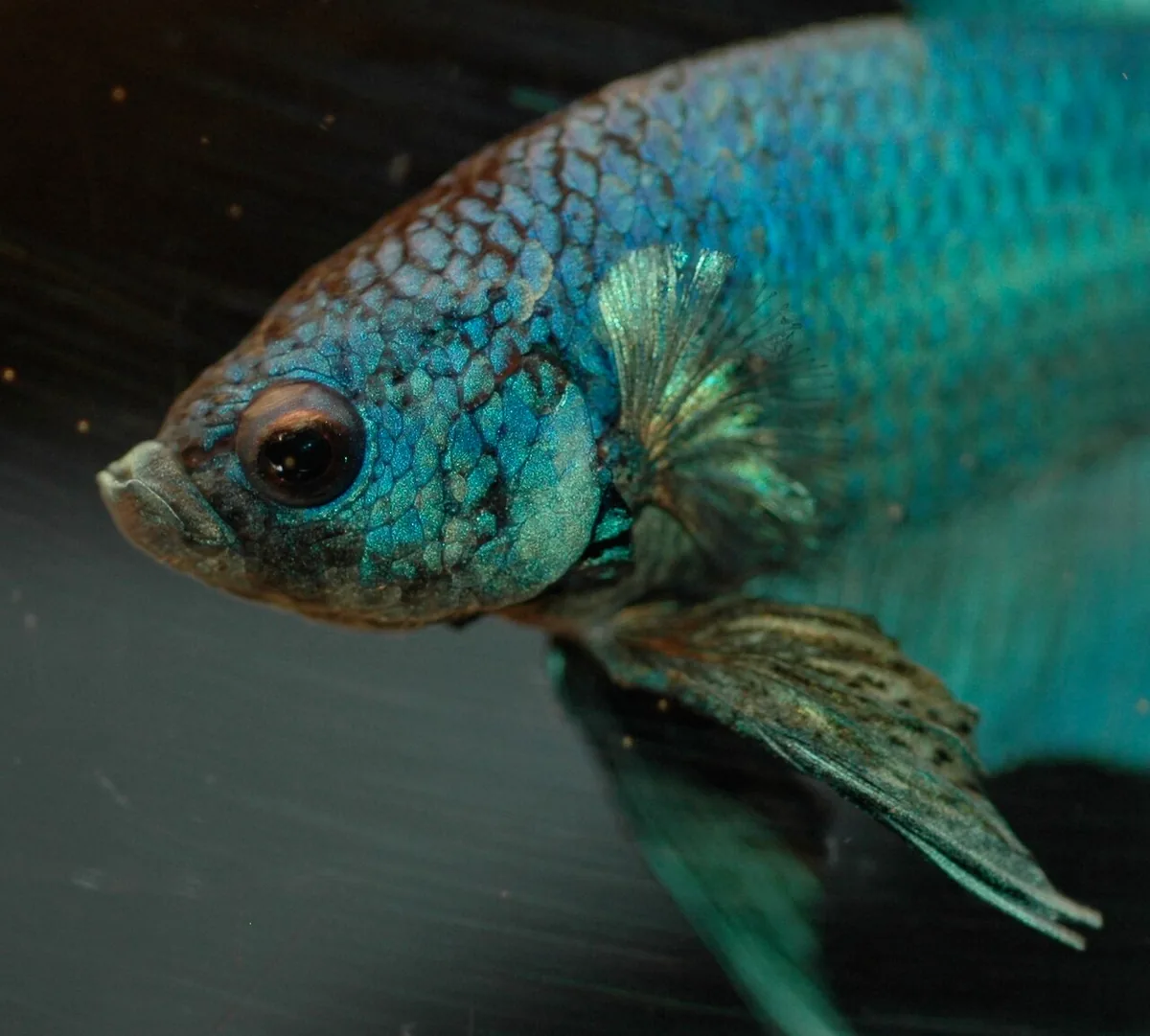
Image: Daniella Vereeken / CC BY 2.0 / resized and cropped for layout
Disease guide
Mouth Rot in Fish: White Mouth or Injury?
A white or damaged fish mouth does not confirm mouth rot. Compare injury, columnaris-like changes, and fungal growth, then check feeding and breathing. Spreading tissue loss or difficulty eating needs prompt expert help.
Key signs
- White, gray, fuzzy, swollen, or eroded mouth tissue.
- Spitting food, refusing food, or difficulty feeding.
First check: Check eating ability and compare with columnaris.
Same-day concernRead guide
Fins and tissue damage
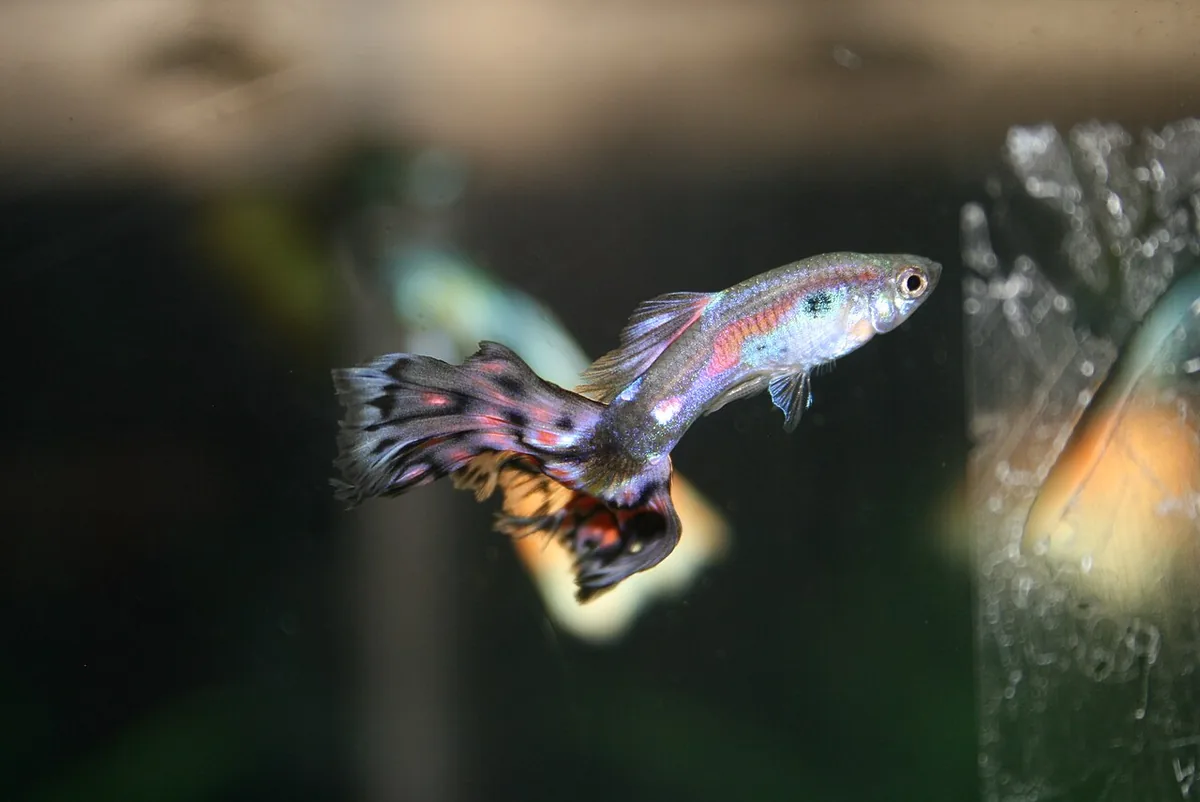
Image: Andrew Sheedy / CC BY-SA 4.0 / resized and cropped for layout
Disease guide
Fin Rot in Bettas and Other Fish: Signs and First Checks
Fin rot is a possible match when ragged or discolored fin edges keep shrinking toward the body. A single clean split after chasing or contact with decor fits the torn-fins symptom guide more closely.
Key signs
- Ragged, uneven, shrinking, pale, red, or dark fin edges.
- Fin clamping, hiding, lower appetite, or reduced activity.
First check: Check water, nipping, and whether fin loss is spreading.
Monitor closelyRead guide
Swelling and systemic illness
Image: Citron / Public domain / resized and cropped for layout
Disease guide
Dropsy in Fish: Swollen Belly, Pineconing Scales, and Warning Signs
Dropsy describes swelling and fluid imbalance rather than one single disease. Pineconing scales, severe bloating, and lethargy can be serious warning signs.
Key signs
- Raised scales that look pinecone-like from above.
- Sudden or severe body or belly swelling.
First check: Look from above for pineconing scales.
Same-day concernRead guide
Image: Bernard Spragg. NZ / CC0 / resized and cropped for layout
Disease guide
Hole-in-the-Head Disease in Fish: Pits, Erosion, and Next Steps
Hole-in-the-head is often discussed when fish develop pits or erosion around the head and lateral line. It may involve multiple stressors rather than one simple cause.
Key signs
- Pits or erosions around the head, face, or lateral line.
- Loss of condition, faded color, or reduced appetite.
First check: Review water, diet, stress, and lesion progression.
Monitor closelyRead guide
Swimming and buoyancy
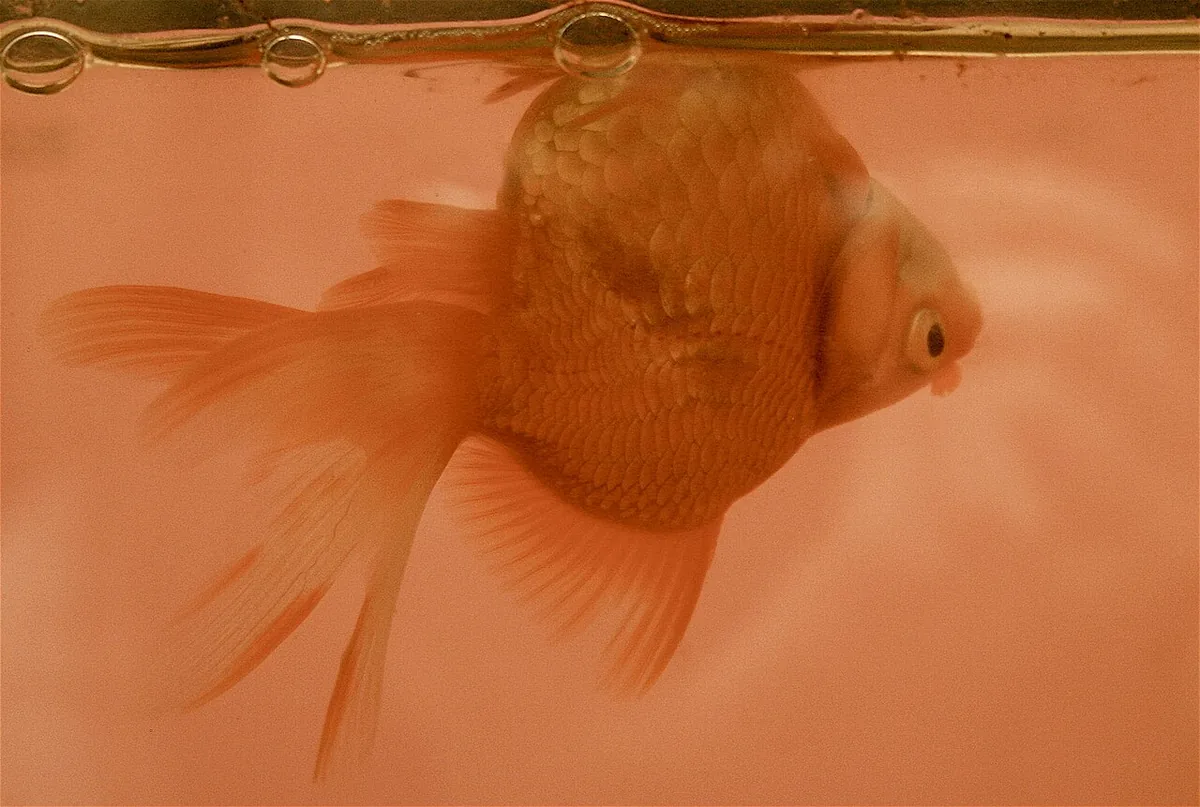
Image: Humanfeather / Michelle Jo / CC BY 3.0 / resized and cropped for layout
Disease guide
Swim Bladder Disorders in Fish: Betta Signs and Checks
The swim bladder helps fish maintain buoyancy. Floating, sinking, or rolling can suggest a buoyancy problem, but does not identify its cause. A betta resting on the bottom is not, by itself, evidence of a swim bladder disorder.
Key signs
- Floating, sinking, rolling, nose-up, tail-up, or sideways posture.
- Excessive fin effort to stay level.
First check: Check water, feeding history, swelling, and posture.
Monitor closelyRead guide
Other aquarium health problems
Fish Disease Identifier
Still not sure what your fish has?
Scan a photo in Fish Disease Identifier and get likely disease matches, possible causes, and next steps to consider.
Educational only. Not veterinary advice.