


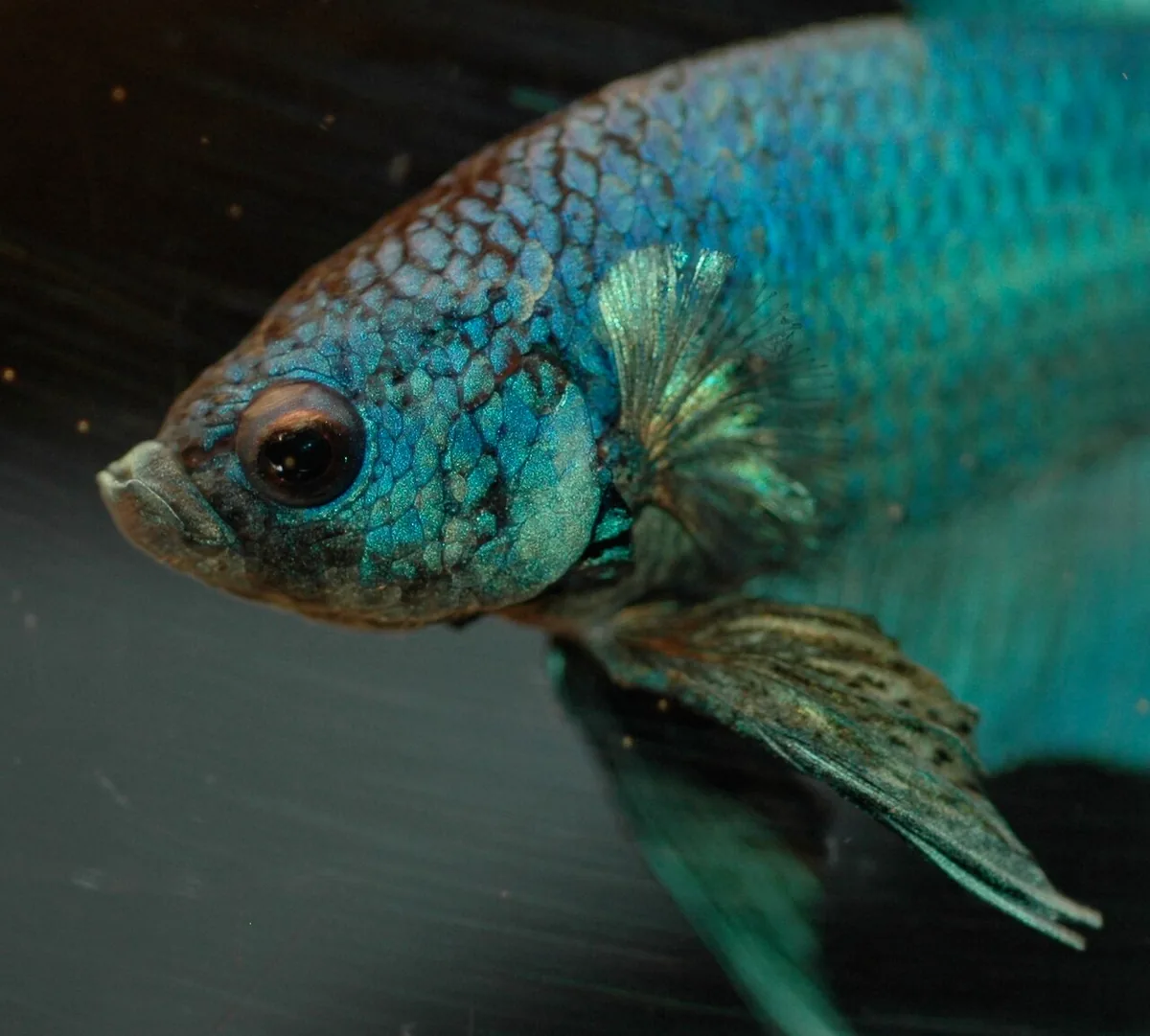
Common signs
- White, gray, fuzzy, swollen, or eroded tissue around the mouth.
- Difficulty eating, spitting food, or hanging near the surface.
- Frayed fins, pale patches, or lethargy may appear with wider illness.
Most useful clues
- White, gray, fuzzy, swollen, or eroded mouth tissue.
- Spitting food, refusing food, or difficulty feeding.
- May appear with frayed fins, pale patches, or rapid breathing.
Same-day concern
What to check first
Review quickly if the fish cannot eat, breathing is affected, tissue loss spreads, or the mouth looks cottony and fast-moving.
- Test ammonia, nitrite, nitrate, temperature, and pH, because water stress can mimic or worsen many disease signs.
- Watch whether the fish can still eat and breathe normally.
- Compare with columnaris if mouth changes spread quickly or look cottony.
Possible causes
- Bacterial infection after injury, fighting, or poor water quality.
- Columnaris-like bacterial disease affecting mouth tissue.
- Abrasive surfaces, aggressive tank mates, or stress from transport.
How to tell it apart
- Mouth erosion plus pale body patches, saddle-like marks, or fast breathing.
- Single mouth scrape after injury may be more local.
- Loose fluffy strands on damaged mouth tissue.
- Flat fast-spreading mouth erosion points toward bacterial comparison.
What to check next
- Test ammonia, nitrite, nitrate, temperature, and pH, because water stress can mimic or worsen many disease signs.
- Watch whether the fish can still eat and breathe normally.
- Compare with columnaris if mouth changes spread quickly or look cottony.
Care steps to consider
- Correct water conditions and reduce stress right away.
- Consider isolation if the fish cannot compete for food or is being attacked.
- Ask an experienced professional about appropriate treatment if erosion spreads.
Photo checklist
- Take a close photo of mouth edges and lips.
- Record whether the fish can pick up and swallow food.
- Include body patches, fins, and breathing posture.
Common mistakes to avoid
- Calling mouth changes fungus without comparing columnaris-like signs.
- Waiting too long when feeding or breathing is affected.
Species and tank notes
- Newly shipped fish and fish in aggressive tanks may injure mouth tissue.
- Bottom feeders can abrade mouth tissue on rough surfaces or unsuitable substrate.
When to get expert help
- Mouth damage can become urgent if the fish stops eating or breathing is affected.
- Fast tissue loss around the mouth needs careful help.
Prevention tips
- Reduce aggression, avoid overcrowding, and maintain stable water.
- Quarantine stressed or newly shipped fish when possible.
Related guides
Related symptoms
FAQ
Frequently asked questions
01Is mouth rot the same as columnaris?+
Mouth rot can be associated with columnaris-like bacterial problems, but visual signs alone may not confirm the exact cause.
02Why is eating behavior important?+
Mouth damage can stop a fish from feeding, so appetite and food handling help judge urgency.
03What should I check first for Mouth Rot in Fish?+
Start with this check: Check eating ability and compare with columnaris. Then compare the visible signs with behavior and tank history before relying on a photo match.
04When is Mouth Rot in Fish urgent?+
Review quickly if the fish cannot eat, breathing is affected, tissue loss spreads, or the mouth looks cottony and fast-moving.
05What can look similar to Mouth Rot in Fish?+
Compare it with Columnaris, Fungal growth. The key is to match the full pattern: body area, behavior, breathing, spread speed, and water-test context.
06What photos help review Mouth Rot in Fish?+
Take a close photo of mouth edges and lips. Also check record whether the fish can pick up and swallow food.
07What common mistake should I avoid with Mouth Rot in Fish?+
Calling mouth changes fungus without comparing columnaris-like signs. Also check waiting too long when feeding or breathing is affected.
Fish Disease Identifier provides educational guidance and possible matches from photos. Results are not veterinary advice and may be wrong. For severe, worsening, or unclear symptoms, consult an aquatic veterinarian or experienced aquarium professional.
Review notes
Sources and limits
This guide is educational and helps narrow possible matches. It is not a veterinary diagnosis, and urgent breathing, swelling, collapse, or tank-wide distress should not wait for photo confirmation.
Read more about safety limits and educational use on the About page.
Last content review: 2026-07-01
Fish Disease Identifier
Compare visible mouth changes in the app
Use a clear fish photo in the mobile app to explore possible matches and next checks. Do not delay expert help if tissue loss spreads or feeding or breathing is affected.
Educational only. Not veterinary advice.