

Photo evidence and limits
Compare the texture of white marks
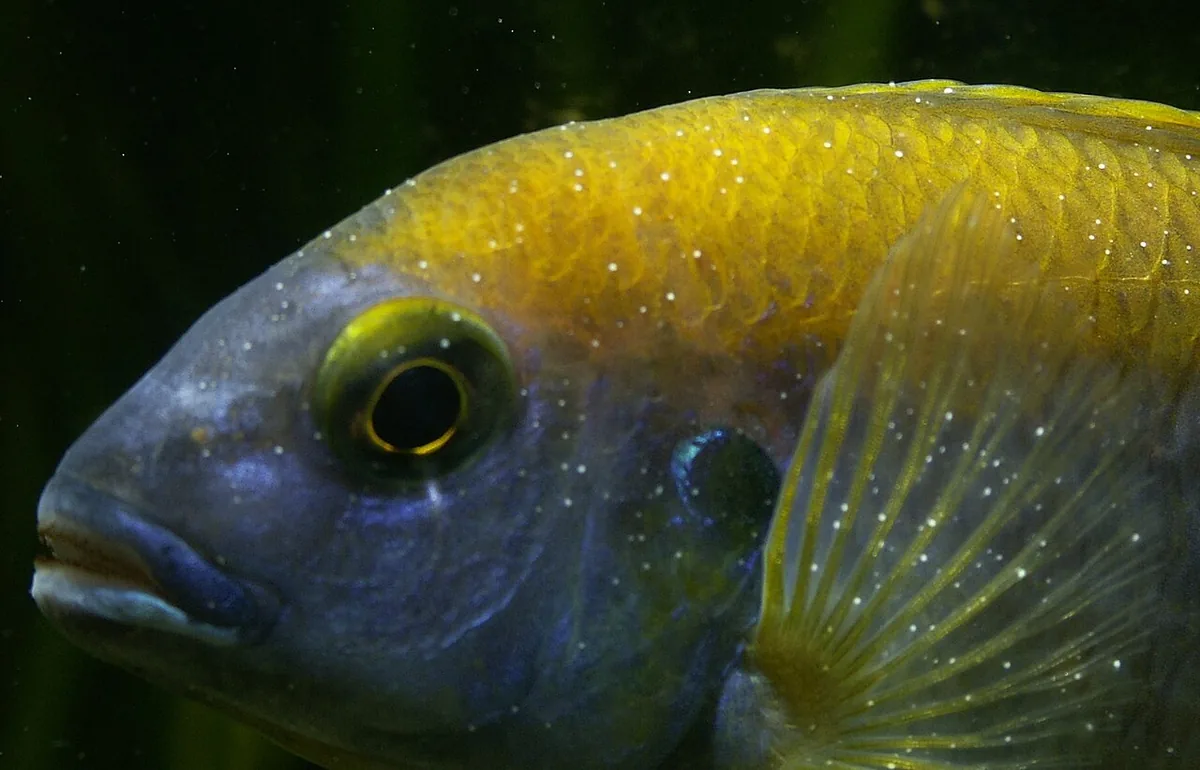
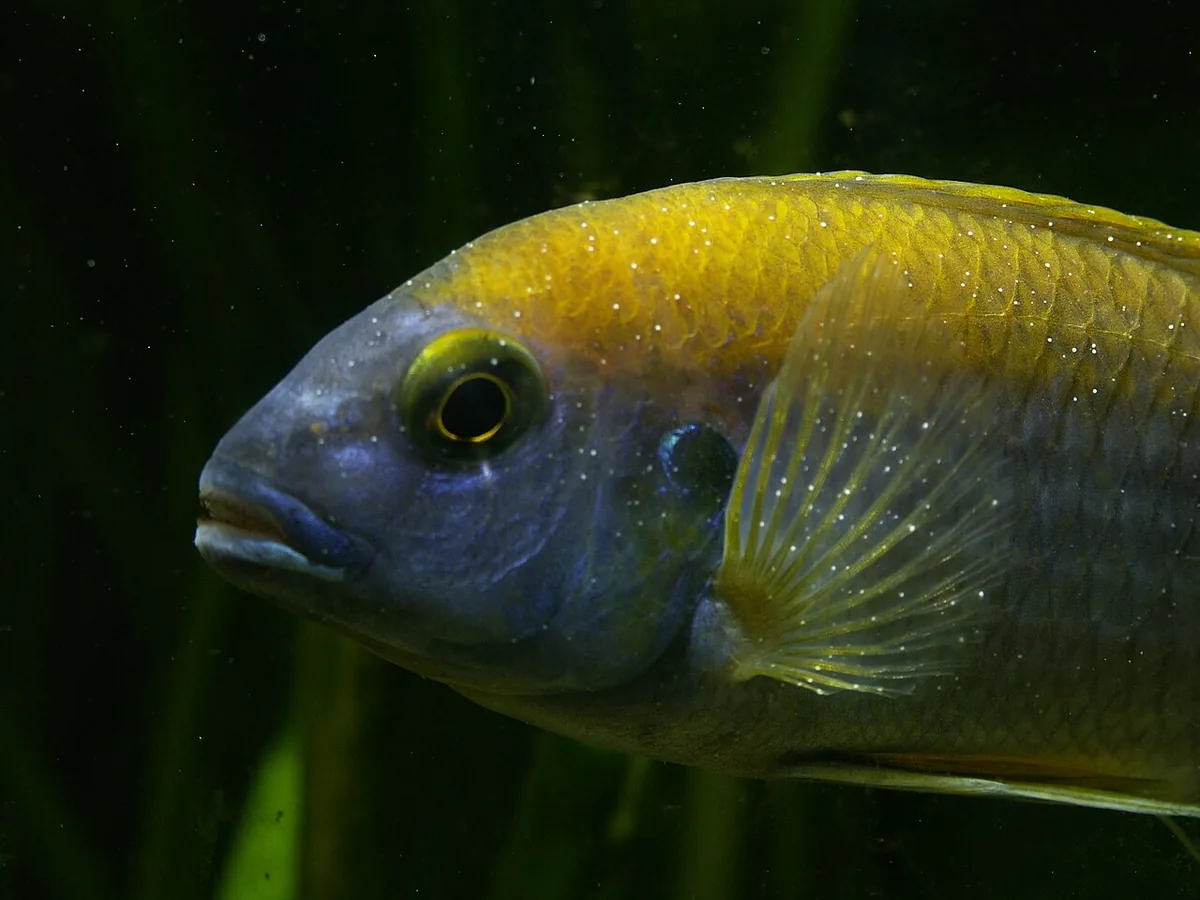
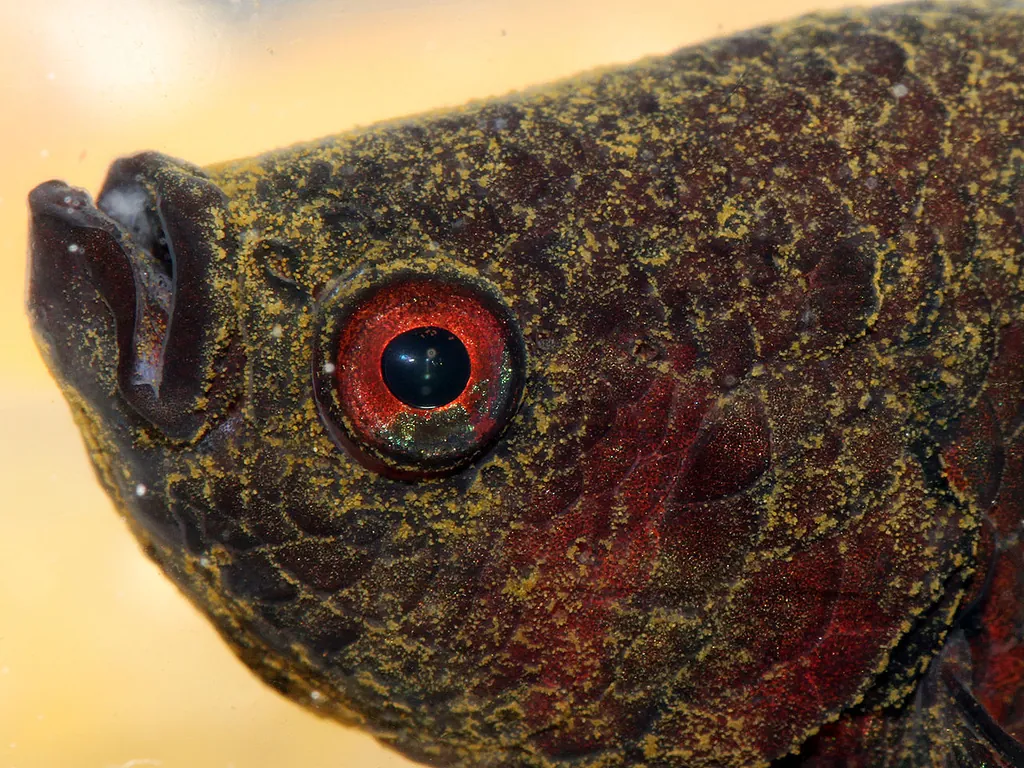
These are different fish photographed under different lighting. The source pages describe the pictured patterns, but the images cannot diagnose your fish. No pictured example represents every flat patch, wound, or bubble: compare those directly on your fish rather than treating an absent photo as proof. Check breathing, rubbing, water readings, and change over time; urgent breathing signs should not wait for a photo comparison.
Separate grains
Small, distinct white points are visible on the head and fin. The source labels this image as white spot disease; similar-looking marks still need the broader checks on this page.
Image: Thomas Kaczmarczyk / Djpalme / Public domain / resized and cropped for layout
Fine dusting
The source describes a velvet-like rusty coating across skin and gills. This is a different pattern from isolated grains, but lighting and species can alter its appearance.
Image: Mydigitalife / CC0 / resized and cropped for layout
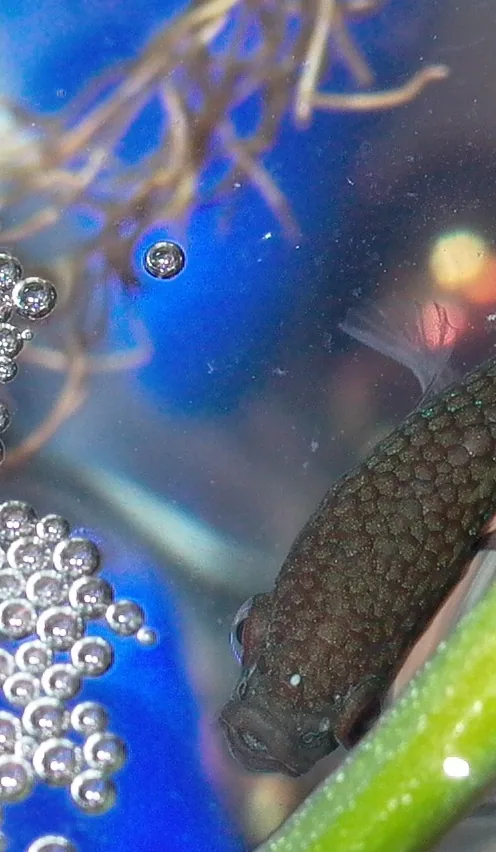
One point beside air bubbles
The source identifies the point on this fish's forehead as ich. The larger round bubbles at the side of the photo are in the water, showing why location and persistence matter when comparing pale specks.
Image: Helian / Public domain / resized and cropped for layout
What to look for
- Salt-like grains suggest ich more than fuzzy fungus.
- Fine dusting or sheen may point toward velvet-like irritation.
- Cottony white patches often need comparison with fungal or bacterial guides.
Most useful clues
- Distinct salt-like grains on fins, body, or near gills.
- Rubbing, flashing, clamped fins, or hiding.
- Fine dusting, fuzzy patches, or flat white marks may point away from classic ich.
Same-day concern
What to check first
Review the same day, especially if spots spread, multiple fish are affected, or breathing changes. Surface gasping or collapse is urgent.
- Test ammonia, nitrite, nitrate, temperature, and pH.
- Use angled light to compare grains, dusting, fuzz, flat patches, and bubbles.
- Review new fish, plants, decor, or shared equipment from the last 1-3 weeks.
Possible causes
- Ich / white spot disease.
- Velvet disease, fungal infection, columnaris, injuries, or air bubbles.
- Stress after new additions or poor water quality.
How to tell it apart
- Salt-grain dots.
- Rubbing or flashing.
- Recent new fish or temperature swings.
- Patch is fuzzy, flat, or vanishes like bubbles after movement.
- Fine gold or rust dusting.
- Rapid breathing.
- Hiding near flow.
- Large isolated cottony tufts or one wound-based patch.
- Cottony texture, mouth involvement, fin damage, or spreading patch.
- Many separate salt-like grains across multiple fish.
What to check next
- Test ammonia, nitrite, nitrate, temperature, and pH, because water stress can mimic or worsen many disease signs.
- Use side lighting to compare grains, dust, fuzz, and flat patches.
- Check for rubbing, clamped fins, and rapid breathing.
Next steps to consider
- Scan a clear side photo and compare likely disease matches.
- Avoid choosing treatment based only on the word white.
- Seek help quickly if spots come with gasping or fast decline.
Photo checklist
- Take a sharp side photo with low glare.
- Show whether marks are grains, dust, fuzz, or flat patches.
- Include gills and fins plus notes on breathing and rubbing.
Common mistakes to avoid
- Assuming every white spot is ich.
- Choosing medication before checking ammonia, nitrite, oxygen, and species sensitivity.
Species and tank notes
- Pale, white, or metallic fish may hide early white spots, so behavior matters.
- Scaleless or sensitive fish may react poorly to some products, so labels and expert guidance matter.
When it may be urgent
- White spots plus breathing distress can be urgent.
- Multiple fish affected after a new addition should be reviewed quickly.
Related guides
Related symptoms
FAQ
Frequently asked questions
01Can white spots on fish fins be something other than ich?+
Yes. Compare separate grains with a damaged or pale fin edge, cottony growth, or attached bubbles. Fin-only location does not exclude ich, which can affect fins as well as skin and gills. Check for spread, rubbing, and breathing changes.
02Are white spots on fish always ich?+
No. Fuzzy growth, injured tissue, bacterial lesions, or bubbles can resemble white spots. Shape and behavior guide the comparison, but a single photo cannot confirm or rule out ich. Expert examination may be needed.
03What should I check first for White Spots on Fish?+
Start with this check: Compare grains, dust, fuzz, and bubbles under angled light. Then compare the visible signs with behavior and tank history before relying on a photo match.
04When is White Spots on Fish urgent?+
Review the same day, especially if spots spread, multiple fish are affected, or breathing changes. Surface gasping or collapse is urgent.
05What can look similar to White Spots on Fish?+
Compare it with Ich / white spot disease, Velvet or gill parasites, Fungus or columnaris-like lesion. The key is to match the full pattern: body area, behavior, breathing, spread speed, and water-test context.
06What photos help review White Spots on Fish?+
Take a sharp side photo with low glare. Also check show whether marks are grains, dust, fuzz, or flat patches.
07What common mistake should I avoid with White Spots on Fish?+
Assuming every white spot is ich. Also check choosing medication before checking ammonia, nitrite, oxygen, and species sensitivity.
Fish Disease Identifier provides educational guidance and possible matches from photos. Results are not veterinary advice and may be wrong. For severe, worsening, or unclear symptoms, consult an aquatic veterinarian or experienced aquarium professional.
Review notes
Sources and limits
This guide is educational and helps narrow possible matches. It is not a veterinary diagnosis, and urgent breathing, swelling, collapse, or tank-wide distress should not wait for photo confirmation.
Read more about safety limits and educational use on the About page.
Last content review: 2026-09-25
Fish Disease Identifier
Still not sure what your fish has?
Scan a photo in Fish Disease Identifier and get likely disease matches, possible causes, and next steps to consider.
Educational only. Not veterinary advice.