

01
Start with one clear photo
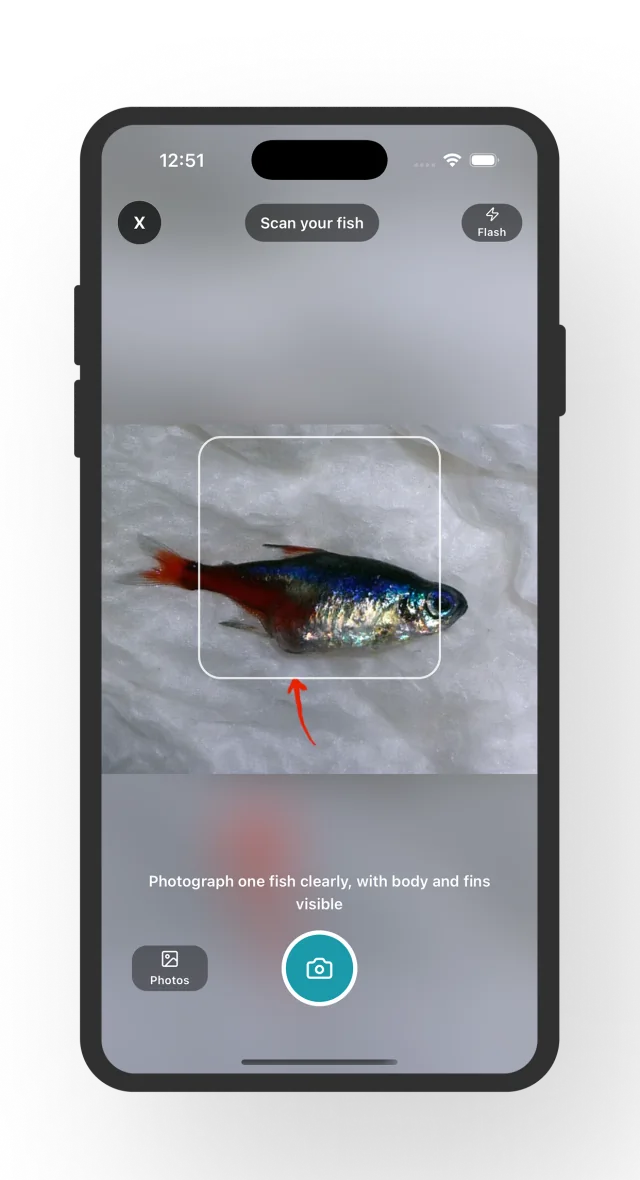
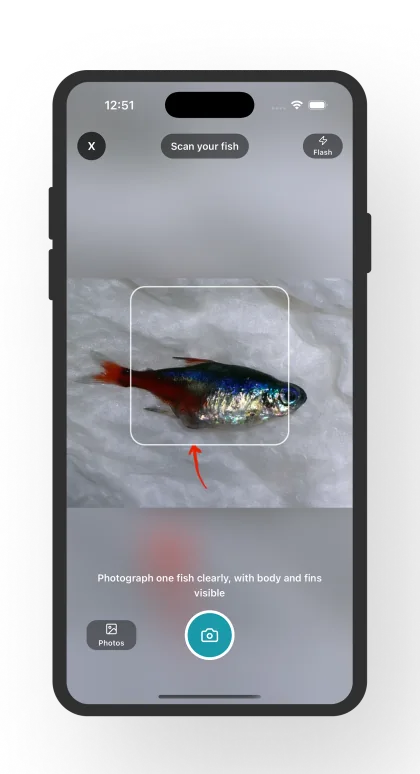
Use a photo of your fish as the first input when you notice spots, torn fins, swelling, unusual swimming, or color changes.
Fish Disease Identifier app
Take one clear photo in Fish Disease Identifier and get likely disease matches, possible causes, and practical next steps when something looks wrong in your aquarium.
Educational guidance only. Not veterinary advice.
Not sure what is wrong with your fish? Start with the symptom checklistBuilt for aquarium owners using Fish Disease Identifier to compare sick fish photos, visible symptoms, and saved scans.
Why Download It
Start with a photo, compare likely matches, and know which checks matter next.
Use a photo of your fish as the first input when you notice spots, torn fins, swelling, unusual swimming, or color changes.
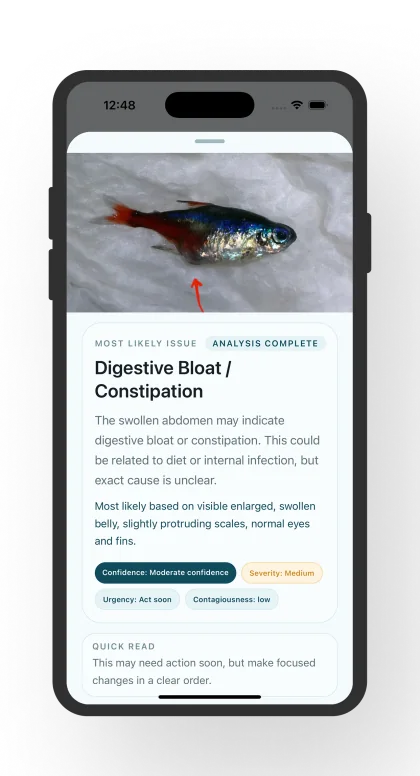
See possible issues such as ich, fin rot, swim bladder problems, fungal infections, or water-quality stress.
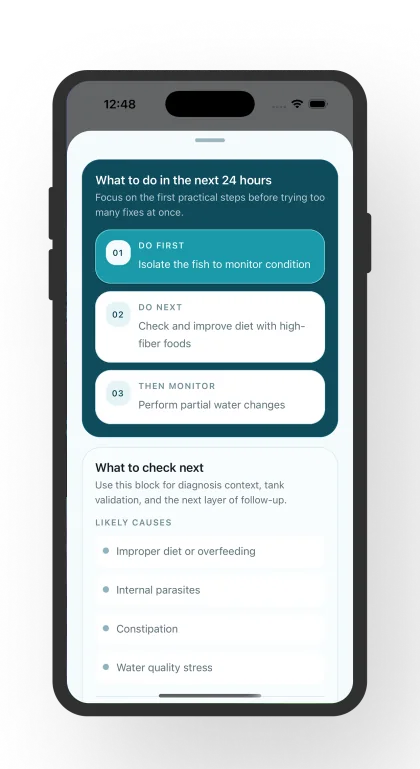
Get practical next checks like water parameters, visible symptoms, urgency signs, and care steps to consider.
After the scan
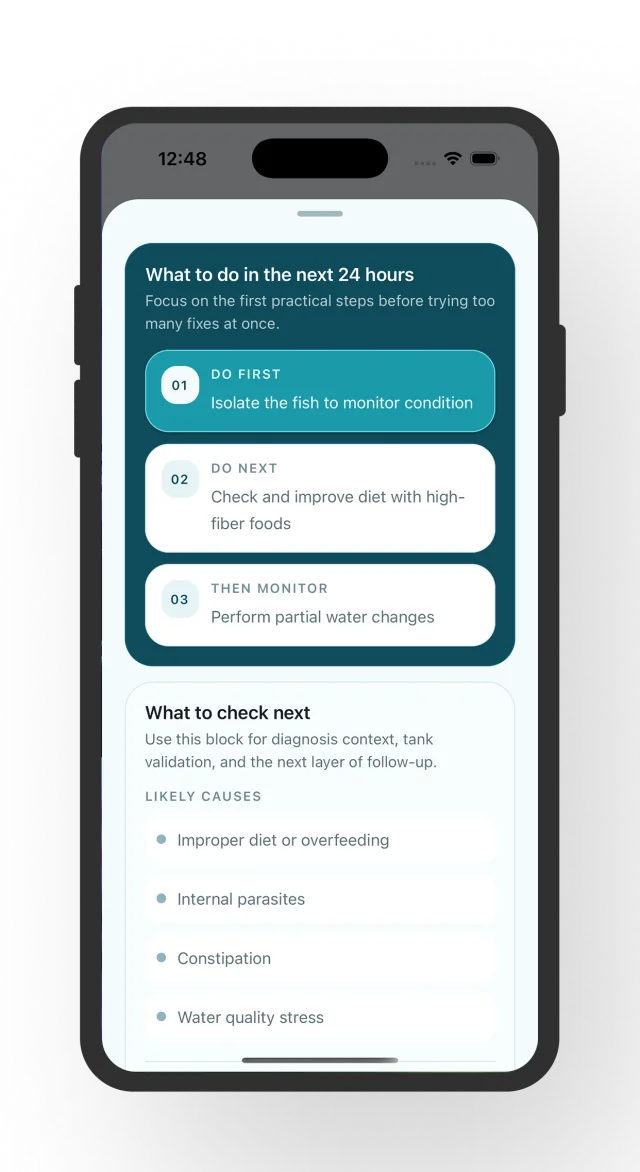
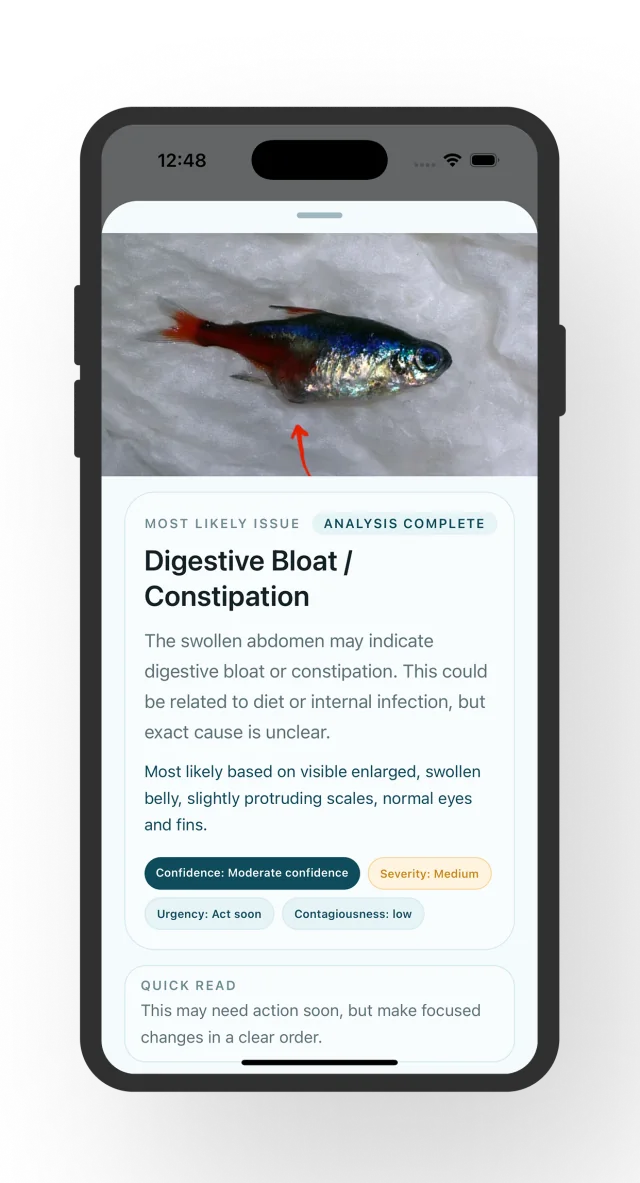
The app turns one fish photo into a practical result you can compare against visible symptoms and tank conditions.
Likely issue
Compare the photo against common problems such as ich, fin rot, bloat, swim bladder issues, parasites, or water-quality stress.
Reasoning
See which visible clues matter most, including spots, fins, swelling, eye changes, breathing, posture, and swimming behavior.
Priority
Separate mild changes from warning signs such as gasping, pineconing scales, open sores, collapse, or fast decline.
Next checks
Get practical checks for water parameters, recent changes, new fish, food, tank mates, and whether expert help is needed.
Common Fish Disease Guides
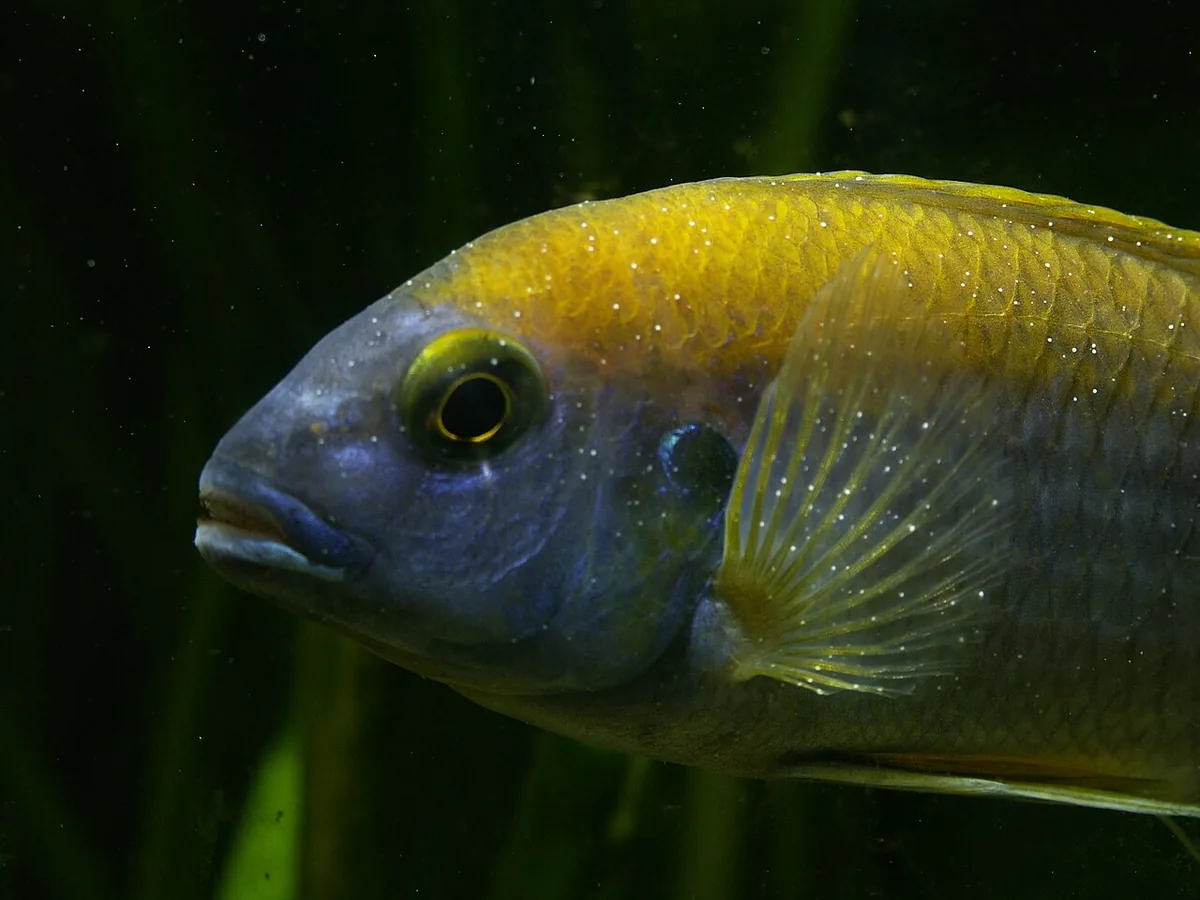
Image: Thomas Kaczmarczyk / Djpalme / Public domain / resized and cropped for layout
Disease guide
Use this disease guide when distinct salt-grain spots plus rubbing, clamped fins, or faster breathing make ich a likely match. If the marks are fuzzy, dusty, flat, or still unclear, start with the broader white-spots symptom guide instead.
Key signs
First check: Compare salt-like grains with dust, fuzz, and bubbles.
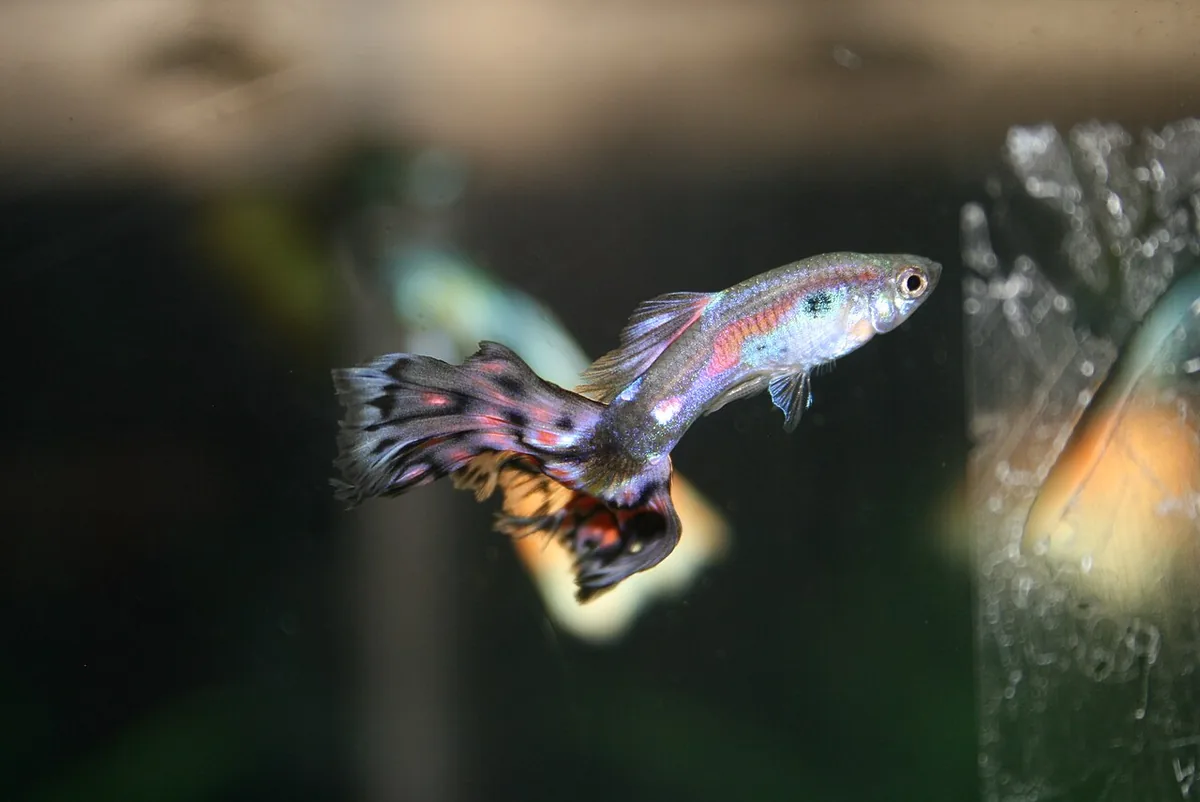
Image: Andrew Sheedy / CC BY-SA 4.0 / resized and cropped for layout
Disease guide
Fin rot is a possible match when ragged or discolored fin edges keep shrinking toward the body. A single clean split after chasing or contact with decor fits the torn-fins symptom guide more closely.
Key signs
First check: Check water, nipping, and whether fin loss is spreading.
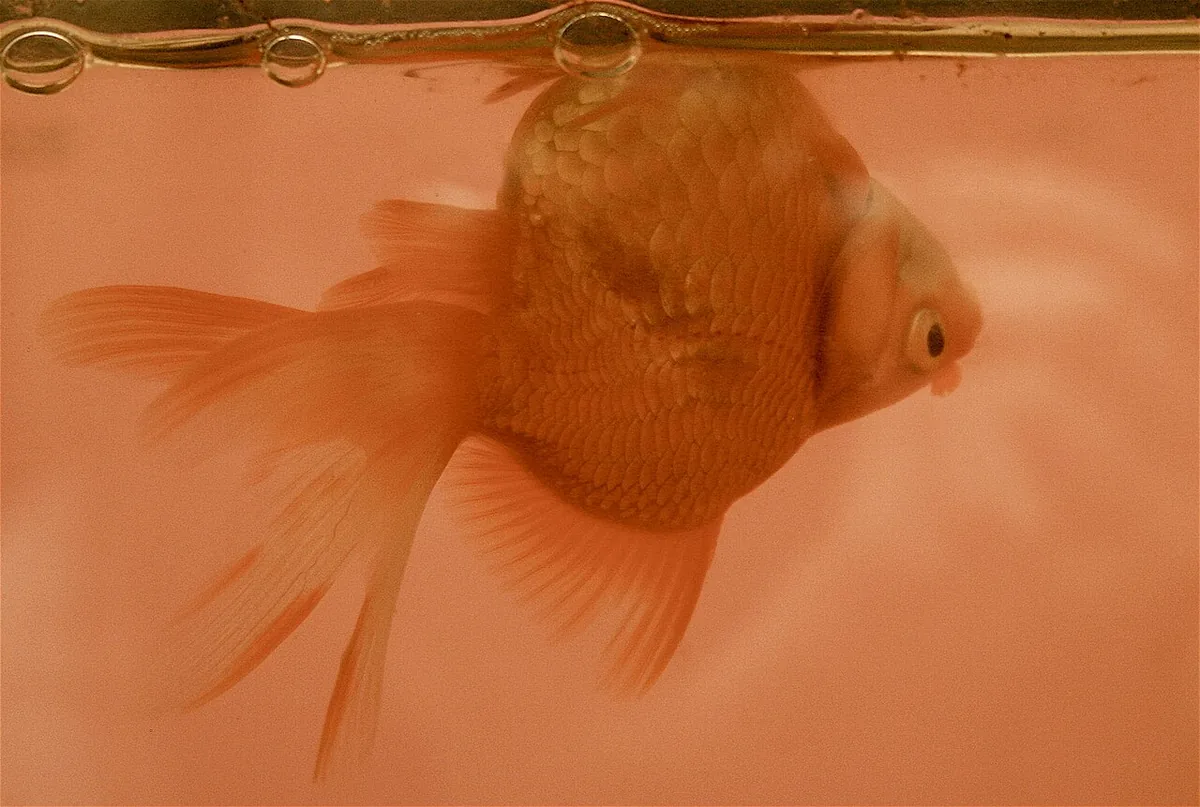
Image: Humanfeather / Michelle Jo / CC BY 3.0 / resized and cropped for layout
Disease guide
The swim bladder helps fish maintain buoyancy. Floating, sinking, or rolling can suggest a buoyancy problem, but does not identify its cause. A betta resting on the bottom is not, by itself, evidence of a swim bladder disorder.
Key signs
First check: Check water, feeding history, swelling, and posture.
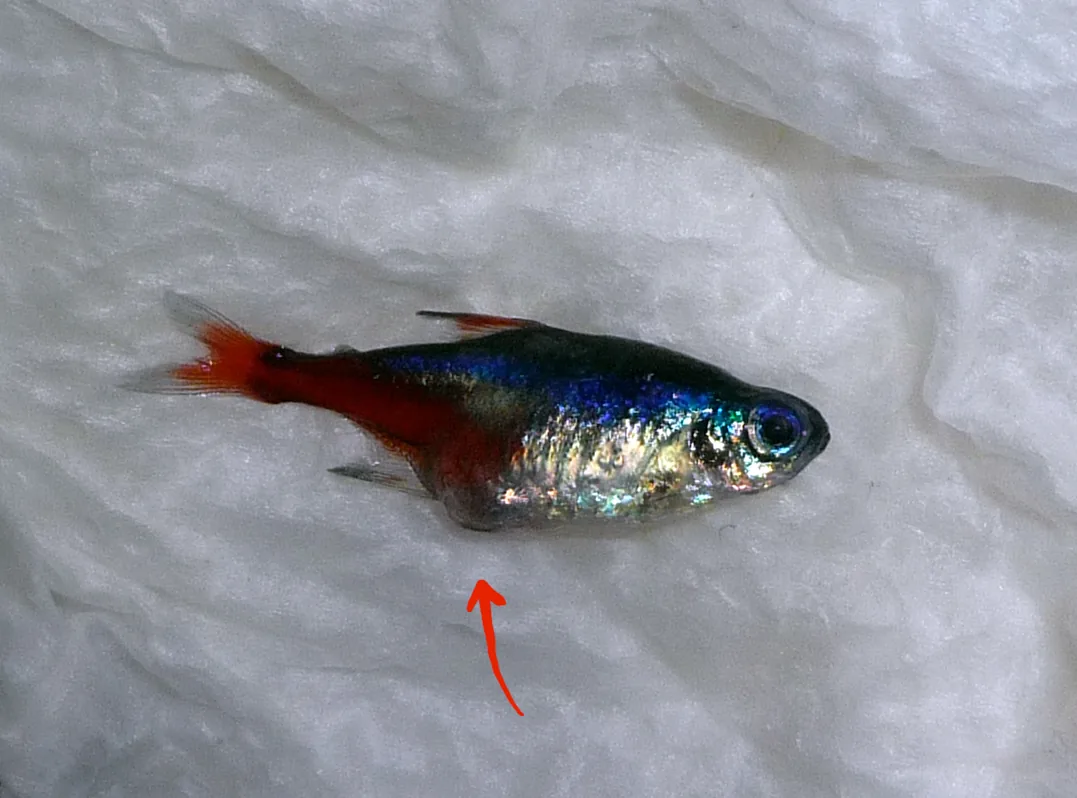
Image: Citron / Public domain / resized and cropped for layout
Disease guide
Dropsy describes swelling and fluid imbalance rather than one single disease. Pineconing scales, severe bloating, and lethargy can be serious warning signs.
Key signs
First check: Look from above for pineconing scales.
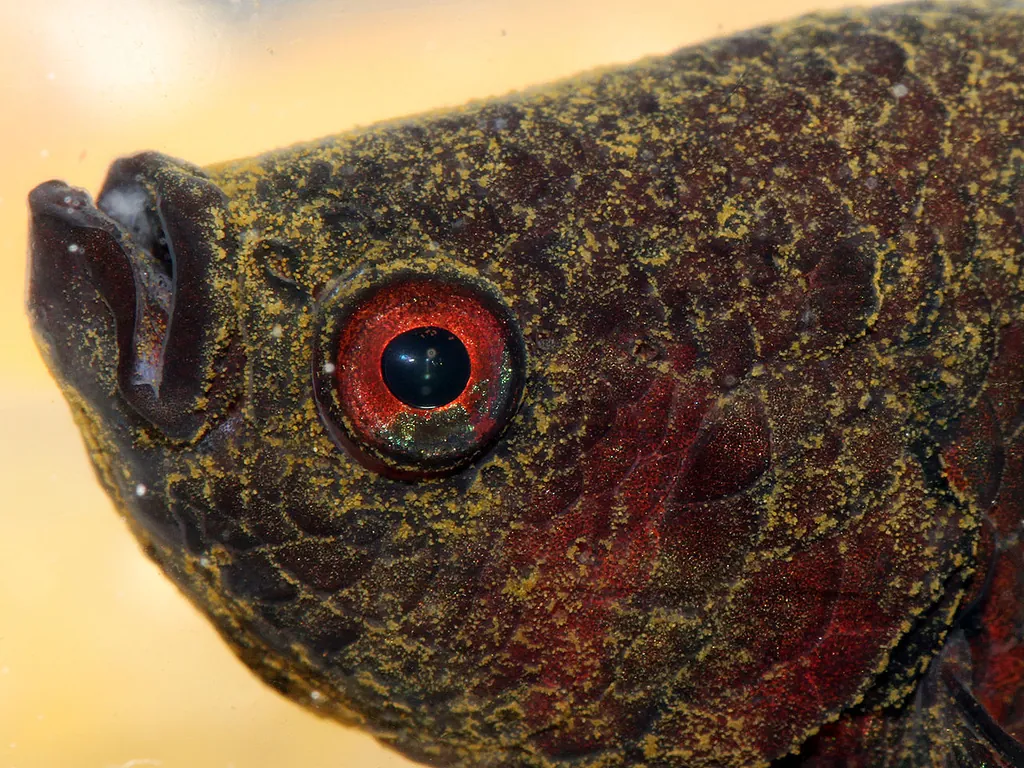
Image: Mydigitalife / CC0 / resized and cropped for layout
Disease guide
Velvet may look like a fine gold, rust, or dusty coating and can affect the gills. It can progress quickly, so breathing signs deserve attention.
Key signs
First check: Use angled light and check breathing immediately.
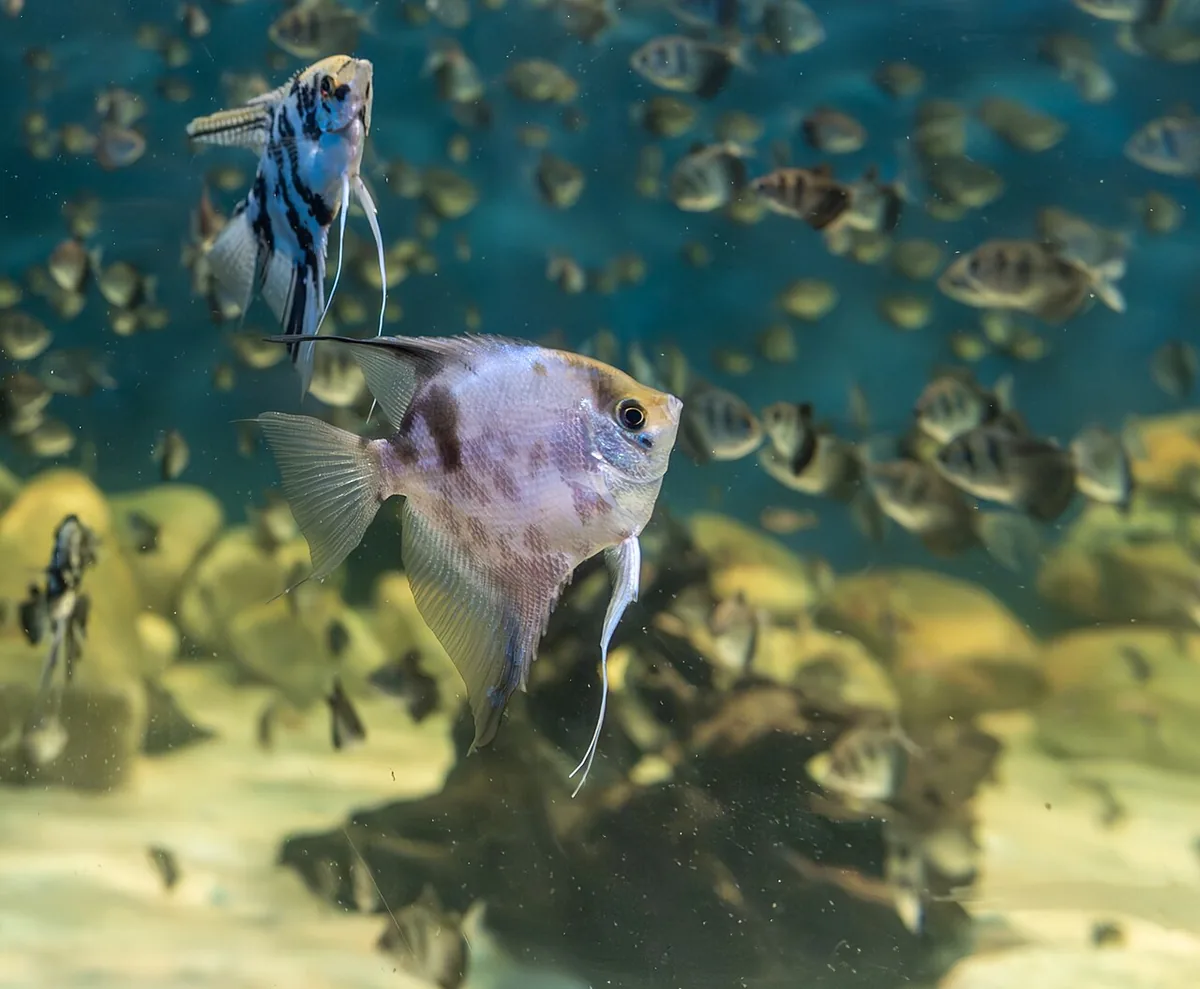
Image: Rjcastillo / CC BY 4.0 / resized and cropped for layout
Disease guide
Cloudy eye can be a symptom of injury, water stress, infection, or irritation. One cloudy eye often suggests trauma, while both eyes can point toward system-wide stress.
Key signs
First check: Check one eye vs both eyes and test water.
Symptom Guides
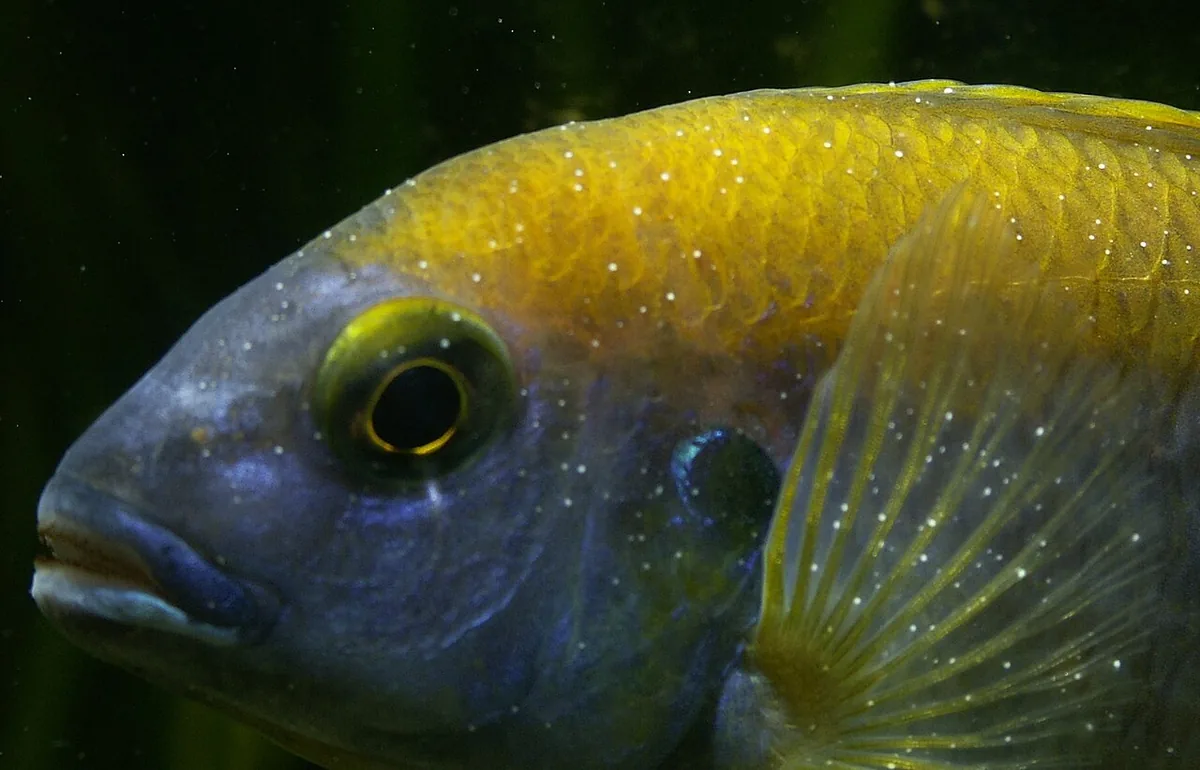
Image: Thomas Kaczmarczyk / Public domain / resized and cropped for layout
Symptom guide
Start here when you can see white marks but do not yet know the cause. Compare grains, dust, fuzz, flat patches, behavior, breathing, and water tests before opening a disease-specific guide.
Key signs
First check: Compare grains, dust, fuzz, and bubbles under angled light.
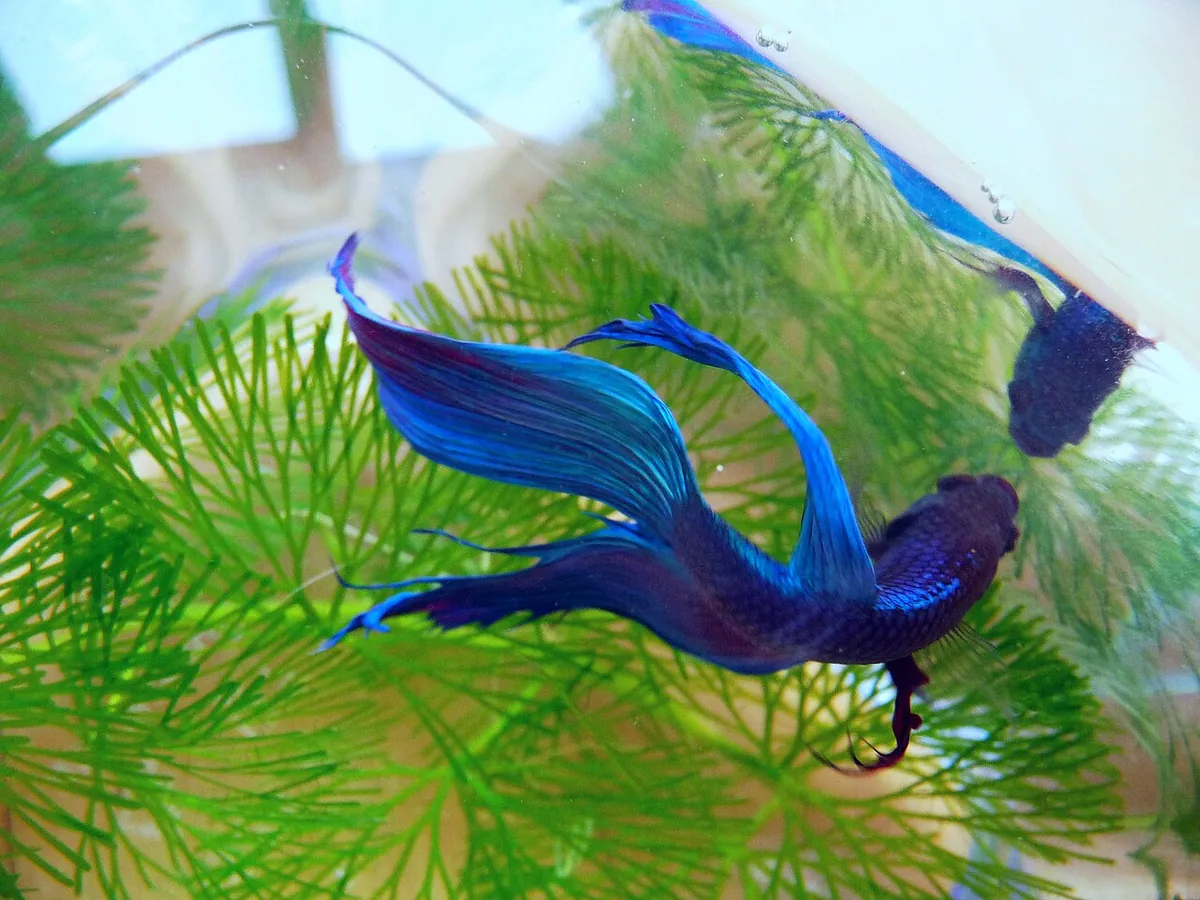
Image: Denise Chan / CC BY-SA 2.0 / resized and cropped for layout
Symptom guide
Start here for unexplained torn, split, or frayed fins. Clean sudden tears often fit nipping or injury, while shrinking, discolored edges that worsen over time make fin rot a more useful comparison.
Key signs
First check: Check nipping, sharp decor, filter intake, and water.
Image: Humanfeather / Michelle Jo / CC BY 3.0 / resized and cropped for layout
Symptom guide
Floating sideways is a buoyancy sign, not a single diagnosis. It can range from digestive pressure to serious systemic illness.
Key signs
First check: Check swelling, feeding history, posture, and water.
Image: Citron / Public domain / resized and cropped for layout
Symptom guide
Belly swelling can be mild or serious. Pineconing scales, lethargy, and appetite loss are important warning signs.
Key signs
First check: Use a top-down view to check for pineconing.
Image: Mitternacht90 / Public domain / resized and cropped for layout
Symptom guide
Repeated surface gasping with labored breathing calls for urgent checks. Increase aeration, confirm the filter is running, and test ammonia, nitrite, and temperature. Note whether one fish or several are affected; do not wait for a photo result.
Key signs
First check: Test ammonia/nitrite and increase aeration immediately.
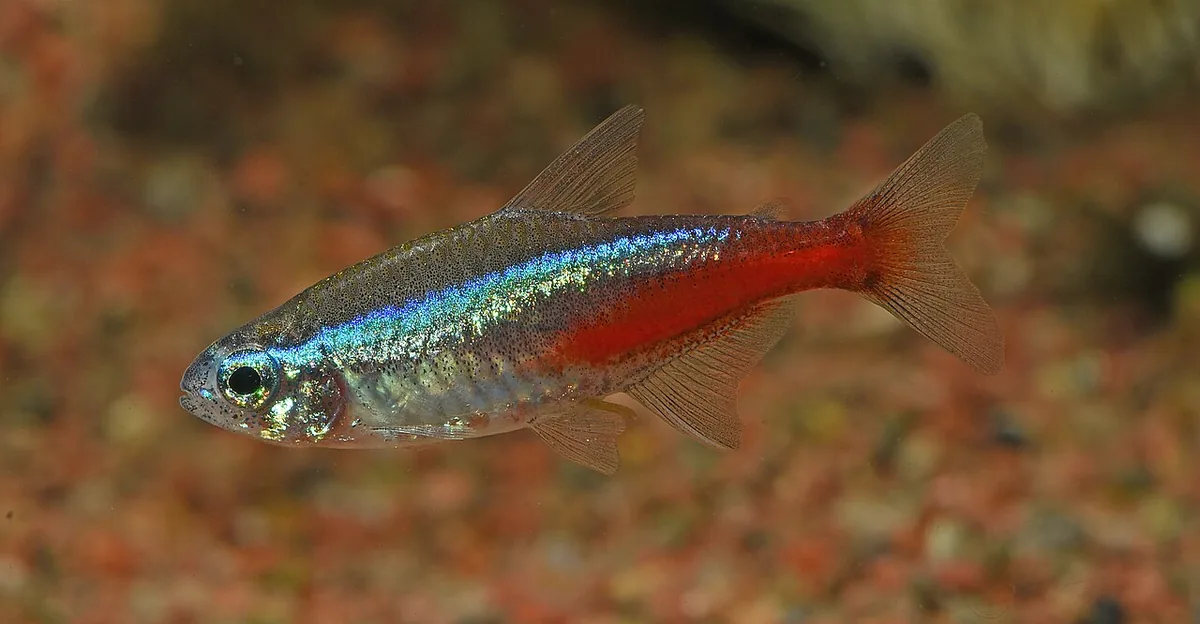
Image: SOK / CC BY-SA 4.0 / resized and cropped for layout
Symptom guide
Rapid breathing is often more urgent than external spots because gill or oxygen problems can worsen quickly.
Key signs
First check: Test ammonia/nitrite and check oxygenation.
Start with what you see
Start with the visible symptom when the cause is unclear, or open a disease guide when the pattern already fits.
Disease guide
Gasping, red gills, and sudden lethargy can occur with ammonia stress, but also with other water or gill problems. Test ammonia and nitrite immediately and check aeration. A photo cannot confirm or rule out toxic water.
Symptom guide
Repeated surface gasping with labored breathing calls for urgent checks. Increase aeration, confirm the filter is running, and test ammonia, nitrite, and temperature. Note whether one fish or several are affected; do not wait for a photo result.
Symptom guide
Sudden red or inflamed gills plus fast breathing can point to ammonia, nitrite, low oxygen, heat, or gill irritation. Test the water and check aeration promptly, especially when several fish are affected.
Symptom guide
Lethargy means your fish is less active or responsive than usual. Rest can be normal, but a sudden change, appetite loss, or difficult breathing needs attention. Start with water, temperature, and whether one fish or the whole tank is affected.
Disease guide
Fin rot is a possible match when ragged or discolored fin edges keep shrinking toward the body. A single clean split after chasing or contact with decor fits the torn-fins symptom guide more closely.
Symptom guide
Start here for unexplained torn, split, or frayed fins. Clean sudden tears often fit nipping or injury, while shrinking, discolored edges that worsen over time make fin rot a more useful comparison.
Disease guide
Use this disease guide when distinct salt-grain spots plus rubbing, clamped fins, or faster breathing make ich a likely match. If the marks are fuzzy, dusty, flat, or still unclear, start with the broader white-spots symptom guide instead.
Symptom guide
Start here when you can see white marks but do not yet know the cause. Compare grains, dust, fuzz, flat patches, behavior, breathing, and water tests before opening a disease-specific guide.
High-Intent Help
These pages connect urgent aquarium questions to Fish Disease Identifier, practical checks, and app downloads.
A direct starting point for spots, swelling, gasping, strange swimming, or appetite changes.
How the mobile app works and why results are possible matches, not guaranteed diagnoses.
Move from visible symptom to possible causes, checks, and next steps to consider.
FAQ
No. The app provides likely matches and possible causes from a photo. Fish disease symptoms can overlap, and photo quality, lighting, water conditions, and species differences can affect results.
No. Fish Disease Identifier is educational and should be used as a starting point. For severe, worsening, or unclear symptoms, contact an aquatic veterinarian or experienced aquarium professional.
Use a sharp, well-lit photo where the fish is visible from the side. Avoid glare, heavy blue lighting, motion blur, and reflections.
Check recent water changes, ammonia, nitrite, nitrate, temperature, pH, tank mates, new fish introductions, food changes, and visible behavior changes.
The app can suggest practical next steps to consider, but you should verify treatment choices with trusted aquarium references, product labels, or a qualified professional.
Fish Disease Identifier
Scan a photo in Fish Disease Identifier and get likely disease matches, possible causes, and next steps to consider.
Educational only. Not veterinary advice.