
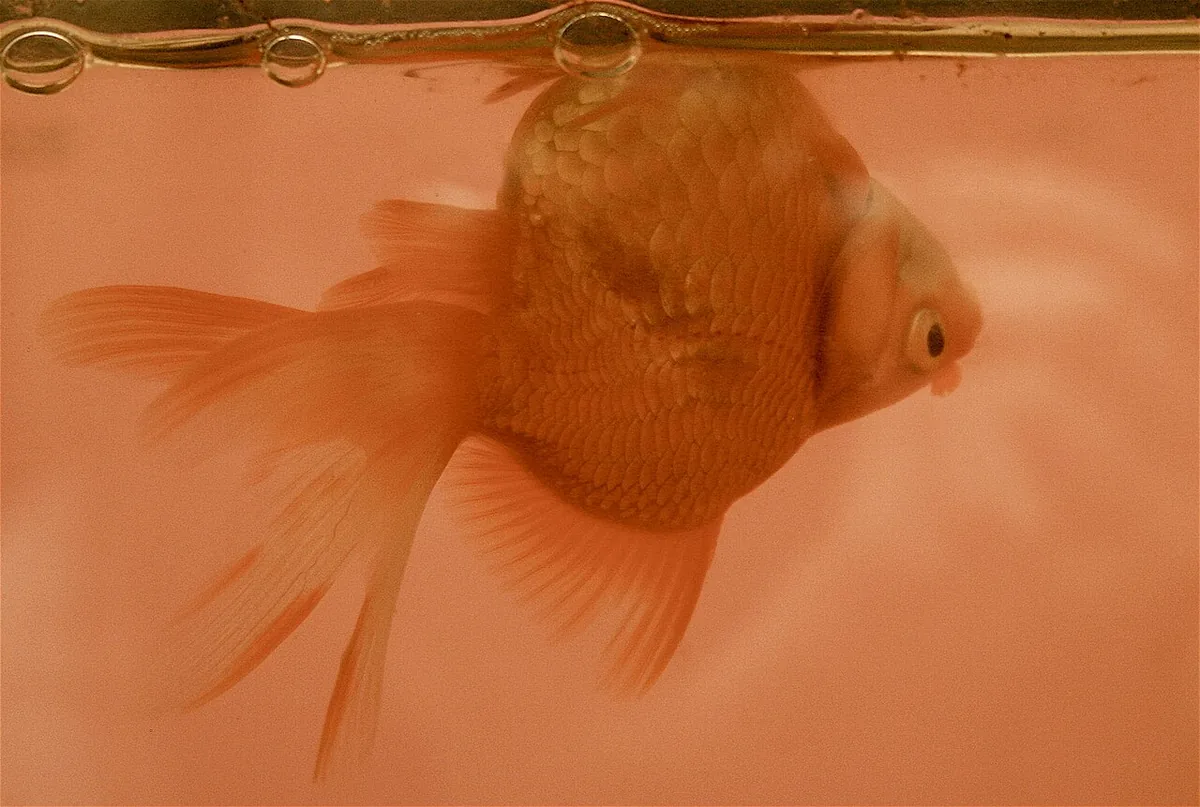


What to look for
- Floating sideways, upside down, nose-up, or sinking.
- Bloated belly, loss of balance, or trouble reaching food.
- Lethargy, red marks, or fast breathing in more serious cases.
Most useful clues
- Floating sideways, upside down, nose-up, tail-up, or sinking.
- Trouble holding position or reaching food.
- May appear with bloating, lethargy, or fast breathing.
Same-day concern
What to check first
Review quickly if floating comes with swelling, pineconing, red marks, rapid breathing, weakness, or inability to reach food.
- Test ammonia, nitrite, nitrate, temperature, and pH, because water stress can mimic or worsen many disease signs.
- Review recent feeding and whether waste is passing.
- Look from above for pineconing scales or swelling.
Possible causes
- Swim bladder problems or digestive pressure.
- Dropsy, internal infection, injury, or poor water quality.
- Temperature stress or overfeeding.
How to tell it apart
- Alert fish, recent feeding, belly fullness, or waste changes.
- Pineconing, red marks, or severe lethargy suggest more serious illness.
- Swelling, raised scales, not eating, or weakness.
- Short-lived buoyancy issue after feeding with normal behavior.
What to check next
- Test ammonia, nitrite, nitrate, temperature, and pH, because water stress can mimic or worsen many disease signs.
- Review recent feeding and whether the fish is passing waste.
- Look from above for pineconing scales or swelling.
Next steps to consider
- Reduce current and protect the fish from harassment.
- Compare with swim bladder and dropsy guides before choosing next steps.
- Get help quickly if the fish is weak, swollen, or gasping.
Photo checklist
- Record swimming posture as a short video.
- Take side and top photos to show swelling and scales.
- Include feeding, waste, and water-test context.
Common mistakes to avoid
- Assuming every floating fish is constipated.
- Missing water stress or dropsy signs because buoyancy is the obvious symptom.
Species and tank notes
- Fancy goldfish and bettas may show buoyancy issues more visibly.
- Strong current can make weak fish look more buoyant or helpless.
When it may be urgent
- Floating with swelling, pineconing, or breathing distress is more urgent.
- Repeated episodes should trigger a full husbandry review.
Related guides
Related symptoms
FAQ
Frequently asked questions
01Can overfeeding make fish float sideways?+
It can contribute in some fish, but floating can also come from infection, injury, or water stress.
02Can a scan diagnose swim bladder disease?+
No. A scan can suggest possible matches, but buoyancy problems require behavior and water context.
03What should I check first for Fish Floating Sideways?+
Start with this check: Check swelling, feeding history, posture, and water. Then compare the visible signs with behavior and tank history before relying on a photo match.
04When is Fish Floating Sideways urgent?+
Review quickly if floating comes with swelling, pineconing, red marks, rapid breathing, weakness, or inability to reach food.
05What can look similar to Fish Floating Sideways?+
Compare it with Swim bladder or digestive pressure, Dropsy or internal infection. The key is to match the full pattern: body area, behavior, breathing, spread speed, and water-test context.
06What photos help review Fish Floating Sideways?+
Record swimming posture as a short video. Also check take side and top photos to show swelling and scales.
07What common mistake should I avoid with Fish Floating Sideways?+
Assuming every floating fish is constipated. Also check missing water stress or dropsy signs because buoyancy is the obvious symptom.
Fish Disease Identifier provides educational guidance and possible matches from photos. Results are not veterinary advice and may be wrong. For severe, worsening, or unclear symptoms, consult an aquatic veterinarian or experienced aquarium professional.
Review notes
Sources and limits
This guide is educational and helps narrow possible matches. It is not a veterinary diagnosis, and urgent breathing, swelling, collapse, or tank-wide distress should not wait for photo confirmation.
Read more about safety limits and educational use on the About page.
Last content review: 2026-07-01
Fish Disease Identifier
Still not sure what your fish has?
Scan a photo in Fish Disease Identifier and get likely disease matches, possible causes, and next steps to consider.
Educational only. Not veterinary advice.