
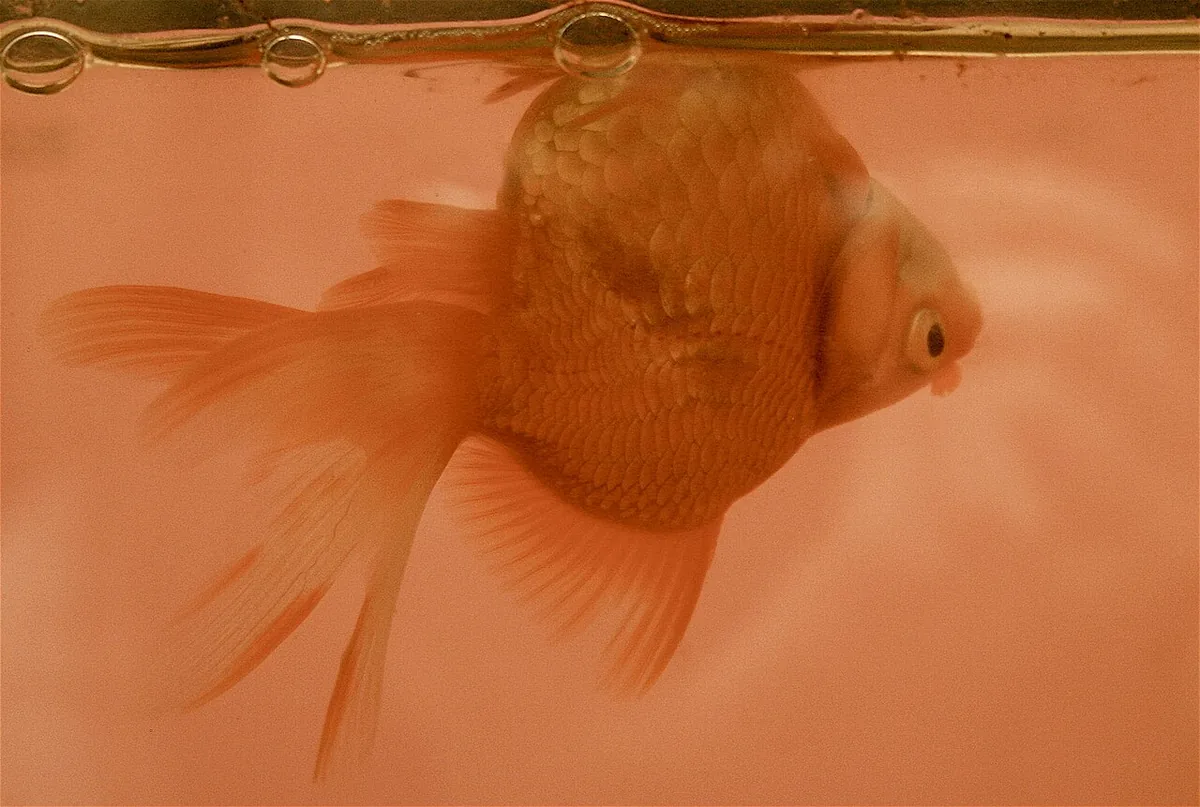


Common signs
- Floating sideways, nose-up, tail-up, sinking, or struggling to hold position.
- Normal alertness in mild cases, or lethargy and stress in more serious cases.
- Belly swelling or appetite changes may occur, but do not establish constipation.
Most useful clues
- Floating, sinking, rolling, nose-up, tail-up, or sideways posture.
- Excessive fin effort to stay level.
- Possible belly swelling, appetite change, or abnormal waste.
Monitor closely
What to check first
Seek same-day expert help for persistent loss of balance or inability to feed. Raised scales, rapid swelling, severe weakness, or breathing distress need urgent attention.
- Test ammonia, nitrite, nitrate, pH, and temperature.
- Review recent feeding amount, food type, and whether waste is passing.
- Look for swelling, raised scales, sores, red streaks, or breathing distress.
Possible causes
- Feeding-related gas can affect some fish; a feeding history alone does not establish the cause, and goldfish mechanisms should not be assumed to apply to bettas.
- Internal infection, injury, deformity, or organ stress.
- Poor water quality or temperature stress affecting overall condition.
How to tell it apart
- Pineconing, swelling, lethargy, or poor appetite.
- Buoyancy issue without raised scales or systemic decline.
- Multiple fish gasping or lethargic.
- Abnormal water tests.
- Single fish affected with normal water readings.
- Bent spine, trauma history, or chronic issue.
- Sudden onset after overfeeding or a water event.
What to check next
- Test ammonia, nitrite, nitrate, temperature, and pH, because water stress can mimic or worsen many disease signs.
- Review recent feeding amount, food type, and whether the fish can pass waste.
- Look for swelling, sores, red streaks, pineconing scales, or rapid breathing.
Care steps to consider
- Reduce stress and make sure the fish is not being pushed around by flow or tank mates.
- Share water readings, feeding history, and a swimming video with an aquatic veterinarian if the problem persists or recurs.
- Seek expert help if buoyancy problems come with swelling, red marks, or fast decline.
Photo checklist
- For an aquatic veterinarian, record a short video of spontaneous swimming and resting: does the fish rise, sink, or roll despite trying to hold position? Do not chase it to provoke movement.
- Take a side photo showing belly size and spine line.
- Keep the onset date, water readings, recent changes, and appetite notes with the video; recording must not delay urgent help.
Common mistakes to avoid
- Assuming all buoyancy problems are constipation.
- Missing ammonia, nitrite, dropsy, or infection signs because the fish is still floating.
Species and tank notes
- Fancy goldfish are prone to buoyancy issues because of compact body shape.
- A betta that rests but then swims upright and reaches food differs from one that cannot hold position. New inactivity or appetite loss still deserves water checks and expert review if persistent.
When to get expert help
- Floating upside down with lethargy, swelling, or breathing distress can be urgent.
- Repeated buoyancy episodes may need deeper husbandry review.
Prevention tips
- Avoid overfeeding and keep diet appropriate for the species.
- Maintain stable water temperature and routine water checks.
Related guides
Related symptoms
FAQ
Frequently asked questions
01Is floating sideways always swim bladder disease?+
No. Buoyancy trouble can come from digestion, injury, infection, water stress, or severe weakness.
02Should I medicate immediately?+
No single medication fits every buoyancy problem. Check water and warning signs, then seek veterinary guidance for persistent or worsening trouble rather than treating a presumed cause.
03Does a betta resting on the bottom have swim bladder disease?+
Not necessarily. Bettas rest, and an inactive fish may also be weak or unwell for another reason. Observe whether it can swim upright and reach food when it chooses to move. Persistent sinking, rolling, appetite loss, or a change from its usual behavior needs closer review.
04Is the betta labyrinth organ the same as its swim bladder?+
No. The labyrinth organ lets a betta breathe air; the swim bladder helps regulate buoyancy. Normal air-sipping does not demonstrate a swim bladder disorder or remove the need for water-quality checks.
05Is swim bladder disease one exact disease?+
No. It is a label for buoyancy trouble, and the cause may be digestion, injury, infection, anatomy, temperature, or water stress.
06When is floating sideways urgent?+
Floating with swelling, pineconing scales, red marks, rapid breathing, weakness, or inability to feed should be reviewed quickly.
07What should I check first for Swim Bladder Disorders in Fish?+
Start with this check: Check water, feeding history, swelling, and posture. Then compare the visible signs with behavior and tank history before relying on a photo match.
Fish Disease Identifier provides educational guidance and possible matches from photos. Results are not veterinary advice and may be wrong. For severe, worsening, or unclear symptoms, consult an aquatic veterinarian or experienced aquarium professional.
Review notes
Sources and limits
This guide is educational and helps narrow possible matches. It is not a veterinary diagnosis, and urgent breathing, swelling, collapse, or tank-wide distress should not wait for photo confirmation.
Read more about safety limits and educational use on the About page.
Last content review: 2026-09-22
Fish Disease Identifier
Still not sure what your fish has?
Scan a photo in Fish Disease Identifier and get likely disease matches, possible causes, and next steps to consider.
Educational only. Not veterinary advice.