

Common signs
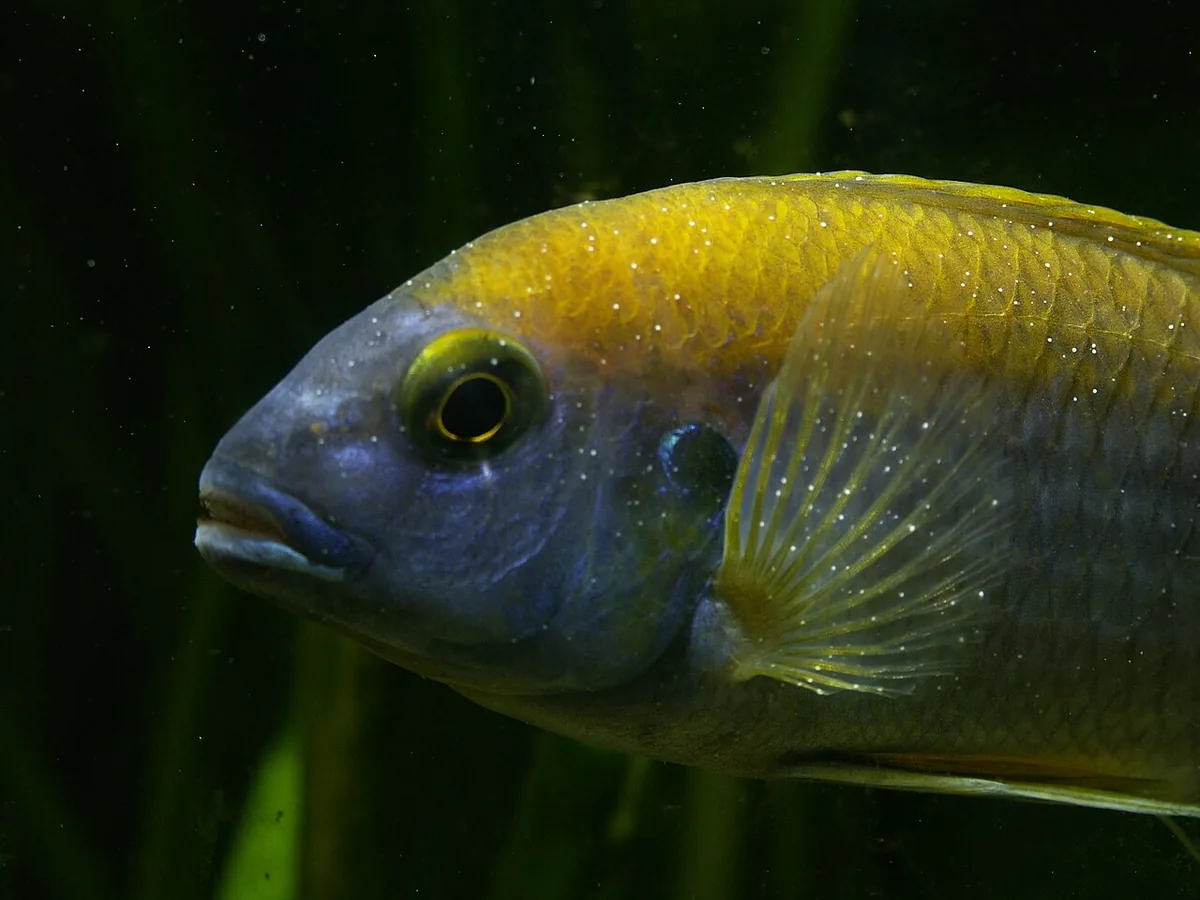
- Small white dots that look like salt grains on fins, body, or gill area.
- Fish rubbing on objects, flashing, clamped fins, or acting irritated.
- Faster breathing or hiding when spots are heavy or gills may be affected.
Most useful clues
- Distinct salt-like white grains on fins, body, or near gills.
- Flashing, rubbing, clamped fins, or sudden irritation.
- Rapid breathing when gills may be involved.
Same-day concern
What to check first
Review the same day if spots are spreading, multiple fish are affected, or breathing is faster. Surface gasping, collapse, or severe gill distress should be treated as urgent.
- Test ammonia, nitrite, nitrate, pH, and temperature.
- Compare distinct grains with fine dusting, fuzz, air bubbles, or injuries.
- Review new fish, plants, decor, nets, or water added in the last 1-3 weeks.
Possible causes
- A parasite outbreak after new fish, plants, equipment, or stressful transport.
- Temperature swings or water-quality stress lowering the fish's resilience.
- Delayed quarantine or shared nets moving parasites between tanks.
White spots after new fish, or spots that seemed to return
Record when each new fish arrived, when the first spots or rubbing appeared, and which fish are affected. New arrivals can carry parasites without obvious spots, but the timing alone cannot confirm ich; compare the marks with the broader white-spots guide and check water and breathing too.
If spots fade and later reappear, do not assume the problem is over. In a possible ich outbreak, visible parasites may leave a fish during the parasite's life cycle while other stages remain in the aquarium. Monitor the whole tank and seek qualified guidance promptly about a species-safe plan; one clear photo or one quiet day is insufficient evidence of resolution.
How to tell it apart
- Fine gold or rust dusting.
- Early rapid breathing or hiding near flow.
- Ich spots are usually larger, whiter, and grain-like.
- Cottony or thread-like growth on wounds.
- Patch is attached to damaged tissue.
- Ich usually appears as separate grains, not fuzzy mats.
- Specks appear after maintenance and vanish or move.
- No flashing, progression, or consistent attachment to the fish.
What to check next
- Test ammonia, nitrite, nitrate, temperature, and pH, because water stress can mimic or worsen many disease signs.
- Look closely at whether spots are raised grains rather than fuzzy patches, dusting, or air bubbles.
- Review any new livestock, plants, or equipment added in the last two weeks.
Care steps to consider
- Consider isolating affected fish or treating the display only after confirming what livestock and plants can tolerate.
- Compare symptoms with velvet, fungal infection, and general parasite guides before choosing a product.
- Follow trusted product labels exactly and avoid mixing medications unless an expert advises it.
Photo checklist
- Take a side photo showing spot size and distribution.
- Include fins and gill covers under bright, low-glare light.
- Add a whole-tank photo showing affected and unaffected fish.
Common mistakes to avoid
- Treating every white speck as ich without checking water quality.
- Ignoring breathing distress while waiting for spots to look clearer.
Species and tank notes
- Scaleless fish and some catfish can be more sensitive to common aquarium products.
- Pale or white fish may show spots poorly, so behavior and gill signs matter.
When to get expert help
- Heavy spots, labored breathing, or fish lying near the bottom can become urgent.
- Get experienced help if multiple fish worsen quickly or if sensitive species are involved.
Prevention tips
- Quarantine new fish when possible and avoid sharing wet equipment between tanks.
- Keep temperature stable and reduce stress during acclimation.
Related guides
Related symptoms
FAQ
Frequently asked questions
01Are white spots always ich?+
No. White spots may also come from velvet, fungus, injuries, air bubbles, or other parasites. Use the pattern, behavior, and water checks together.
02Can Fish Disease Identifier confirm ich from one photo?+
No. It can provide likely matches and next checks, but fish disease signs overlap and results may be wrong.
03How quickly should ich-like white spots be checked?+
Check the same day if spots spread, more than one fish is affected, or breathing changes. Gasping or collapse should not wait for photo confirmation.
04What makes ich harder to identify from photos?+
Glare, bubbles, pale fish, dusting from velvet, and cottony fungus can all make white marks look similar in a single image.
05What should I check first for Ich in Fish (White Spot Disease)?+
Start with this check: Compare salt-like grains with dust, fuzz, and bubbles. Then compare the visible signs with behavior and tank history before relying on a photo match.
06When is Ich in Fish (White Spot Disease) urgent?+
Review the same day if spots are spreading, multiple fish are affected, or breathing is faster. Surface gasping, collapse, or severe gill distress should be treated as urgent.
07What can look similar to Ich in Fish (White Spot Disease)?+
Compare it with Velvet disease, Fungal infection, Air bubbles or debris. The key is to match the full pattern: body area, behavior, breathing, spread speed, and water-test context.
Fish Disease Identifier provides educational guidance and possible matches from photos. Results are not veterinary advice and may be wrong. For severe, worsening, or unclear symptoms, consult an aquatic veterinarian or experienced aquarium professional.
Review notes
Sources and limits
This guide is educational and helps narrow possible matches. It is not a veterinary diagnosis, and urgent breathing, swelling, collapse, or tank-wide distress should not wait for photo confirmation.
Read more about safety limits and educational use on the About page.
Last content review: 2026-09-25
Fish Disease Identifier
Still not sure what your fish has?
Scan a photo in Fish Disease Identifier and get likely disease matches, possible causes, and next steps to consider.
Educational only. Not veterinary advice.