

Photo evidence and limits
What a fin photo can show
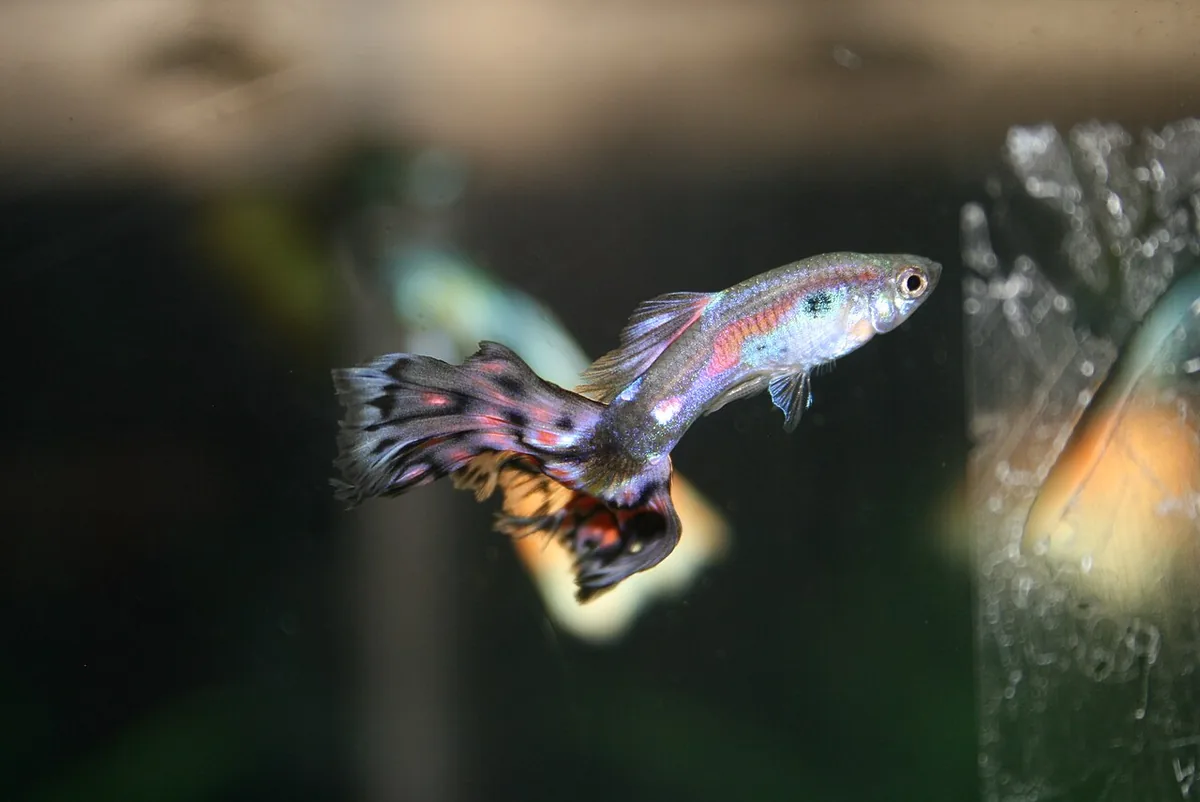
The guppy above is a fin-shape reference, not a documented fin-rot case. Compare dated photos of the same fish, side, and fin in similar light. A receding edge, new redness, or tissue loss over time is more informative than one color or one ragged edge. Check water and behavior alongside the photos; seek experienced help if damage spreads or the fish declines.
Common signs
- Fins look torn, ragged, melting back, pale at the edge, or darkened at the edge.
- The fish may clamp fins, hide, eat less, or avoid active tank mates.
- Redness near fin bases may suggest irritation or a worsening infection.
Most useful clues
- Ragged, uneven, shrinking, pale, red, or dark fin edges.
- Fin clamping, hiding, lower appetite, or reduced activity.
- Redness or inflammation near fin bases in worsening cases.
Monitor closely
What to check first
Monitor mild stable fraying closely, but treat it as a same-day concern if fin loss progresses, redness spreads, or the fish becomes lethargic.
- Test ammonia, nitrite, nitrate, pH, and temperature.
- Watch for fin nipping, chasing, rough decor, or filter-intake damage.
- Compare old photos to see whether fin loss is progressing.
Possible causes
- Poor water quality, especially ammonia or nitrite exposure.
- Fin nipping, rough decorations, transport stress, or repeated chasing.
- Bacterial infection taking advantage of damaged tissue.
How to tell it apart
- Single split after chasing, netting, or sharp decor.
- Spreading edge discoloration or tissue loss points away from simple tearing.
- Cottony patches, mouth changes, saddle-like lesions, or fast breathing.
- Fin-only damage without pale body patches is less suggestive.
- Clear or pale smooth new edge after previous injury.
- Redness, fuzz, or continued erosion needs closer review.
What to check next
- Test ammonia, nitrite, nitrate, temperature, and pH, because water stress can mimic or worsen many disease signs.
- Watch tank mates for chasing or nipping, especially at feeding time.
- Inspect decorations, filter intakes, and hardscape for sharp edges.
Care steps to consider
- Improve water quality and reduce stress before assuming medication is the only answer.
- Consider separating aggressive tank mates or protecting the fish if nipping is likely.
- If fin loss progresses, ask an experienced aquarium professional about appropriate treatment options.
Photo checklist
- Take a sharp side photo of all fins with edges visible.
- Add a close photo of the worst fin and fin base.
- Photograph the same side in similar light and note the date, appetite, and water readings. Track the edge against the fin rays rather than judging color alone.
Common mistakes to avoid
- Ignoring aggression or sharp decor and only focusing on disease labels.
- Assuming mild tears need medication before correcting water and stress.
Species and tank notes
- Long-finned bettas and fancy goldfish can injure delicate fins on tank furnishings. Inspect resting places and compare the damaged edge with earlier photos.
- In a betta community tank, watch for chasing or fin nipping. An injury and a secondary infection can occur together; finding an injury does not rule out infection.
When to get expert help
- Rapid fin loss, bloody bases, body sores, or lethargy should be treated as a higher concern.
- Small tears from nipping may improve with clean water, but spreading damage needs closer review.
Prevention tips
- Keep stocking compatible and avoid overcrowding.
- Maintain stable water quality and remove sharp hazards.
Related guides
Related symptoms
FAQ
Frequently asked questions
01Can torn fins heal without medication?+
Minor mechanical damage may improve with clean water and less stress, but spreading fin loss or redness can point to infection that needs expert guidance.
02Is fin rot contagious?+
The underlying bacteria may be present in many aquariums. Stress, poor water, or injuries often determine whether fish show disease signs.
03Does a stable fin edge mean the problem is resolved?+
A stable outline is useful to record, but keep checking appetite, behavior, and water conditions. Renewed tissue loss or inflammation needs further review even after an apparently quiet period.
04What does fin rot look like on a betta?+
Look for a newly receding, damaged fin edge with inflammation, not simply a long or uneven tail. Similar damage can follow an injury. Check water and progression; a single photo cannot confirm an infection.
05Is a clear or white fin edge always fin rot?+
No. New fin tissue can look clear or whitish during healing. An edge that is extending rather than disappearing is a useful observation, but color alone cannot establish healing or rule out infection.
06What is the first thing to check with fin rot signs?+
Check ammonia, nitrite, tank mate behavior, and sharp decor. Fin damage often worsens when water stress or repeated nipping is still present.
07How do I know if torn fins are getting worse?+
Compare dated photos of the same fin: is tissue still disappearing toward the body, or is the outline stable? Spreading loss, inflammation, reduced appetite, or lethargy warrants prompt expert review; do not wait to complete a photo series.
Fish Disease Identifier provides educational guidance and possible matches from photos. Results are not veterinary advice and may be wrong. For severe, worsening, or unclear symptoms, consult an aquatic veterinarian or experienced aquarium professional.
Review notes
Sources and limits
This guide is educational and helps narrow possible matches. It is not a veterinary diagnosis, and urgent breathing, swelling, collapse, or tank-wide distress should not wait for photo confirmation.
Read more about safety limits and educational use on the About page.
Last content review: 2026-09-22
Fish Disease Identifier
Still not sure what your fish has?
Scan a photo in Fish Disease Identifier and get likely disease matches, possible causes, and next steps to consider.
Educational only. Not veterinary advice.