Skip to content

Symptoms

Fish Symptom Checker Guides

Start with what you can see: spots, torn fins, swelling, unusual swimming, cloudy eyes, gasping, or appetite changes. These guides explain possible causes, what to check first, and when water or oxygen problems should be treated as more urgent than a photo match.

BreathingSkin and finsBehavior change

Urgent symptoms

Check tank-wide breathing and swelling signs first.

Gasping, rapid breathing, red gills, pineconing, or several fish acting sick at once should trigger water, oxygen, temperature, and recent-change checks.

Community aquarium fish near the front glass, used as breathing context.

Priority guide

Fish Gasping at the Surface: What It May Mean

Treat active surface gasping as urgent because oxygen, ammonia, nitrite, heat, or gill damage can worsen quickly. Do not wait for clearer external signs.

Emergency signRead guide ->

Image: Mitternacht90 / Public domain / resized and cropped for layout
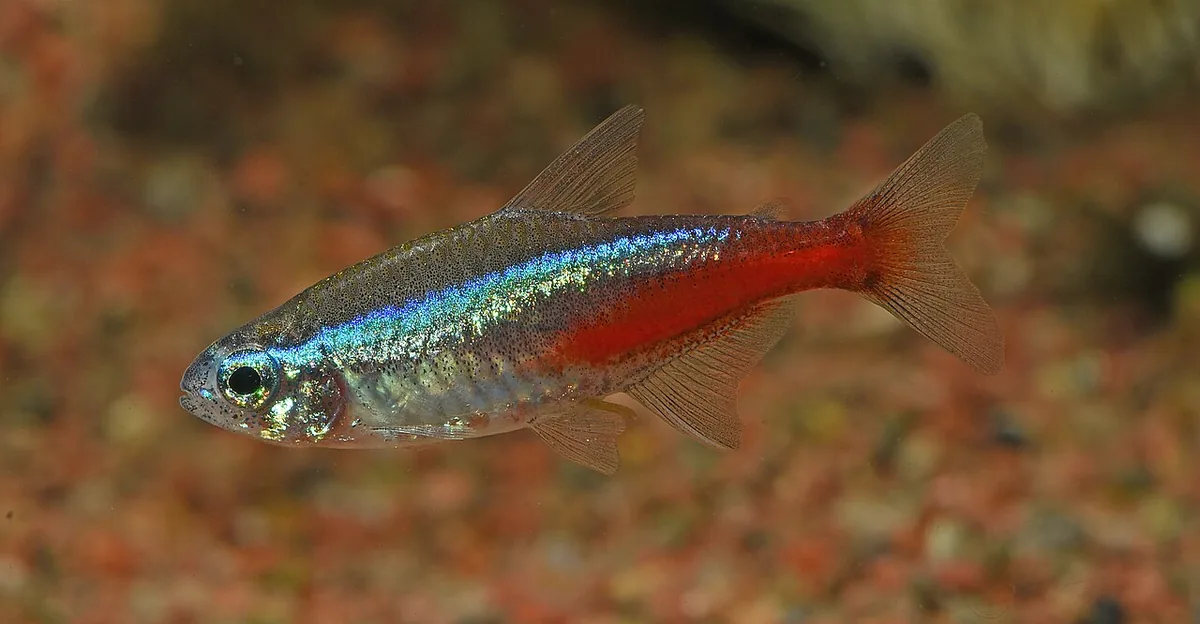
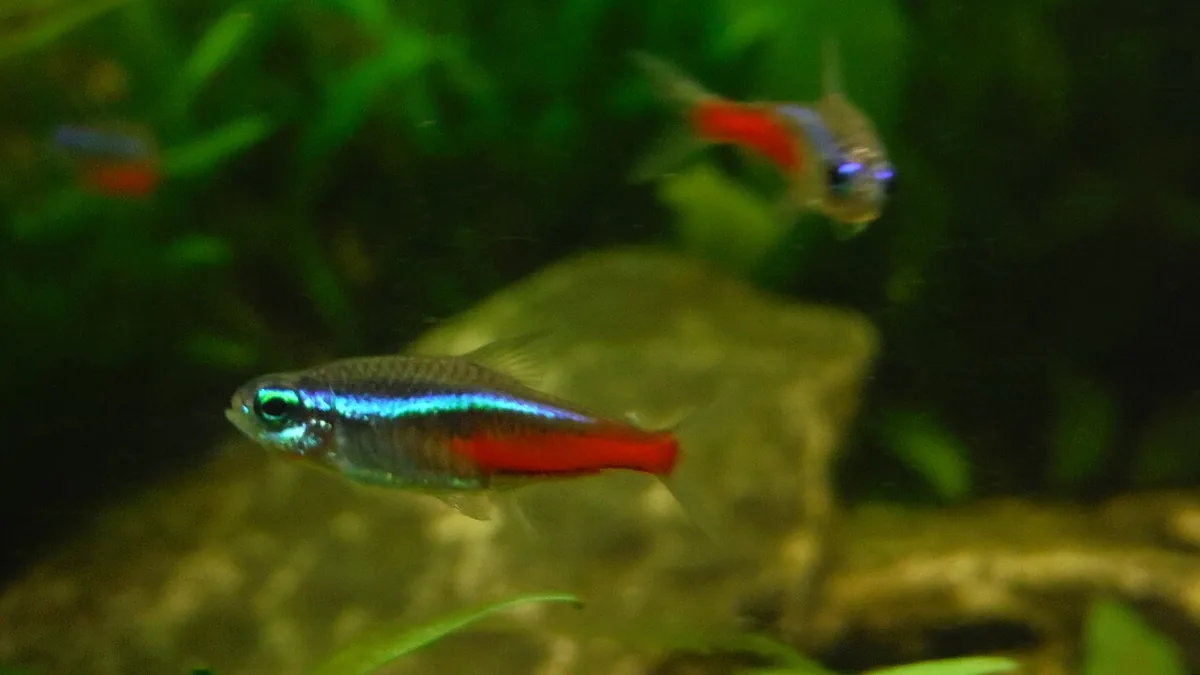
Neon tetra in an aquarium, used as breathing and oxygen context.

Priority guide

Rapid Breathing in Fish: Possible Causes and Next Checks

Rapid breathing needs same-day checks. Escalate to urgent action if it becomes surface gasping, affects several fish, or the fish is weak, lying down, or collapsing.

Same-day checkRead guide ->

Image: SOK / CC BY-SA 4.0 / resized and cropped for layout

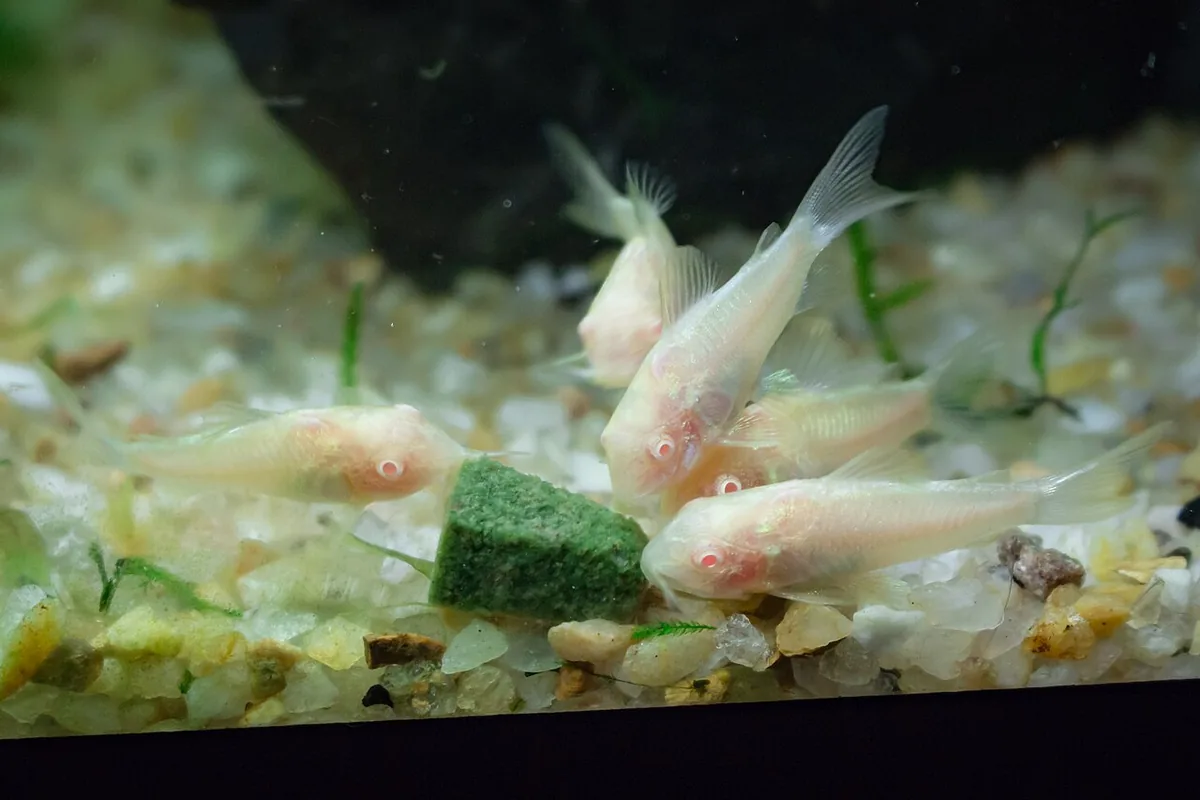
Corydoras catfish in an aquarium, used as gill-area context.

Priority guide

Red Gills on Fish: Possible Causes and What to Check

Check the same day. Red gills plus gasping, rapid breathing, or multiple fish affected should be treated as urgent water/oxygen triage.

Same-day checkRead guide ->

Image: Gabriel Resende Veiga / CC BY-SA 4.0 / resized and cropped for layout

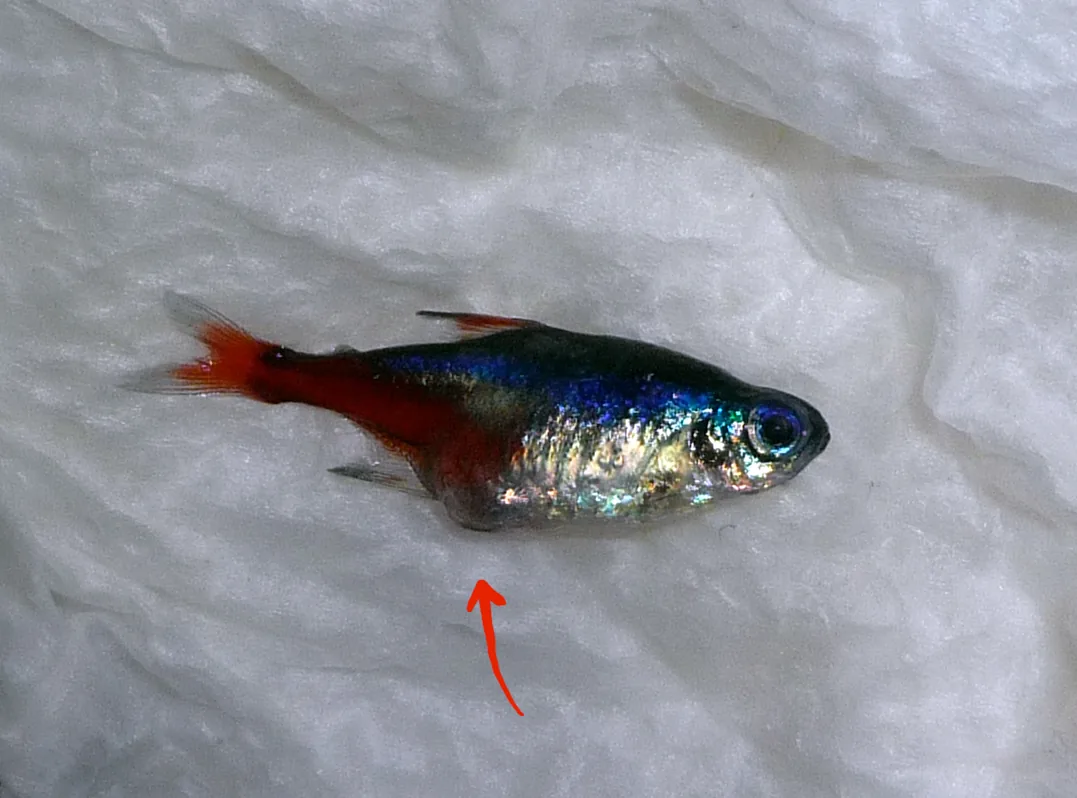
Neon tetra with a swollen belly and raised scales.

Priority guide

Swollen Belly in Fish: Possible Causes and Warning Signs

Review the same day if swelling is new, uneven, or paired with appetite loss. Pineconing scales, severe lethargy, red streaks, or breathing trouble are urgent.

Same-day checkRead guide ->

Image: Citron / Public domain / resized and cropped for layout
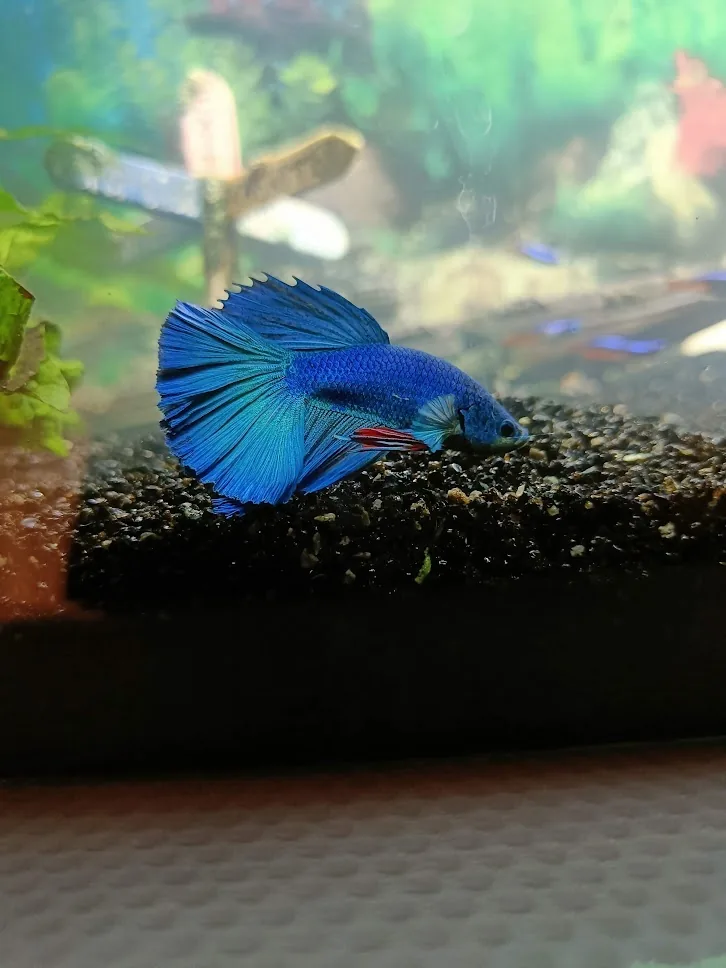
Betta fish portrait, used as betta body-shape context.

Priority guide

Bloated Betta Fish: Possible Causes and Warning Signs

Review the same day if bloating is new, persistent, or paired with appetite or buoyancy changes. Raised scales, severe lethargy, gasping, or rapid swelling are urgent warning signs.

Same-day checkRead guide ->

Image: NelsonNellie / CC0 / resized and cropped for layout

Symptom index

Browse fish symptoms by what changed

Breathing and gills

Community aquarium fish near the front glass, used as breathing context.

Image: Mitternacht90 / Public domain / resized and cropped for layout
Symptom guide

Fish Gasping at the Surface: What It May Mean

Surface gasping can be urgent because it often points to oxygen or gill stress. Water checks and aeration review should happen quickly.

Key signs

  • Mouth opening repeatedly at the surface or filter outflow.
  • Multiple fish crowding high-flow or high-oxygen areas.

First check: Test ammonia/nitrite and increase aeration immediately.

Emergency checkRead guide
Corydoras catfish in an aquarium, used as gill-area context.

Image: Gabriel Resende Veiga / CC BY-SA 4.0 / resized and cropped for layout

Symptom guide

Red Gills on Fish: Possible Causes and What to Check

Red or inflamed gills deserve quick water testing because ammonia, nitrite, and oxygen problems can affect the whole tank.

Key signs

  • Gills look brighter red, inflamed, or irritated.
  • Rapid breathing, gasping, or staying near water flow.

First check: Test ammonia/nitrite and check aeration.

Same-day concernRead guide
Neon tetra in an aquarium, used as breathing and oxygen context.

Image: SOK / CC BY-SA 4.0 / resized and cropped for layout

Symptom guide

Rapid Breathing in Fish: Possible Causes and Next Checks

Rapid breathing is often more urgent than external spots because gill or oxygen problems can worsen quickly.

Key signs

  • Gill covers moving faster than normal for the species.
  • Fish stays near flow, hides, clamps fins, or stops eating.

First check: Test ammonia/nitrite and check oxygenation.

Same-day concernRead guide

Spots, growths, and skin changes

Close view of white spots on an aquarium fish.

Image: Thomas Kaczmarczyk / Public domain / resized and cropped for layout
Symptom guide

White Spots on Fish: Possible Causes and What to Check

White spots are a high-intent warning sign, but they are not one diagnosis. Spot shape, behavior, breathing, and water tests help narrow the cause.

Key signs

  • Distinct salt-like grains on fins, body, or near gills.
  • Rubbing, flashing, clamped fins, or hiding.

First check: Compare grains, dust, fuzz, and bubbles under angled light.

Same-day concernRead guide
Aquarium fish with visible surface changes, used for growth comparison.

Image: Tze Sin, Tan / CC BY-SA 3.0 / resized and cropped for layout

Symptom guide

Fuzzy White Growth on Fish: Possible Causes and Next Checks

Fuzzy white growth often suggests damaged tissue, but fungus and bacterial problems can look similar. Speed, location, and texture matter.

Key signs

  • Cottony, fuzzy, thread-like, or cloudy white growth.
  • Often attached to a wound, fin edge, mouth area, eggs, or irritated skin.

First check: Compare fluffy growth with flat columnaris-like patches.

Same-day concernRead guide
Aquarium fish with a white spot on the forehead, used for rubbing and irritation context.

Image: Helian / Public domain / resized and cropped for layout
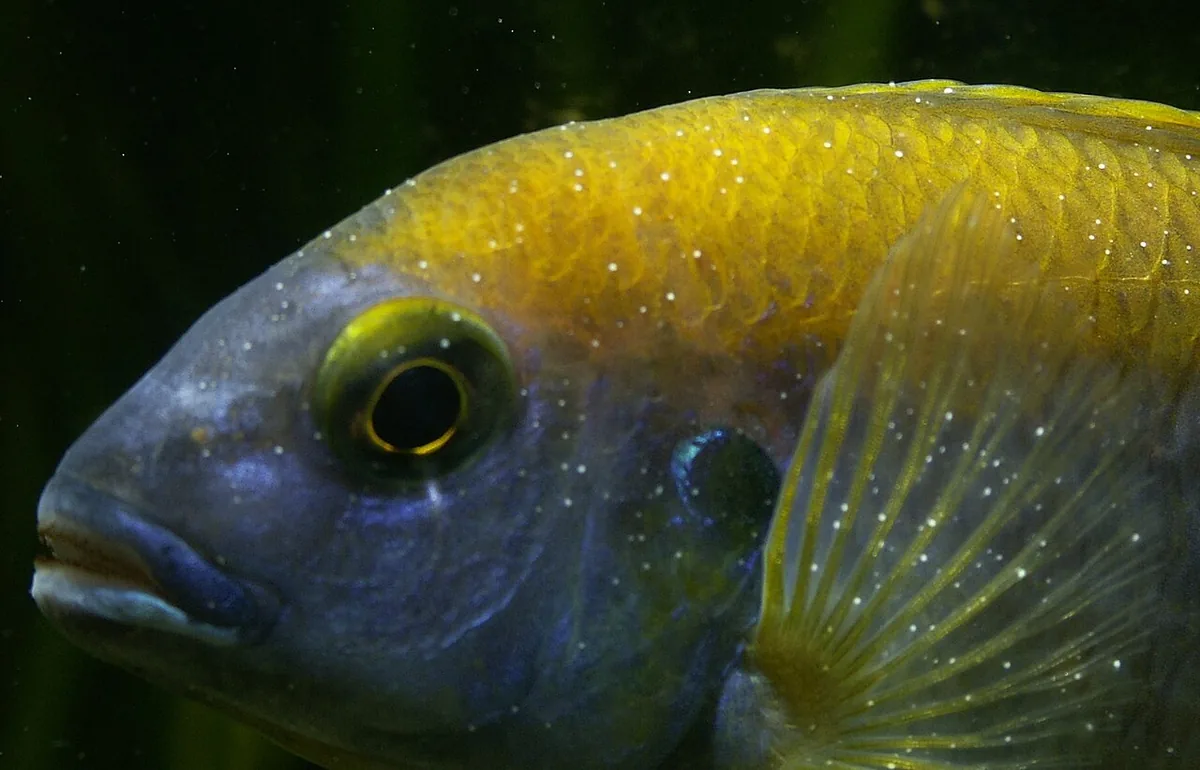
Symptom guide

Fish Rubbing on Objects: Possible Causes and What to Check

Rubbing or flashing means the fish feels irritated. Parasites are possible, but ammonia, nitrite, pH swings, and particles can also irritate skin or gills.

Key signs

  • Quick side-scrapes against gravel, decor, leaves, or equipment.
  • May appear with clamped fins, spots, dusting, mucus, or rapid breathing.

First check: Rule out water irritation before assuming parasites.

Monitor closelyRead guide

Fins and body damage

Betta fish photographed from above, used as fin-shape context.

Image: Denise Chan / CC BY-SA 2.0 / resized and cropped for layout

Symptom guide

Torn Fins on Fish: Possible Causes and Next Checks

Torn or frayed fins can be mechanical damage or a disease sign. The pattern, speed, redness, and tank behavior help separate likely causes.

Key signs

  • Clean splits, missing fin pieces, ragged edges, or shrinking fin margins.
  • Pale, dark, or red fin edges may suggest irritation or infection.

First check: Check nipping, sharp decor, filter intake, and water.

Monitor closelyRead guide
Betta fish with infected wounds, used as red-mark and lesion context.

Image: Ryan O. Hershey / CC BY 4.0 / resized and cropped for layout

Symptom guide

Red Streaks on Fish: Possible Causes and Urgent Checks

Red streaks can be a serious sign when paired with lethargy, ulcers, fin rot, or poor water readings. They need context and water testing.

Key signs

  • Red lines in fins, body, tail, or near fin bases.
  • Ulcers, sores, bloody patches, or swollen areas.

First check: Check spread, wounds, behavior, and water readings.

Same-day concernRead guide

Swimming and buoyancy

Goldfish floating sideways with buoyancy trouble.

Image: Humanfeather / Michelle Jo / CC BY 3.0 / resized and cropped for layout

Symptom guide

Fish Floating Sideways: Possible Causes and Next Steps

Floating sideways is a buoyancy sign, not a single diagnosis. It can range from digestive pressure to serious systemic illness.

Key signs

  • Floating sideways, upside down, nose-up, tail-up, or sinking.
  • Trouble holding position or reaching food.

First check: Check swelling, feeding history, posture, and water.

Same-day concernRead guide

Swelling and bloating

Neon tetra with a swollen belly and raised scales.

Image: Citron / Public domain / resized and cropped for layout
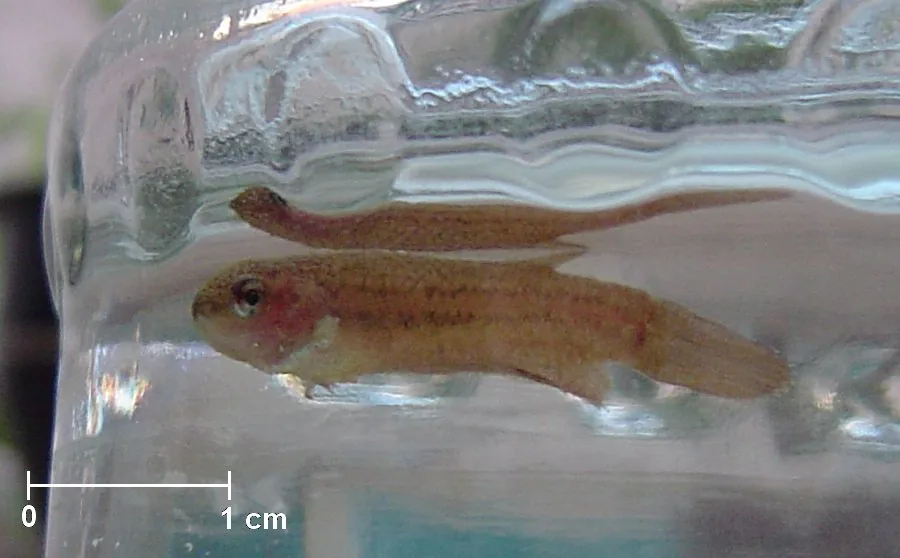
Symptom guide

Swollen Belly in Fish: Possible Causes and Warning Signs

Belly swelling can be mild or serious. Pineconing scales, lethargy, and appetite loss are important warning signs.

Key signs

  • Round belly, uneven swelling, or full-body bloating.
  • Raised scales from above, appetite loss, hiding, or lethargy.

First check: Use a top-down view to check for pineconing.

Same-day concernRead guide
Betta fish portrait, used as betta body-shape context.

Image: NelsonNellie / CC0 / resized and cropped for layout
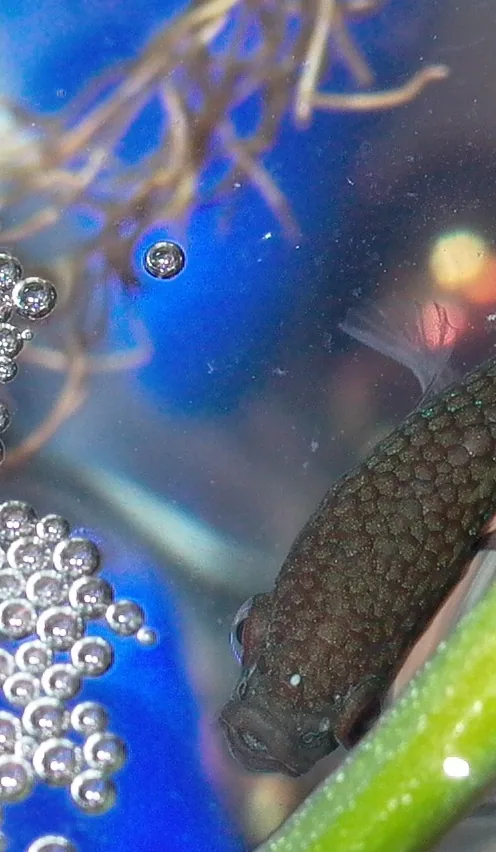
Symptom guide

Bloated Betta Fish: Possible Causes and Warning Signs

Betta bloating is common but can range from feeding-related swelling to serious dropsy signs. Top-view scale appearance matters.

Key signs

  • Rounded belly, buoyancy trouble, reduced appetite, or stringy waste.
  • Raised scales visible from above may suggest a serious dropsy-like pattern.

First check: Check top view for pineconing and verify water/temperature.

Same-day concernRead guide

Other behavior and eye changes

Freshwater angelfish in an aquarium, used as eye-area context.

Image: Rjcastillo / CC BY 4.0 / resized and cropped for layout
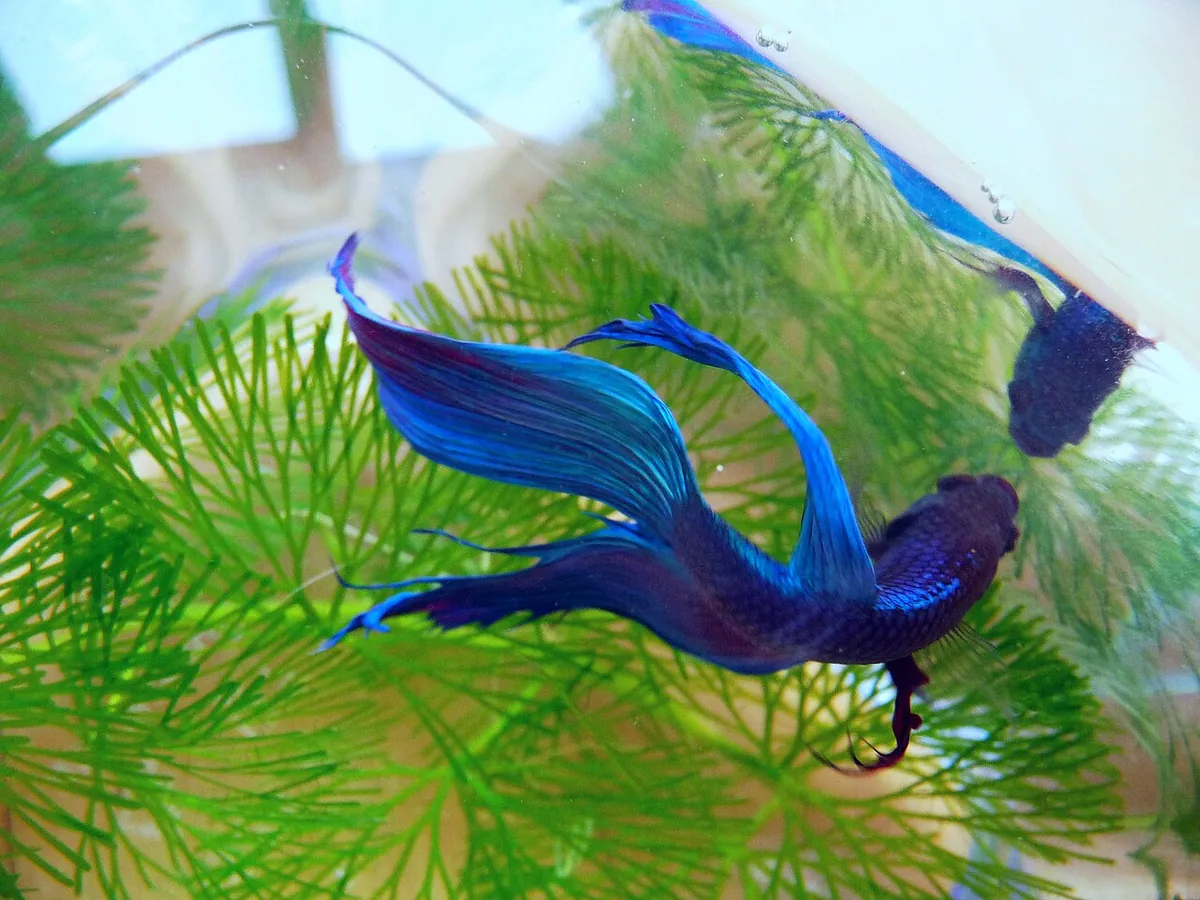
Symptom guide

Cloudy Eye in Fish: Causes, Checks, and Next Steps

Cloudy eye is a symptom that can involve injury, irritation, or infection. Whether one eye or both eyes are affected matters.

Key signs

  • Milky, hazy, scratched, or filmed eye surface.
  • One eye after injury, or both eyes with water stress.

First check: Check one eye vs both eyes and whether it protrudes.

Monitor closelyRead guide
Male betta fish in an aquarium, used as fin posture context.

Image: Gourami Watcher / CC BY-SA 3.0 / resized and cropped for layout
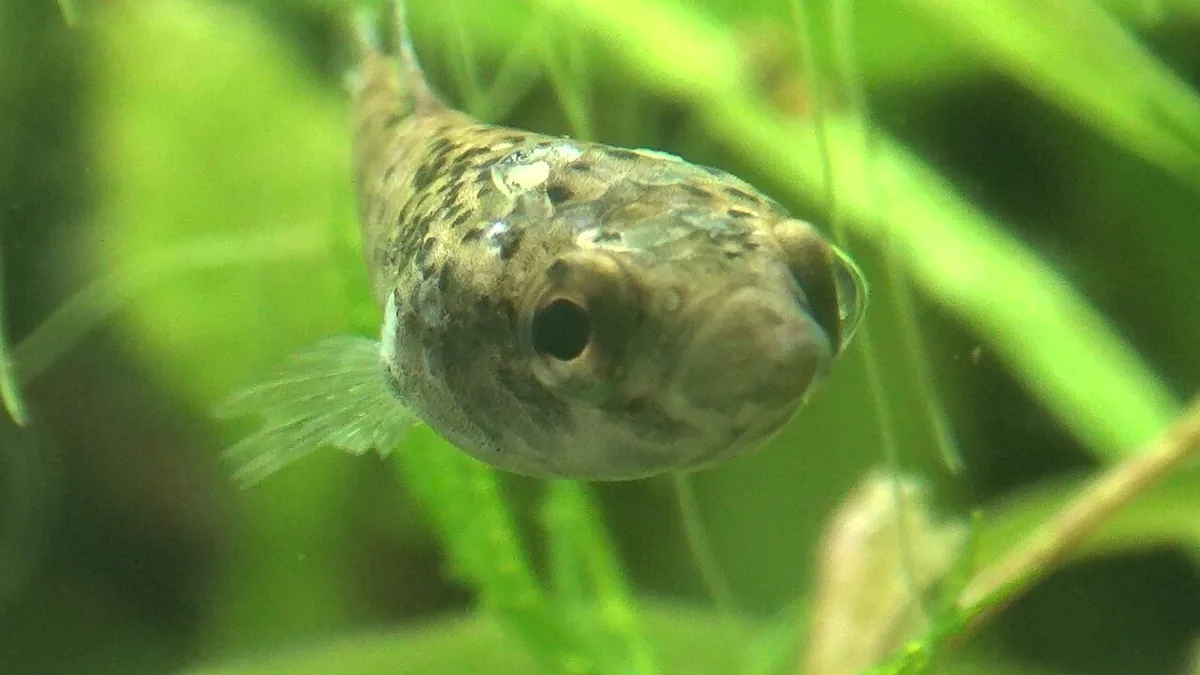
Symptom guide

Clamped Fins in Fish: Possible Causes and What to Check

Clamped fins are a broad stress sign. They matter most when paired with spots, rubbing, gasping, lethargy, or appetite changes.

Key signs

  • Fins held tight against the body instead of open.
  • Often appears with hiding, rubbing, appetite loss, or low activity.

First check: Check water and look for paired symptoms.

Monitor closelyRead guide
Guppies in an aquarium, used as feeding and behavior context.

Image: Schumi4ever / CC BY-SA 4.0 / resized and cropped for layout
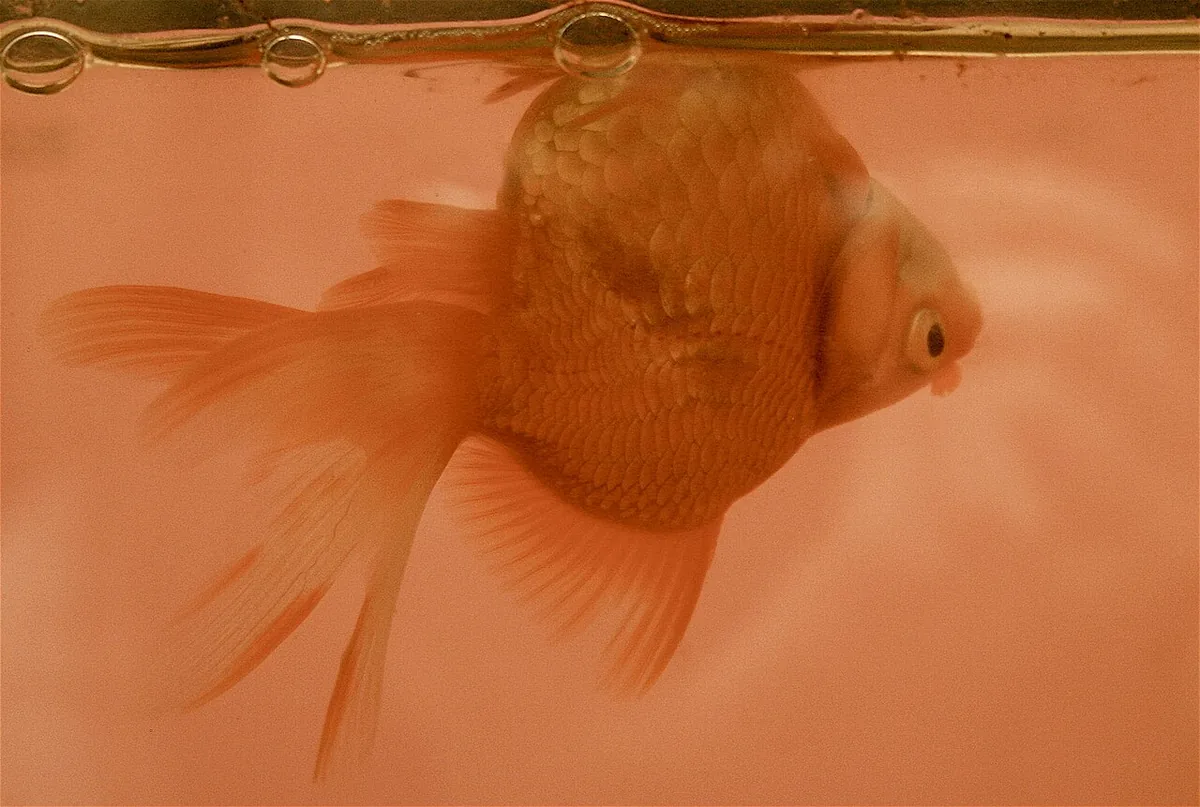
Symptom guide

Fish Not Eating: Possible Causes and Next Checks

Appetite loss is common across many fish health problems. Recent tank changes, water tests, and visible symptoms help narrow the cause.

Key signs

  • Ignoring food, spitting food, hiding during feeding, or losing weight.
  • May pair with swollen belly, mouth damage, lethargy, or rapid breathing.

First check: Check water, bullying, mouth, belly, and breathing.

Monitor closelyRead guide
Neon tetra in an aquarium, used as general behavior context.

Image: Warrieboy / CC BY-SA 4.0 / resized and cropped for layout
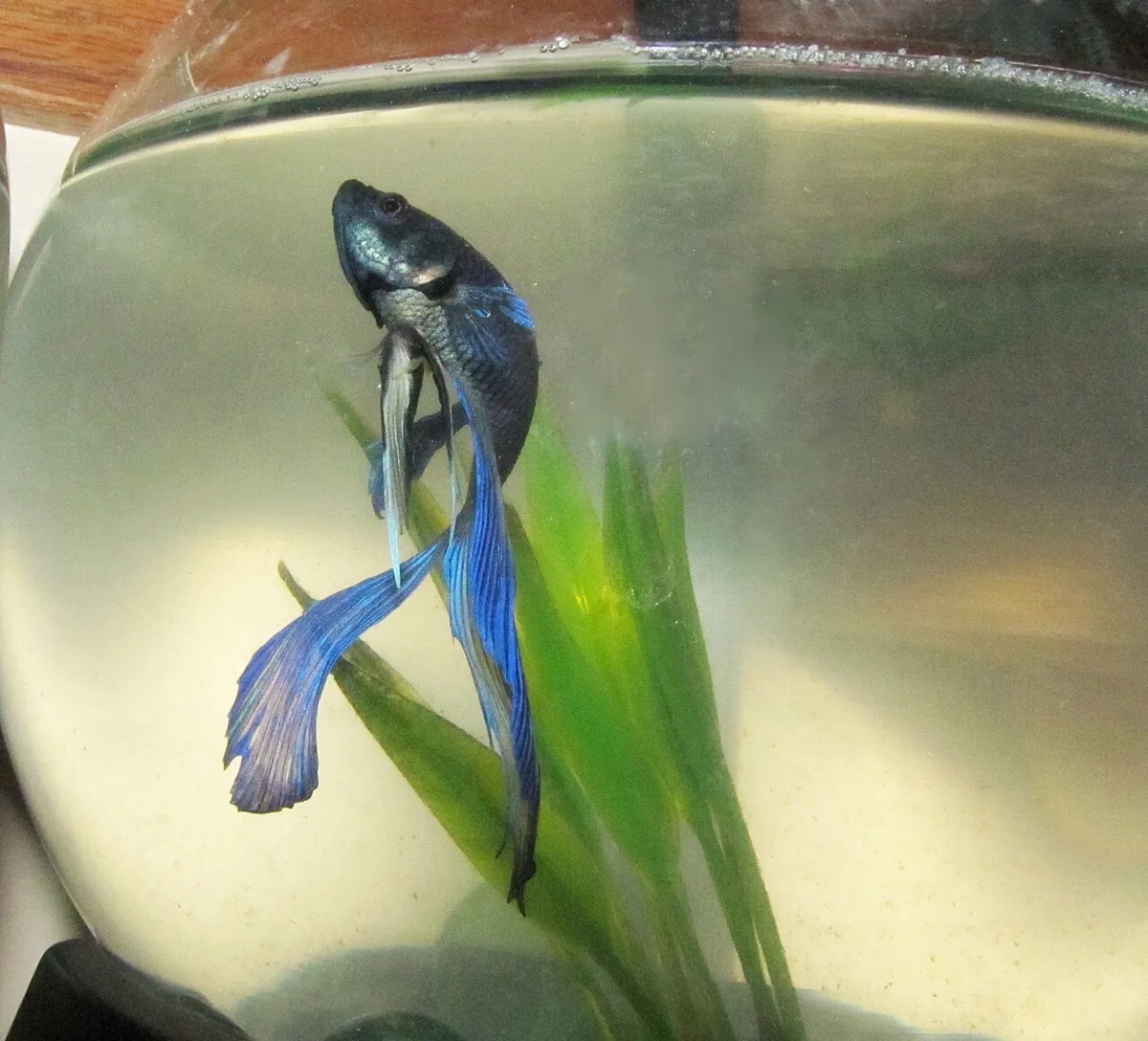
Symptom guide

Lethargic Fish: Possible Causes and What to Check

Lethargy is a broad but important sign. It becomes more useful when paired with breathing, appetite, posture, and visible body changes.

Key signs

  • Resting more than normal, hiding, bottom-sitting, or weak swimming.
  • Reduced appetite, clamped fins, dull color, or slow response.

First check: Check water, oxygen, temperature, and whether multiple fish are affected.

Same-day concernRead guide

Other behavior and eye changes

Fish Disease Identifier

Still not sure what your fish has?

Scan a photo in Fish Disease Identifier and get likely disease matches, possible causes, and next steps to consider.

Educational only. Not veterinary advice.