
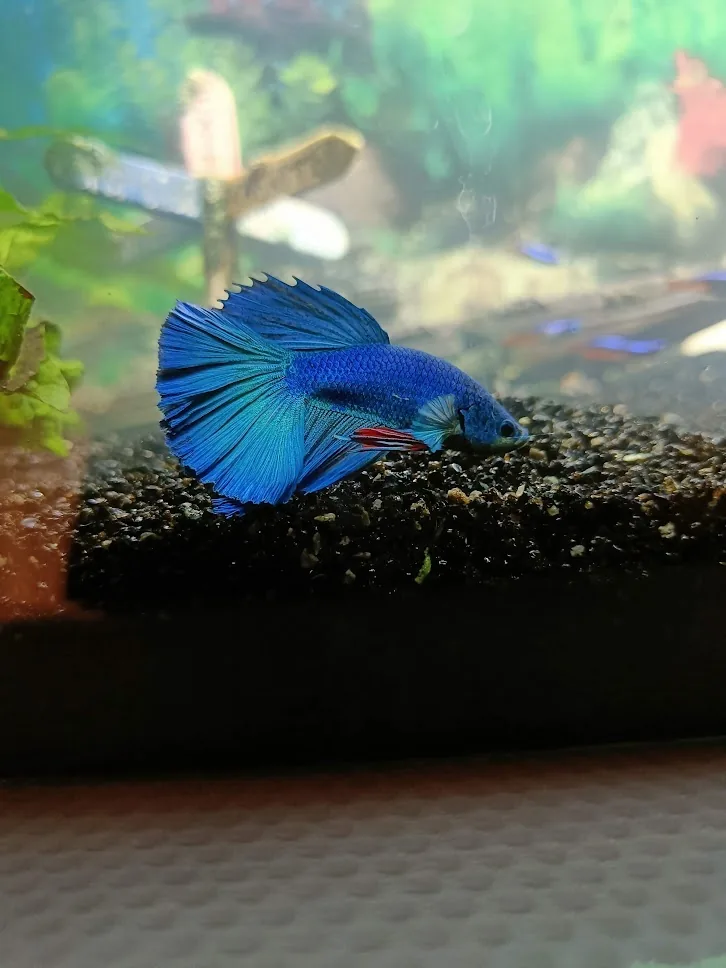


What to look for
- Round belly, buoyancy trouble, reduced appetite, or stringy waste.
- Raised scales from above can suggest a more serious dropsy-like pattern.
- Lethargy, clamped fins, or staying near the surface may appear.
Most useful clues
- Rounded belly, buoyancy trouble, reduced appetite, or stringy waste.
- Raised scales visible from above may suggest a serious dropsy-like pattern.
- Clamped fins, lethargy, surface hanging, or fast breathing may appear.
Same-day concern
What to check first
Review the same day if bloating is new, persistent, or paired with appetite or buoyancy changes. Raised scales, severe lethargy, gasping, or rapid swelling are urgent warning signs.
- Test ammonia, nitrite, nitrate, temperature, and pH.
- Confirm stable tropical temperature and appropriate filtration or aeration.
- Check top view for pineconing, plus appetite, waste, recent feeding, and tank size.
Possible causes
- Overfeeding, constipation, unsuitable food, or eggs.
- Dropsy, bacterial infection, parasites, or water stress.
- Small unheated tanks, temperature swings, or poor filtration.
How to tell it apart
- Recent overfeeding, belly-focused swelling, alert behavior, or waste changes.
- Raised scales, severe lethargy, red marks, or rapid decline.
- Pineconing scales, full-body swelling, not eating, or weakness.
- Flat scales and brief fullness after feeding fit this pattern less closely, but do not rule out internal illness.
- Unheated or unstable tank, ammonia/nitrite present, lethargy, or surface hanging.
- Stable parameters and isolated post-feeding fullness.
What to check next
- Test ammonia, nitrite, nitrate, temperature, and pH, because water stress can mimic or worsen many disease signs.
- Check temperature stability and whether the betta has a heater if needed.
- Look from above for pineconing scales and note appetite.
Next steps to consider
- Review feeding and water quality before assuming a single cause.
- Compare with swollen belly, swim bladder, and dropsy guides.
- Get help quickly for pineconing, severe lethargy, or breathing trouble.
Photo checklist
- Take a side photo and compare with an earlier image of the same fish. Note when the shape changed and whether swelling is increasing.
- Take a top-down photo showing whether scales lie flat.
- Record swimming level, surface behavior, and fin posture.
Common mistakes to avoid
- Assuming all betta bloating is dropsy.
- Skipping water and temperature checks in small tanks or bowls.
Species and tank notes
- Bettas are tropical labyrinth fish; air-sipping can be normal, but surface hanging with lethargy is not reassuring.
- Long-finned bettas may show buoyancy and fatigue sooner when bloating or water stress is present.
When it may be urgent
- Bloating plus raised scales is a warning sign.
- Floating trouble with lethargy or not eating should be reviewed promptly.
Related guides
Related symptoms
FAQ
Frequently asked questions
01Can I assume a rounded female betta is carrying eggs?+
Do not use presumed eggs to dismiss new or increasing swelling. Check the change from her usual shape, appetite, scales, and ability to swim. Food refusal, raised scales, or distress still warrants expert help.
02What if my betta is swollen but still eating?+
Appetite is useful context, but does not establish that swelling is harmless. Record whether the shape is changing and whether swimming or scales change. Persistent or increasing swelling needs review even if food is still taken.
03Is a bloated betta always dropsy?+
No. Dropsy describes a swelling and fluid-balance problem, not one underlying disease. Raised scales with swelling need prompt expert assessment; a rounded belly alone is not enough to name the cause.
04Why does temperature matter for bettas?+
Bettas are tropical fish, and cold or unstable water can affect digestion and stress levels.
05What should I check first for Bloated Betta Fish?+
Start with this check: Check top view for pineconing and verify water/temperature. Then compare the visible signs with behavior and tank history before relying on a photo match.
06When is Bloated Betta Fish urgent?+
Review the same day if bloating is new, persistent, or paired with appetite or buoyancy changes. Raised scales, severe lethargy, gasping, or rapid swelling are urgent warning signs.
07What can look similar to Bloated Betta Fish?+
Compare it with Feeding-related bloat or constipation-like issue, Dropsy-like systemic illness, Water stress or temperature mismatch. The key is to match the full pattern: body area, behavior, breathing, spread speed, and water-test context.
Fish Disease Identifier provides educational guidance and possible matches from photos. Results are not veterinary advice and may be wrong. For severe, worsening, or unclear symptoms, consult an aquatic veterinarian or experienced aquarium professional.
Review notes
Sources and limits
This guide is educational and helps narrow possible matches. It is not a veterinary diagnosis, and urgent breathing, swelling, collapse, or tank-wide distress should not wait for photo confirmation.
Read more about safety limits and educational use on the About page.
Last content review: 2026-09-22
Fish Disease Identifier
Still not sure what your fish has?
Scan a photo in Fish Disease Identifier and get likely disease matches, possible causes, and next steps to consider.
Educational only. Not veterinary advice.