
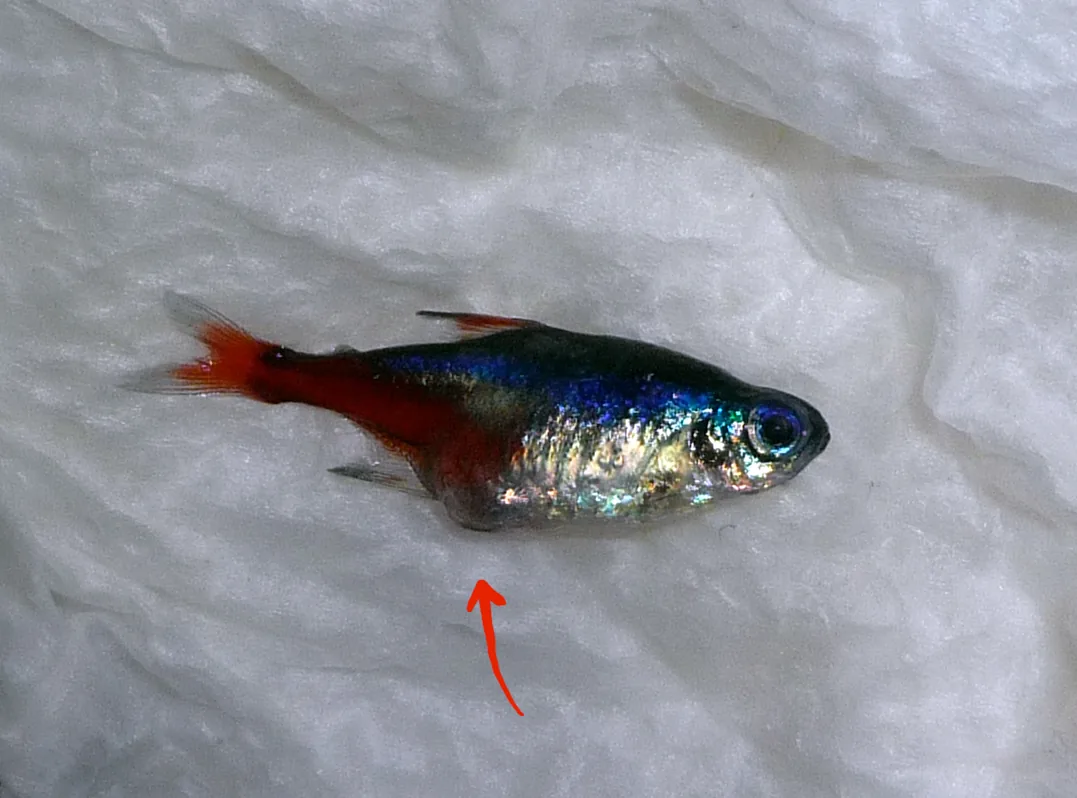


What to look for
- Round belly, uneven swelling, or full-body bloating.
- Raised scales, loss of appetite, or hiding.
- Floating trouble or difficulty staying level.
Most useful clues
- Round belly, uneven swelling, or full-body bloating.
- Raised scales from above, appetite loss, hiding, or lethargy.
- Buoyancy trouble, stringy waste, or difficulty swimming level.
Same-day concern
What to check first
Review the same day if swelling is new, uneven, or paired with appetite loss. Pineconing scales, severe lethargy, red streaks, or breathing trouble are urgent.
- Test ammonia, nitrite, nitrate, temperature, and pH.
- View from above for pineconing scales rather than relying on side view only.
- Check appetite, waste, recent feeding, sex or egg status, and buoyancy.
Possible causes
- Constipation, overfeeding, egg development, or species shape.
- Dropsy, bacterial infection, internal parasites, or organ stress.
- Water-quality stress weakening the fish.
How to tell it apart
- Recent heavy feeding, alert behavior, localized belly fullness, or waste changes.
- Raised scales, red streaks, severe lethargy, or rapid swelling.
- Pineconing scales, full-body swelling, lethargy, or not eating.
- Normal top view and swelling only after feeding.
- Species or sex fits egg development, chronic weight change, appetite or waste changes.
- Sudden tank-wide illness or abnormal water tests.
What to check next
- Test ammonia, nitrite, nitrate, temperature, and pH, because water stress can mimic or worsen many disease signs.
- Look from above for pineconing scales.
- Check appetite, waste, buoyancy, and recent feeding.
Next steps to consider
- Document the belly from side and top views.
- Compare with dropsy and swim bladder guides.
- Seek expert help for pineconing, severe lethargy, or rapid swelling.
Photo checklist
- Take a side photo showing belly outline.
- Take a top-down photo to check scale position.
- Note posture, buoyancy, waste, and appetite status.
Common mistakes to avoid
- Calling every swollen belly dropsy.
- Missing pineconing because only side photos were checked.
Species and tank notes
- Goldfish, livebearers, and egg-carrying females can look naturally rounded; sudden change matters.
- Small fish can decline quickly if swelling is paired with not eating or breathing distress.
When it may be urgent
- Swollen belly plus pineconing is a warning sign.
- Swelling with red streaks or not eating deserves quick review.
Related guides
Related symptoms
FAQ
Frequently asked questions
01Is a swollen belly always dropsy?+
No. Dropsy is one possibility, but feeding, eggs, constipation, parasites, and body shape can also explain swelling.
02Why check from above?+
Raised scales are easier to see from above and can change how urgent the situation looks.
03What should I check first for Swollen Belly in Fish?+
Start with this check: Use a top-down view to check for pineconing. Then compare the visible signs with behavior and tank history before relying on a photo match.
04When is Swollen Belly in Fish urgent?+
Review the same day if swelling is new, uneven, or paired with appetite loss. Pineconing scales, severe lethargy, red streaks, or breathing trouble are urgent.
05What can look similar to Swollen Belly in Fish?+
Compare it with Feeding-related bloating or constipation-like issue, Dropsy-like fluid imbalance, Eggs, normal body shape, or internal parasites. The key is to match the full pattern: body area, behavior, breathing, spread speed, and water-test context.
06What photos help review Swollen Belly in Fish?+
Take a side photo showing belly outline. Also check take a top-down photo to check scale position.
07What common mistake should I avoid with Swollen Belly in Fish?+
Calling every swollen belly dropsy. Also check missing pineconing because only side photos were checked.
Fish Disease Identifier provides educational guidance and possible matches from photos. Results are not veterinary advice and may be wrong. For severe, worsening, or unclear symptoms, consult an aquatic veterinarian or experienced aquarium professional.
Review notes
Sources and limits
This guide is educational and helps narrow possible matches. It is not a veterinary diagnosis, and urgent breathing, swelling, collapse, or tank-wide distress should not wait for photo confirmation.
Read more about safety limits and educational use on the About page.
Last content review: 2026-07-01
Fish Disease Identifier
Still not sure what your fish has?
Scan a photo in Fish Disease Identifier and get likely disease matches, possible causes, and next steps to consider.
Educational only. Not veterinary advice.