
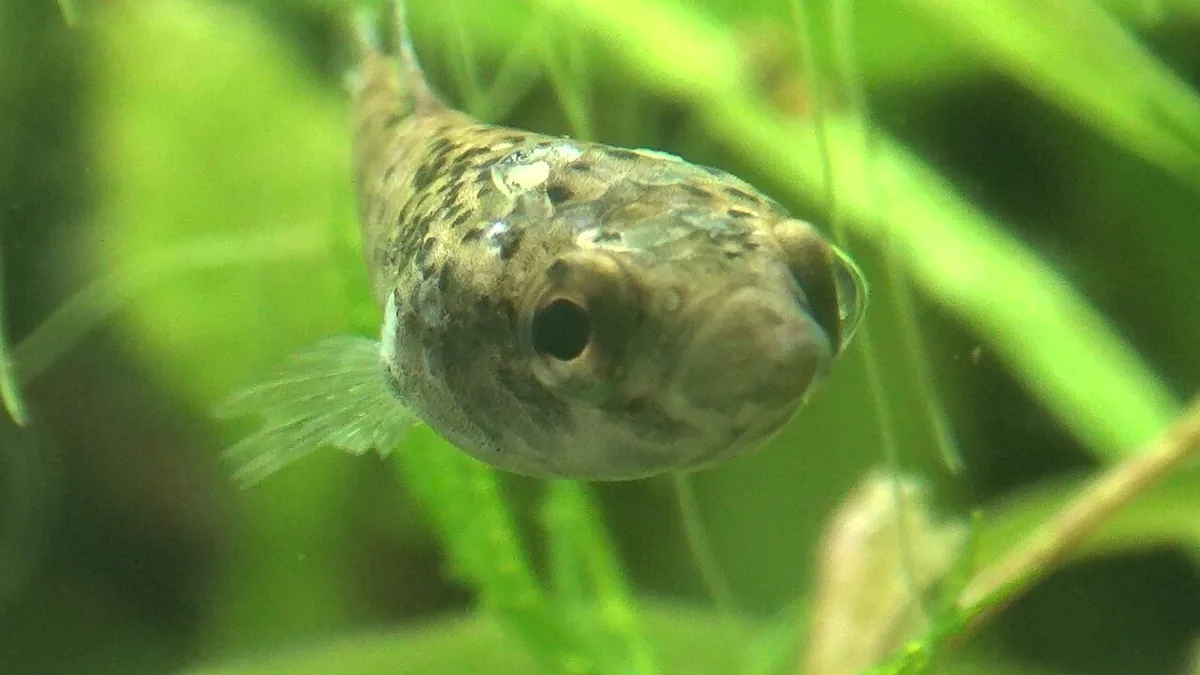


Common signs
- Whitish or gray patches on the mouth, body, fins, or back.
- Cotton-like appearance that may be flat or fuzzy depending on severity.
- Frayed fins, lethargy, fast breathing, or refusing food.
Most useful clues
- Gray-white patches on mouth, head, back, body, fins, or gills.
- Mouth erosion, saddle-like back lesion, or cottony-looking but flat tissue.
- Frayed fins, rapid breathing, lethargy, or appetite loss.
Same-day concern
What to check first
Review the same day for fast-spreading patches, mouth involvement, gill signs, lethargy, or multiple affected fish.
- Test ammonia, nitrite, nitrate, pH, and temperature.
- Look for mouth erosion, saddleback pattern, gill distress, or fast spread.
- Check crowding, oxygenation, organic waste, aggression, and recent transport.
Possible causes
- Bacterial growth after stress, crowding, injury, or poor water quality.
- Warm water and high organic load in some tanks.
- Transport stress or aggression that damages skin and fins.
How to tell it apart
- Fluffy threads on a wound or dead tissue.
- Columnaris often looks flatter, gray-white, mouth-focused, or saddle-like.
- Damage limited to fin edges.
- Mouth patches, body lesions, or breathing distress suggest more than fin rot.
- Single scrape after collision or aggression.
- Spreading pale patch, fuzzy margin, or multiple fish affected.
What to check next
- Test ammonia, nitrite, nitrate, temperature, and pH, because water stress can mimic or worsen many disease signs.
- Look for flat pale patches, mouth erosion, or a saddle-like area behind the dorsal fin.
- Check whether affected tissue is spreading quickly or multiple fish show signs.
Care steps to consider
- Improve water quality and reduce stress immediately as supportive care.
- Do not assume all white cottony marks are fungus; compare with fungal and mouth rot guides.
- Seek expert treatment advice if patches spread, breathing worsens, or the mouth is affected.
Photo checklist
- Take a close photo of mouth, back, and affected patch edges.
- Add a side photo showing fins and breathing posture.
- Include tank setup and stocking density if crowding is possible.
Common mistakes to avoid
- Assuming every cottony white patch is fungus.
- Ignoring fast breathing or mouth damage while waiting for clearer photos.
Species and tank notes
- Livebearers, catfish, and recently shipped fish are often discussed as vulnerable groups.
- Warm, crowded, high-organic systems can make bacterial skin and gill problems worse.
When to get expert help
- Fast-spreading patches, mouth involvement, or breathing distress can become urgent.
- Columnaris-like signs can worsen quickly in stressed tanks.
Prevention tips
- Avoid overcrowding and maintain clean, oxygenated water.
- Quarantine new fish and treat injuries early through husbandry corrections.
Related guides
Related symptoms
FAQ
Frequently asked questions
01Is columnaris the same as fungus?+
No. It can look cottony, but columnaris is bacterial. Misidentifying it may lead to poor treatment choices.
02Why does water quality matter with columnaris signs?+
Stress and poor water can damage tissue and make bacterial problems more likely to spread.
03Why is columnaris often confused with fungus?+
Columnaris can look cottony in photos, but it is bacterial and may be flatter, mouth-focused, saddle-like, or fast spreading.
04When are columnaris-like signs urgent?+
Mouth involvement, breathing trouble, fast spread, or multiple affected fish should be reviewed quickly.
05What should I check first for Columnaris in Aquarium Fish?+
Start with this check: Check mouth involvement, spread speed, breathing, and water. Then compare the visible signs with behavior and tank history before relying on a photo match.
06When is Columnaris in Aquarium Fish urgent?+
Review the same day for fast-spreading patches, mouth involvement, gill signs, lethargy, or multiple affected fish.
07What can look similar to Columnaris in Aquarium Fish?+
Compare it with Fungal infection, Fin rot, Injury. The key is to match the full pattern: body area, behavior, breathing, spread speed, and water-test context.
Fish Disease Identifier provides educational guidance and possible matches from photos. Results are not veterinary advice and may be wrong. For severe, worsening, or unclear symptoms, consult an aquatic veterinarian or experienced aquarium professional.
Review notes
Sources and limits
This guide is educational and helps narrow possible matches. It is not a veterinary diagnosis, and urgent breathing, swelling, collapse, or tank-wide distress should not wait for photo confirmation.
Read more about safety limits and educational use on the About page.
Last content review: 2026-07-01
Fish Disease Identifier
Still not sure what your fish has?
Scan a photo in Fish Disease Identifier and get likely disease matches, possible causes, and next steps to consider.
Educational only. Not veterinary advice.